Research local listings carefully and verify the object before treating a low advertised price as an opportunity.
An underpriced listing still needs to become a sound purchase
Facebook Marketplace can put you in touch with people selling useful objects nearby. Some listings are brief because the owner wants space back rather than a research project. That can create an opportunity for someone who understands the exact item and can arrange a straightforward collection.
A low advertised price alone proves very little. It may refer to one part of a bundle, a deposit, an item with a fault or an offer that is no longer available. Your job is to turn a promising photograph into a verified description, a realistic buying limit and a safe transaction.
Build searches around how owners describe things
Use both precise and ordinary terms. An owner might list a model-specific amplifier under “stereo”, a specialist hand plane under “woodworking tools”, or a camera support under “tripod”. Search the category, the common name and the exact model you understand.
Keep the radius practical for the value and size of the item. Browse relevant results and available filters rather than relying on one search phrase. Search controls can differ between accounts and app versions, so use the options actually shown. Do not assume a broad description means the seller lacks knowledge or will accept an extremely low offer.
Four checks for a promising listing
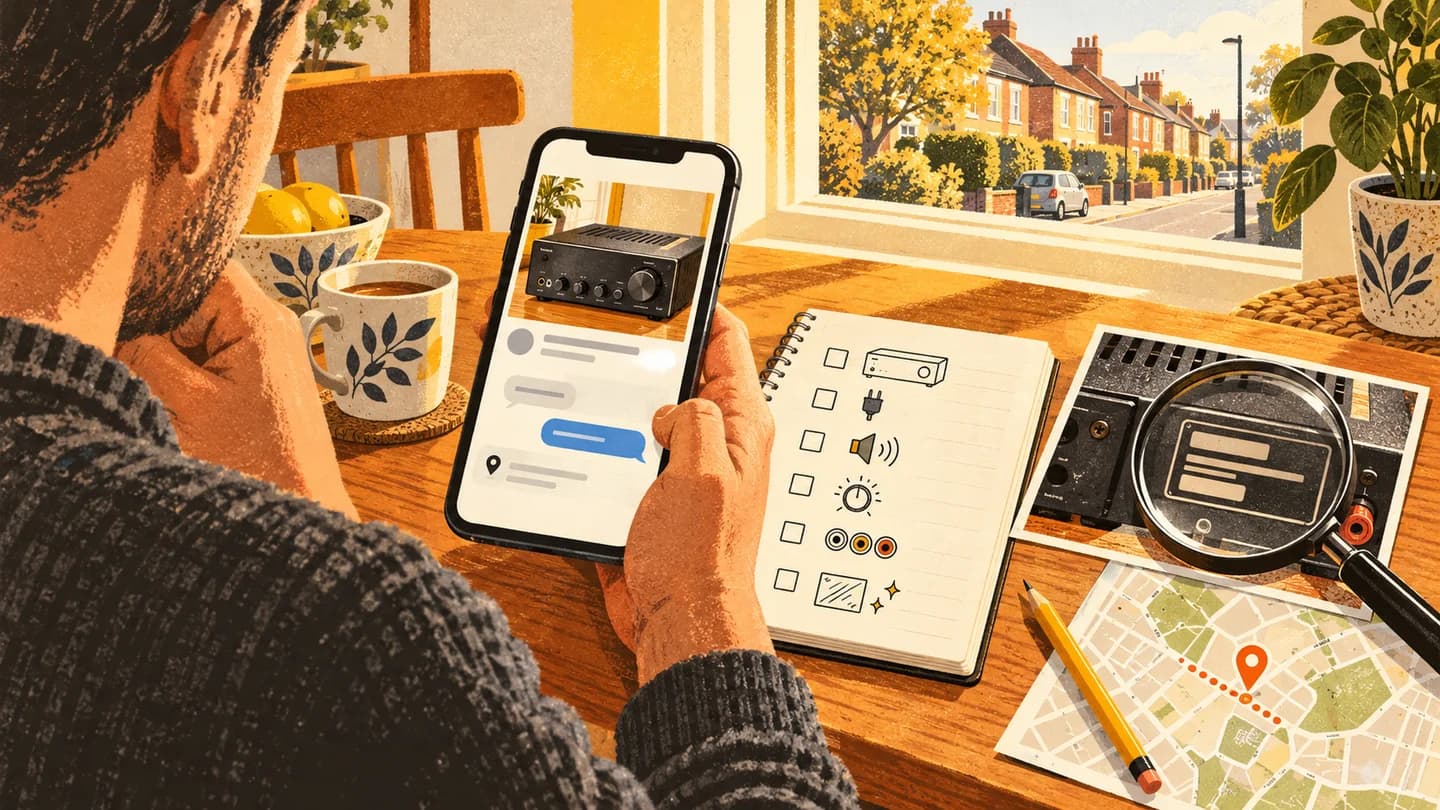
Save a short note for each serious candidate so that excitement does not replace the evidence.
Identity
The photograph, label and specification identify the exact object you expect to buy, including the version that changes its value.
Condition
You know the faults, missing components and limits of any testing. The price comparison reflects those facts.
Economics
The possible sale receipt leaves room for purchase, preparation, selling, fulfilment and collection costs.
Transaction
The seller can answer reasonable questions and agree an appropriate inspection, location and payment arrangement.
Identify the version before comparing prices
Ask for a clear model-label photograph and any details that distinguish variants. Similar-looking products can differ in capacity, mount, region, edition or compatibility. A desirable badge on the front does not establish the specification underneath.
For furniture and homeware, dimensions, material, maker’s marks and construction may be more useful than a model number. For sets, confirm the number of pieces and included accessories. Bargain Bandit can help start identification research, but compare its suggestion with the actual labels and physical details before using it to set a price.
Send a message that moves the decision forward
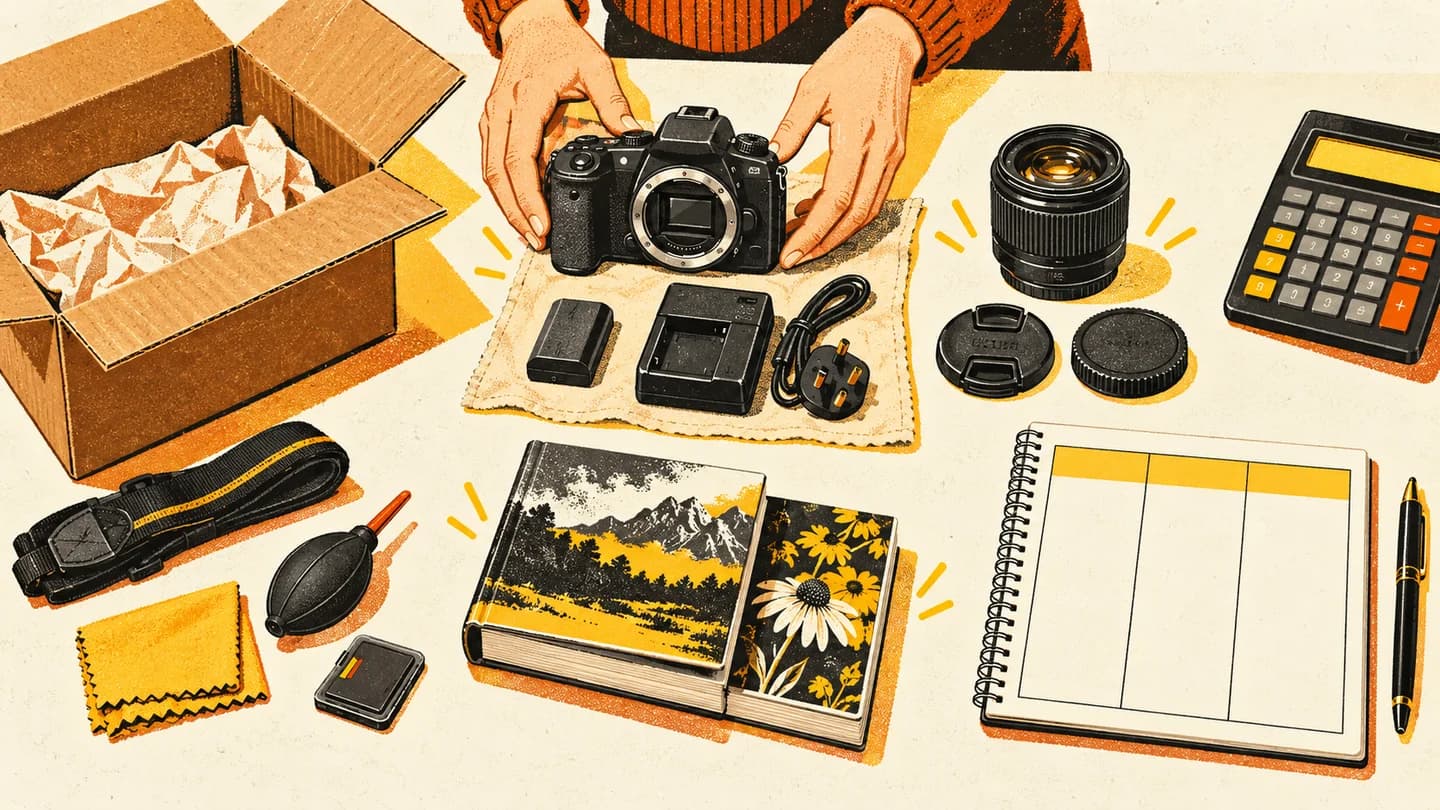
A specific, courteous enquiry is easier to answer than repeated availability messages. For a camera, you might write:
Separate a useful reply from a reassuring phrase
“Works fine” means different things to different people. Ask what has actually been used or tested, and decide what you need to check yourself. A device turning on does not prove that its ports, battery, storage or other functions work correctly.
Keep the important details in the conversation: price, contents, known faults and collection arrangements. If the seller cannot answer a technical question, that is an uncertainty to price or investigate, not proof of dishonesty. If they refuse ordinary verification while pressing for immediate payment, do not let the apparent discount hurry your decision.
Use sold evidence from the route you plan to use
Compare several relevant completed sales where possible. Match the exact variant, condition and accessories, and separate seller asking prices from actual sale evidence. If an accepted offer is hidden in the displayed result, avoid treating the crossed-out asking price as a confirmed receipt.
You may buy locally and sell nationally, but the larger audience brings selling and delivery costs. A local collection price and a fully tested item posted by a specialist dealer are not interchangeable. Your valuation should describe the item and service you can actually provide.
Allow for the trip before making an offer
These figures are invented to show a purchase decision. They are not a forecast for cameras or Marketplace purchases generally.
| Calculation | Amount |
|---|---|
| Cautious resale receipt | £90 |
| Selling, packing and delivery | −£18 |
| Preparation | −£5 |
| Collection travel | −£12 |
| Contribution wanted before time and overhead | −£25 |
| Maximum purchase price | £30 |
A nearer purchase can beat the lowest listing price
At £30, the example leaves the desired £25 contribution if the £90 sale happens. If it sells for £75 instead, that falls to £10. A further £10 detour would consume the remainder of that weaker outcome before your time.
Compare nearby alternatives by total cost and condition. Paying £5 more for a verified complete item fifteen minutes away can be more sensible than driving a long way for an uncertain cheaper one. Only combine pickups when each purchase is worthwhile on its own and the appointments are realistically compatible.
Slow down when the transaction starts changing
No single profile detail proves that a seller is genuine. Assess the whole interaction.
- A newly introduced deposit or delivery fee before you have inspected the item.
- A request to enter payment details through an unfamiliar link sent in the conversation.
- Photographs that do not match the answers or the item offered for collection.
- Pressure to move immediately because another buyer is supposedly transferring money.
- A local listing that becomes delivery-only when you ask to view it.
- Requests for login codes, unnecessary identity documents or account access.
Understand what protects the actual payment
Do not assume that an item advertised on Facebook comes with Facebook Purchase Protection. Meta’s guidance excludes local pickup and person-to-person transactions from that protection. Any protection offered by a separate payment provider depends on its own eligibility and transaction rules.
Keep the arrangement straightforward and verify the object before paying. Avoid transferring a holding deposit to an unknown seller simply to beat other buyers. Open your payment service independently rather than following a payment link in a message, and never share an account verification code. A familiar-looking profile or payment screenshot is not a substitute for those checks.
Arrange an inspection that fits the object
Agree the practical details in advance so neither side is surprised.
- Choose a suitable, well-lit meeting arrangement and let someone know where you are going.
- For a home collection, particularly a bulky item, consider taking another adult and confirm access.
- Agree any safe functional checks beforehand; do not improvise electrical testing in a car park.
- Compare the item and accessories with the agreed description before paying.
- Decline or revise the decision if important facts differ, without inventing faults to force a discount.
- Keep a receipt or written purchase record and move the item securely.
You can leave after travelling
Inspect properly before relisting
At home, complete the checks needed for your intended description and safety responsibilities. Photograph the actual item, record identifiers and make the condition clear. Do not copy the previous seller’s images or claim their brief reassurance as your own testing.
Keep account locks, personal data and ownership questions out of your resale chain. For devices, establish an authorised preparation process and do not browse another person’s information. If a significant discrepancy or suspected scam emerges, preserve the listing and conversation, report it through the platform and contact the payment provider promptly where relevant.
Improve the search from completed purchases
Track which searches produced suitable candidates, how many enquiries led to inspections and what the purchases actually returned. Include unsuccessful journeys and the time spent resolving faults. A series of cheap finds can still be a poor use of a sourcing day.
Use that record to narrow categories and travel limits. The repeatable opportunity is usually an object you understand, described accurately and collected efficiently. Finding it early helps, but verification and a disciplined buying ceiling decide whether it becomes a good resale.