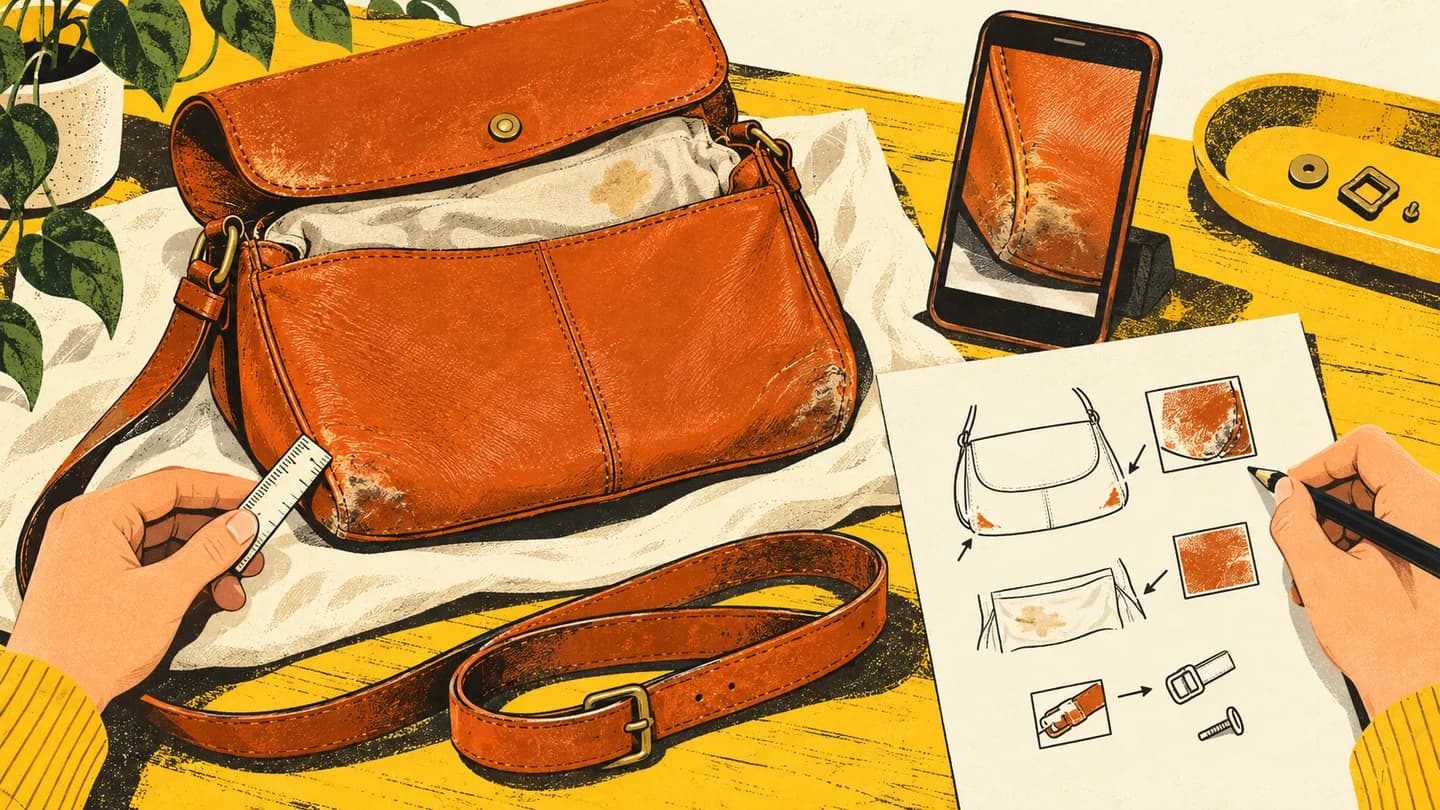
Describe known faults and limits of testing clearly so the buyer understands what they are purchasing.
A repair buyer still needs an accurate description
Faulty items can interest people who repair equipment or need a particular component. That does not make every broken object saleable, and it does not make the description less important. The buyer needs to understand the object, the symptoms you observed and the limits of what you know.
The strongest listing reads like a useful inspection record. It avoids optimism about an “easy fix”, vague reassurance that something “looks fine”, and disclaimers that contradict the condition field. Your job is to describe the evidence, not to diagnose a fault you have not established.
Keep these three statements separate
An object may have a known fault and several untested functions at the same time. Describe each relevant part of the picture.
Known fault
You have observed a failure or have reliable information about it. For example, the camera does not advance film when the lever is operated. State the symptom and the circumstances. Do not replace this information with the single word “untested”.
Limited testing
You performed specified checks, but not a complete assessment. For example, a controller’s wired buttons responded on a compatible console, while wireless connection and battery life were not assessed. The untested functions remain unknown.
No functional testing
You have not operated the item, perhaps because you lack suitable equipment or expertise. Explain that limitation honestly. Its external appearance is not evidence that it works, and a lack of testing is not evidence of a cheap repair.
Check whether the item can be sold at all
Before writing attractive copy, check the product’s identity, eBay’s relevant restrictions and any manufacturer or official recall notice. A permitted condition option does not override product-safety rules. Businesses must not sell products they know, or should know, are unsafe. Requirements can differ by product and market.
Stop if you encounter a damaged mains lead, swollen battery, signs of overheating or another safety concern. Do not power it up just to obtain a more reassuring sentence for the listing. A repair label is not a workaround for unsafe or prohibited goods. Where sale is uncertain, get competent advice or use an appropriate disposal route rather than guessing.
Choose the condition field before polishing the description
eBay’s condition choices depend on the category. In many equipment categories, “Used” means the item functions as intended, whereas “For parts or not working” covers non-operational items and certain missing essential components. Read the definition in the category you are actually using.
Do not select a working condition and try to undo it with “untested” lower down. If you cannot support the selected condition, resolve the uncertainty or choose an appropriate supported route. If the category offers no condition that truthfully fits, investigate before listing; another seller’s example is not permission.
Build a factual inspection record
Keep this record before you draft the advert. Only carry out checks that you can perform safely and competently.
- Identify the exact make, model and version from the item itself. Record important labels and connectors without guessing compatibility.
- Inspect the exterior, compartments and accessible parts. Note missing covers, corrosion, impact damage and evidence of previous work.
- Write down each safe check performed and the result. Include the equipment or accessories used when that affects what the result means.
- Separate observed failures from functions not checked. Record intermittency instead of reducing mixed results to “working”.
- List what will be supplied and what will not. Identify test accessories that appear in your notes but are not included.
- Review eligibility, the condition field, photographs and description together before publishing.
From vague claims to useful observations
These are writing examples, not diagnoses or instructions to operate questionable equipment. Use a statement only when it matches your own evidence.
| Avoid | A clearer statement |
|---|---|
| Probably only needs a battery | No functional test performed because a suitable battery was unavailable. |
| Works apart from a small issue | The display responds, but the right-hand control does not respond when pressed. |
| Easy repair for someone who knows | The fault has not been diagnosed and repair cost is unknown. |
| Untested camera | The film-advance lever does not complete its travel. No further functional tests performed. |
| All there, as pictured | Camera body and strap included. Lens, battery and body cap are not included. |
Give repair buyers the details they actually need
The exact model can matter more than the overall appearance. Two similar products may use different boards, connectors, fittings or firmware. Photograph the identification plate and relevant connections clearly, and transcribe important identifiers carefully. Do not describe a component as compatible with several models merely because it looks similar.
Mention evidence of previous intervention that you can actually see: missing screws, a replacement cover, a cut lead or visible adhesive. Keep observation separate from speculation. “Two case screws are missing” is supportable; “previous owner attempted a motherboard repair” may be an invented explanation.
A sample description for a faulty film camera
An illustrative description might read: “35mm film camera body, model and serial label photographed. The film-advance lever does not complete its travel and the shutter did not release during the checks described. No film test performed. Light-meter operation and shutter speeds have not been assessed. Scratches on the top plate and missing battery-compartment cover are shown in the photographs. Body and strap only; no lens or battery included.”
That description tells a buyer considerably more than “vintage camera, untested, sold as seen”. It still does not promise that every other component works or that the known symptom has a particular cause. The condition category must match the fault, and the title should make the faulty status clear rather than hiding it in the final paragraph.
Photograph the uncertainty as carefully as the attractive parts
A repair buyer needs to identify the item and understand its completeness. Do not dismantle it just for photographs unless you are competent and it is appropriate.
- Show the whole item from several angles, including the underside and back.
- Include model labels, sockets and accessible compartments relevant to identification.
- Photograph cracks, missing covers, damaged controls and other important visible issues.
- Lay out the actual included parts together so loose components are not mistaken for a complete assembly.
- Remove unrelated equipment from the scene, or make any necessary exclusion unmistakable in the description.
Price against faulty examples, not repaired ones
Research the same model with a comparable fault and similar contents. A working example with a warranty is not a suitable starting price for an undiagnosed repair project. A successful sale of one replacement part also does not establish the value of every component inside your item.
Compare the likely proceeds with the cost of packing and dispatch. A £20 sale can be unattractive if it needs a large box, careful protection and substantial handling. Do not dismantle an item speculatively just because several components have high asking prices. You would still need to identify, assess, describe and sell each part.
Packing restrictions do not disappear because it is faulty
Check the carrier’s rules for the actual contents and condition before listing a delivery service. Batteries and damaged electrical products can raise restrictions beyond ordinary parcel size and weight. Do not assume a service that accepts a working product accepts a damaged version.
Secure loose components and protect vulnerable controls without concealing the item’s condition. Keep the parts together with a stock reference so the package matches the advert. If no suitable permitted dispatch route exists, reconsider the listing. Collection does not make an unsafe or prohibited sale acceptable.
“No returns” does not correct an inaccurate advert
Update the evidence when something changes
If further inspection reveals a new problem before sale, revise every affected part of the advert, including the photographs and condition selection. If the item has already sold, contact the buyer through eBay before dispatch and resolve the discrepancy using the appropriate order process. Do not send a materially different item and hope the original disclaimer covers it.
A useful faulty-item listing gives a repair buyer enough information to decide whether to investigate. It leaves unknowns plainly unknown, prices the risk honestly and never confuses a possible repair project with an assurance that the product is safe or serviceable.