Build a simple packing area around your stock rather than buying every possible shipping supply.
Build around the parcels you actually send
A useful packing station makes it easy to send the correct item, protected properly, with the correct label. It does not need to resemble a warehouse. For a small reseller, a clear table, a storage box of tools and a few suitable packaging sizes may be enough. The setup should earn its space by reducing mistakes and repeated trips for supplies.
Start by looking at your last ten orders, or the first small batch you plan to list. A seller of paperback books needs a different setup from someone selling ceramic jugs. Write down the packed sizes, materials and handling problems you expect. Buy for that workload before investing in specialist equipment or hundreds of boxes.
The essentials, and what can wait
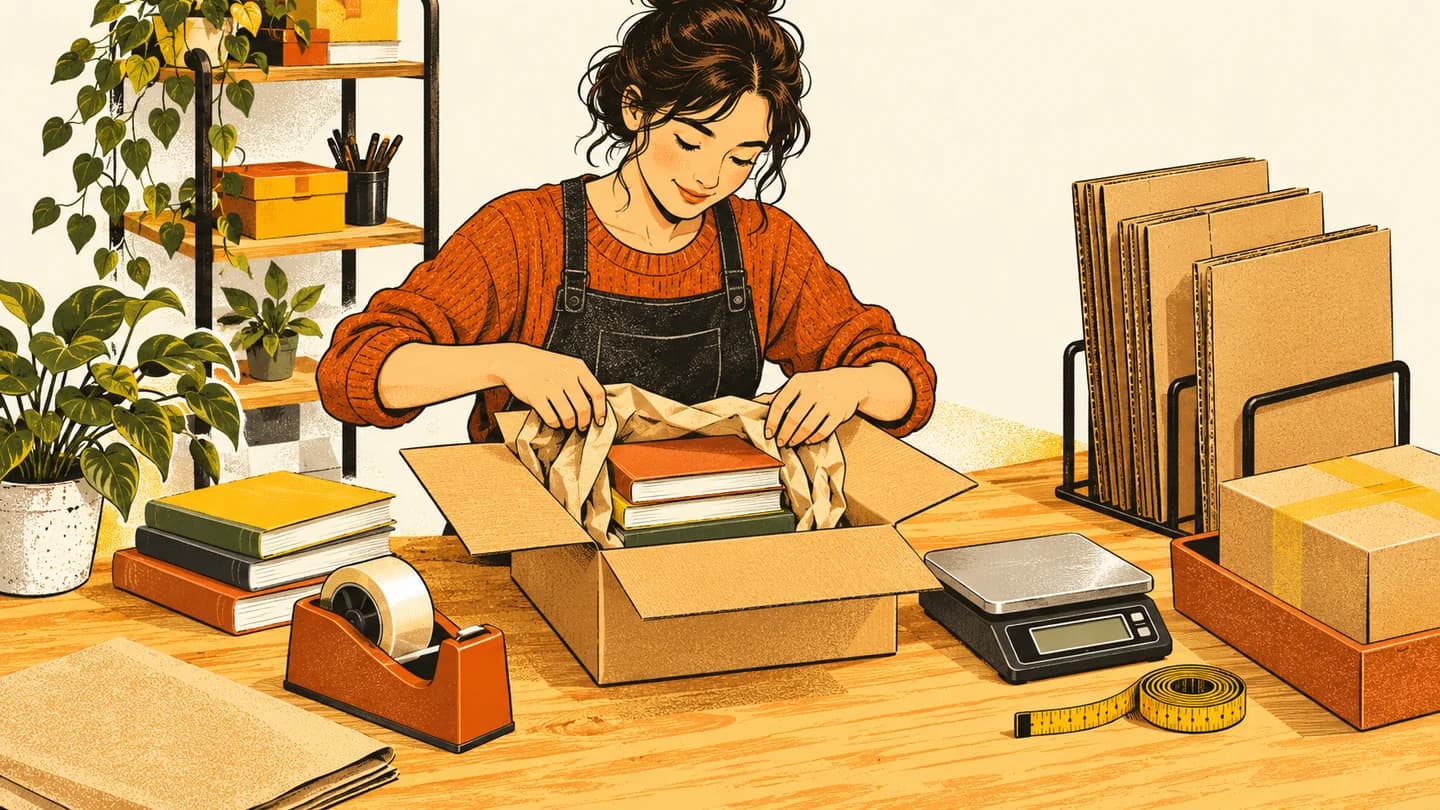
Choose tools that solve a real packing problem. Keep cutting tools secured when not in use and use a stable surface with enough room to work comfortably.
| Essential job | A simple starting point |
|---|---|
| Measure the parcel | Scales suitable for its weight and a tape measure |
| Protect the contents | Appropriate outer packaging and cushioning for your actual stock |
| Close the package | Suitable parcel tape and a safe cutting tool |
| Identify the shipment | A permitted printed label or supported label-printing service |
| Match item to order | Access to the order and your stock record |
| Keep the bench usable | Small containers for tools and a separate outgoing area |
Give the work a clear direction
Set out three areas: the item waiting to be checked, the packing space and the completed parcel. These can be sections of one table rather than separate pieces of furniture. Keep returns and newly purchased stock away from the outgoing area so that an uninspected item cannot accidentally join the dispatch pile.
Place the tools you use most within easy reach. Store flat boxes vertically where practical and keep cushioning clean and dry. Leave a clear floor route to the door. If the table serves another purpose at home, a labelled packing tote and a folding work surface can provide a repeatable setup without permanently taking over the room.
Check the item before reaching for tape
Packing is the last useful opportunity to catch a mismatch before it becomes a customer problem. Open the genuine order and compare it with the item in front of you.
- Match the stock code, model, size, colour or edition to the listing.
- Check that the condition still matches the description and photographs.
- Gather the promised accessories, instructions and removable parts.
- Resolve missing contents or newly discovered damage with the buyer through the platform before dispatch.
- Keep one order together until its package and label have been matched.
Use different packing methods for different risks
A folded jumper needs protection from dirt and moisture, while a hardback book also needs its corners and covers protected. Choose an outer package that suits those risks instead of automatically using the same padded envelope for everything. Keep adhesive away from the item itself, and consider how the buyer will open the parcel without cutting the contents.
Ceramics and other fragile objects need a strong box, suitable cushioning and separation between pieces. Handles and projecting parts must not bear the pressure of neighbouring objects. Royal Mail advises particular caution with reused boxes for fragile goods because previous use can weaken them. Inspect any proposed box carefully; replace it if its strength is doubtful. A fragile sticker does not replace protective packing.
Reuse selectively, with a limit on what you keep
Clean, undamaged packaging can be useful when it remains suitable for the next shipment. Remove old shipping labels and routing barcodes, check the seams and reject material that is damp, crushed, dirty or strongly scented. A tidy-looking box can still have weakened corners. Treat the choice as an assessment of protection, rather than a rule that reused packaging is always good or always bad.
Set a storage limit for saved materials. For example, keep only the sizes you regularly need in one designated area and review the collection when it fills. A room of unsuitable boxes creates handling work and hides the few useful ones. Do not buy fragile stock on the assumption that a free box of the right strength and size will turn up later.
Measure the finished parcel
The item’s bare dimensions and weight are not the shipment’s dimensions and weight. Include the outer packaging, cushioning, accessories and any protruding or bulging areas. Measure after the packing method is established and weigh the completed parcel before buying or confirming postage. Compare it with the current limits for the exact service you intend to use.
If a listing requires a parcel size in advance, do a realistic packing trial before publishing it. Leave enough protection around the item; do not remove necessary cushioning merely to fit a cheaper category. Keep the packed measurements in the stock record for awkward items so that accepting an offer does not leave you discovering the delivery cost for the first time.
Check permission to send and compensation separately
A label printer is an upgrade, not the starting point
A thermal printer can be convenient when you regularly print compatible parcel labels. It is less compelling if you dispatch a handful of orders and already have a suitable printer. Some services support a QR code or label printing at a participating location, but availability depends on the service and the order. Confirm the option before relying on it.
Whichever method you use, keep the label readable, securely attached and positioned as the carrier requires. Avoid folding the barcode over an edge or obscuring it. Check the destination against the current order, especially if you printed several labels earlier. Complete address changes through the platform’s supported process instead of casually rewriting a label from a message.
Put a real packaging cost against each sale
The following figures are illustrative supply costs, not current shop prices or carrier charges. They show why a small allowance should be based on what you use.
| Material | Cost allocated to this parcel |
|---|---|
| Box from a pack of ten costing £12 | £1.20 |
| Protective material used | £0.40 |
| Tape and label allowance | £0.15 |
| Total packaging cost | £1.75 |
Keep the purchase and the per-order cost distinct
Buying the ten boxes takes £12 out of your cash balance immediately. Allocating £1.20 to an order is a way to understand that order’s packaging cost; it is not a second payment. Apply the same distinction to tape and other supplies. Record the actual purchase once and use a consistent allocation for your internal margin review.
Recheck the allowance when your product mix changes. A thin mailer and a protected ceramic parcel do not have the same cost. Include failed packing attempts and wasted materials in a periodic review rather than assuming every purchased sheet or box reaches a customer. Your own packing time is worth recording separately when comparing categories.
Use the same final dispatch sequence
A short routine is easier to follow on a busy evening than a collection of good intentions.
- Match the item and all included contents to the order.
- Protect and immobilise the contents using a method suitable for that item.
- Record any useful packing photographs without treating them as a guarantee of a successful claim.
- Close the parcel, then confirm its final weight and dimensions.
- Match and attach the correct label, checking the service and destination.
- Move the completed parcel to the outgoing area and record its dispatch status.
- Keep the carrier’s acceptance or posting evidence and the tracking reference with the order.
Replenish from use, not enthusiasm
Count the supplies you actually consume over a normal week and allow for the time it takes to replace them. A simple reorder note inside the last few boxes can be more useful than a complicated inventory system. Keep a modest buffer for unexpected orders without spending the next stock-buying budget on materials you may never need.
After a damaged delivery or packing delay, identify the specific cause. Was the box too weak, the item able to move, a component forgotten, or the postage category wrong? Improve that part of the routine. A good packing station is one that repeatedly gets the right goods to buyers safely and leaves a clear record when something needs investigating.