Compare a current quote for the exact equipment with your all-in buying cost before sourcing a camera for resale.
A camera bargain needs an exit price
Buying used cameras to sell to MPB can leave a margin, but the useful comparison is between your total buying cost and a realistic offer for that exact equipment. The price on a dealer’s shop page is a retail selling price. It is not the amount that dealer has offered to pay you. Confusing those two numbers is an expensive way to start.
Think of a potential purchase as a small project with three gates: can you identify it, can you establish enough about its condition, and can you sell it for enough after the work and costs? A low stall price only answers part of the third question. This guide shows how to build a buying decision before money changes hands.
Build an exact equipment record
Use photographs of the actual markings, with the seller’s permission, and check them against the item in your hand.
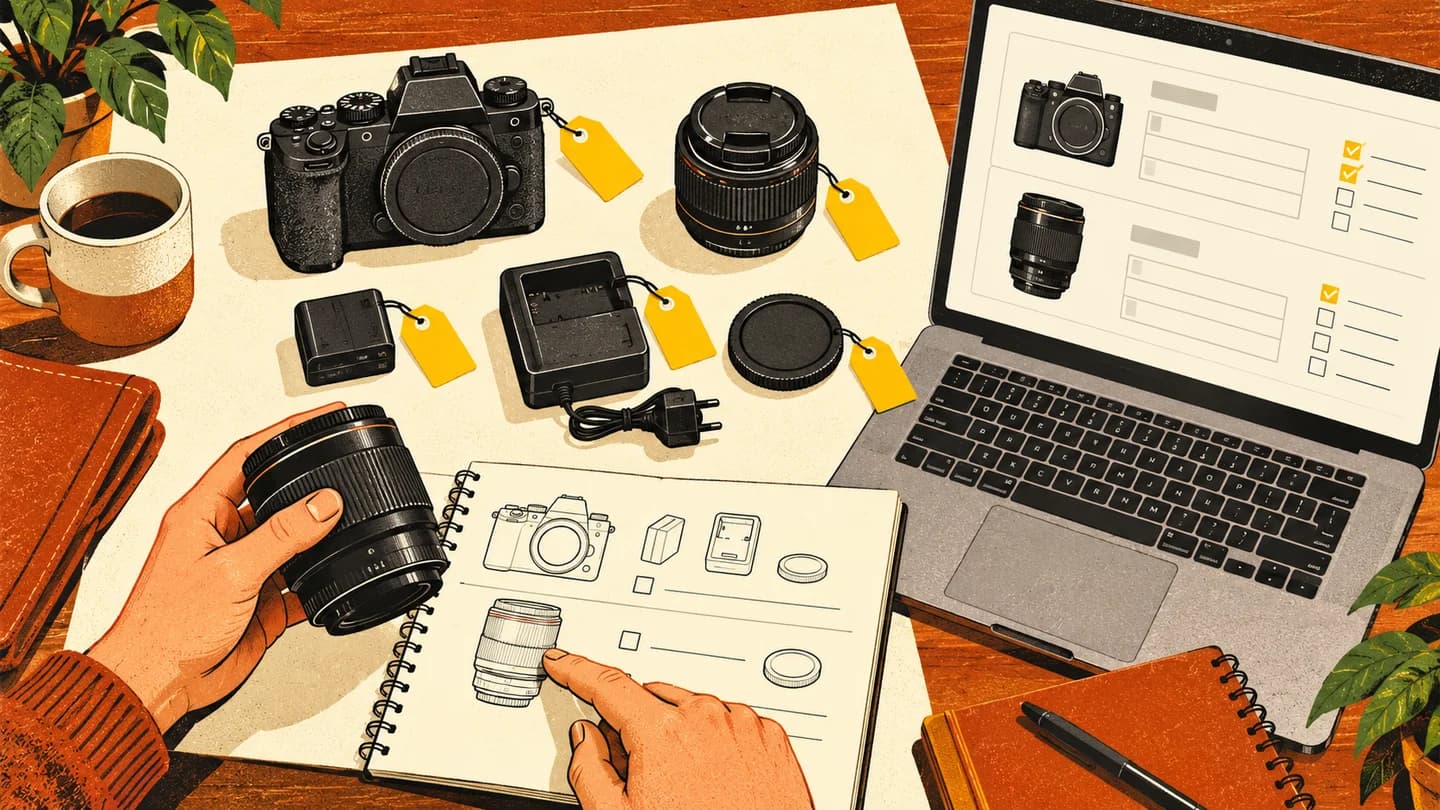
- Camera body: manufacturer, full model designation and any relevant regional variation.
- Lens: maker, focal length, maximum aperture, mount and version.
- Included battery, charger, front and rear caps, hood and other accessories.
- Visible damage, known repairs, functional problems and untested features.
- Purchase price, seller details available to you and a record of the transaction.
Do not buy the wrong version at the right price
A lens name can look almost identical across different mounts or generations. Third-party lenses make this particularly easy to miss. An adapter in the bag does not change the native lens mount, and a case bearing one model name does not establish what is inside it. Read the equipment itself.
If you cannot resolve the identity while viewing the item, pause the calculation. A quote for a newer version cannot support buying an older one. Likewise, do not add an imagined premium because an accessory looks expensive. Identify it, check it works where practical and establish whether your intended buyer wants it.
Get an actual buying quote
Check the current MPB selling service for the precise model and describe the equipment accurately. An initial quote remains subject to assessment. Save the details that produced the figure so you know which condition and contents it assumed. If an important fault or eligibility question is unresolved, ask before relying on the amount.
Treat a previous sale of the same model as background experience rather than a standing offer. Demand, condition and the terms of a particular transaction can differ. An app valuation can help you research a find, but it cannot commit MPB to purchase it.
Inspect before treating the margin as real
Use the correct equipment and stay within your ability.
- Check the body, mount, screen, battery compartment and accessible controls for visible problems.
- Inspect lens markings, exterior and accessible glass in suitable light without disassembly.
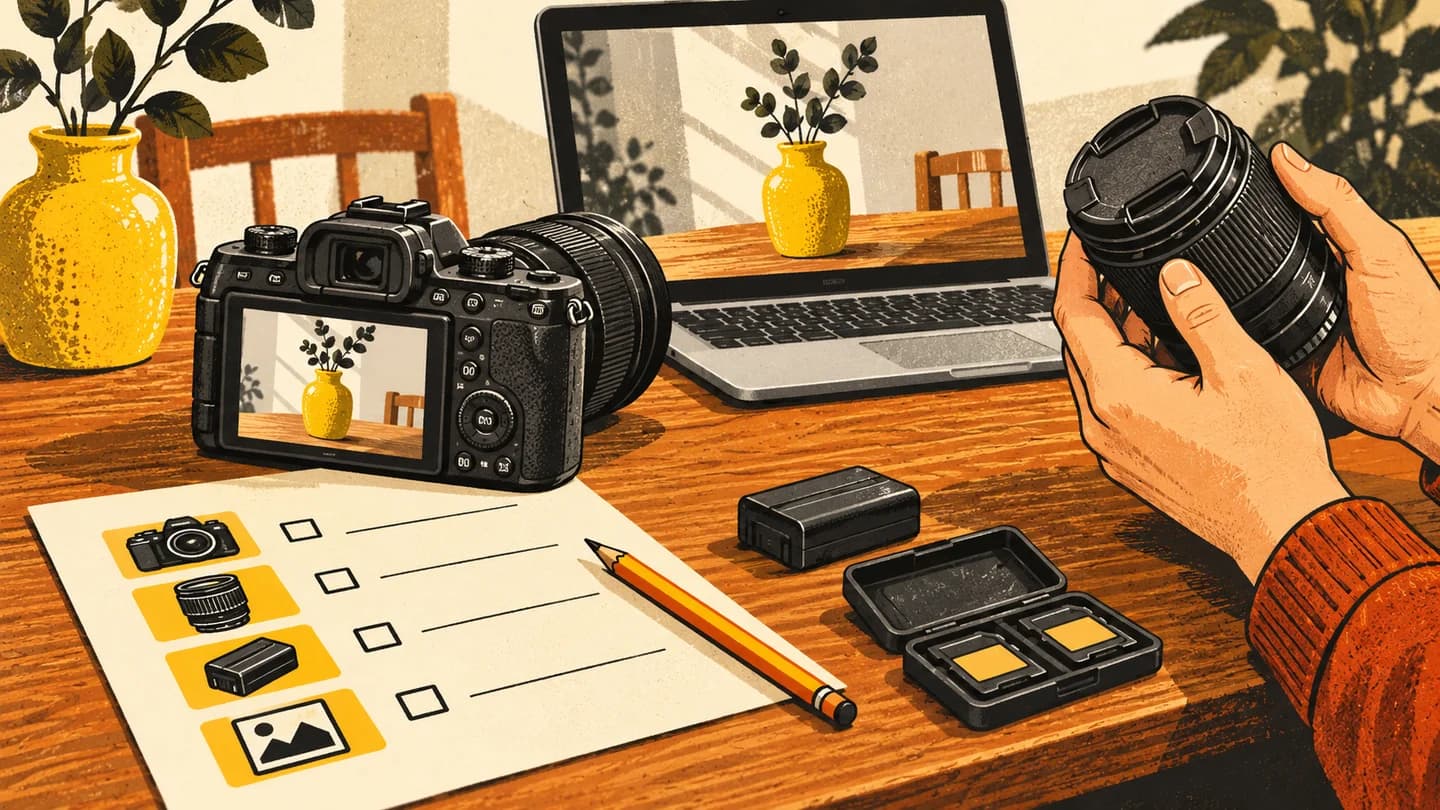
- Use a compatible battery, lens and memory card to take and review sample images where possible.
- Try the relevant controls and autofocus, recording what you actually checked.
- List anything that remains untested, missing or uncertain.
- Decide whether those uncertainties need a specialist assessment before buying.
Untested is a condition of your knowledge
Work backwards to a maximum purchase price
The figures below are invented to demonstrate the calculation. They are not MPB quotes, current charges or a prediction of profit. Replace each line with your own evidence.
| Item | Amount |
|---|---|
| Cautious expected proceeds | £240 |
| Travel allocated to this purchase | −£8 |
| Packing and preparation | −£12 |
| Allowance for uncertainty | −£25 |
| Desired contribution before tax and your time | −£45 |
| Maximum purchase price | £150 |
Understand what the allowance does
The £25 allowance is money you have chosen not to spend on stock because the outcome is uncertain. It is not a real expense unless something consumes it, and it does not guarantee a loss cannot exceed £25. If you pay £150 and all goes exactly to the base assumptions, the unused allowance remains in your result.
Now change the proceeds to £190. With the same £150 purchase and £20 travel/preparation, only £20 remains before other costs and time. That is a useful stress test: a modest-looking quote reduction can take a large share of the expected return. If a hidden fault could make the equipment unacceptable, examine that scenario separately rather than assuming a small reduction covers it.
Cost missing parts before buying them
A missing charger might be easy to replace, but verify the exact compatible part and its delivered cost. Do not buy a cheap unfamiliar power supply simply to make a bundle look complete. Ask whether the proposed replacement changes the quote enough to justify the purchase.
The same logic applies to caps, hoods and cleaning. A £15 accessory that raises proceeds by £5 reduces your result by £10. Some preparation is necessary for safe handling or an accurate test; other preparation is optional. Separate the two so an apparently cheap camera does not accumulate a drawer of unrecovered expenses.
Treat a bundle as several decisions
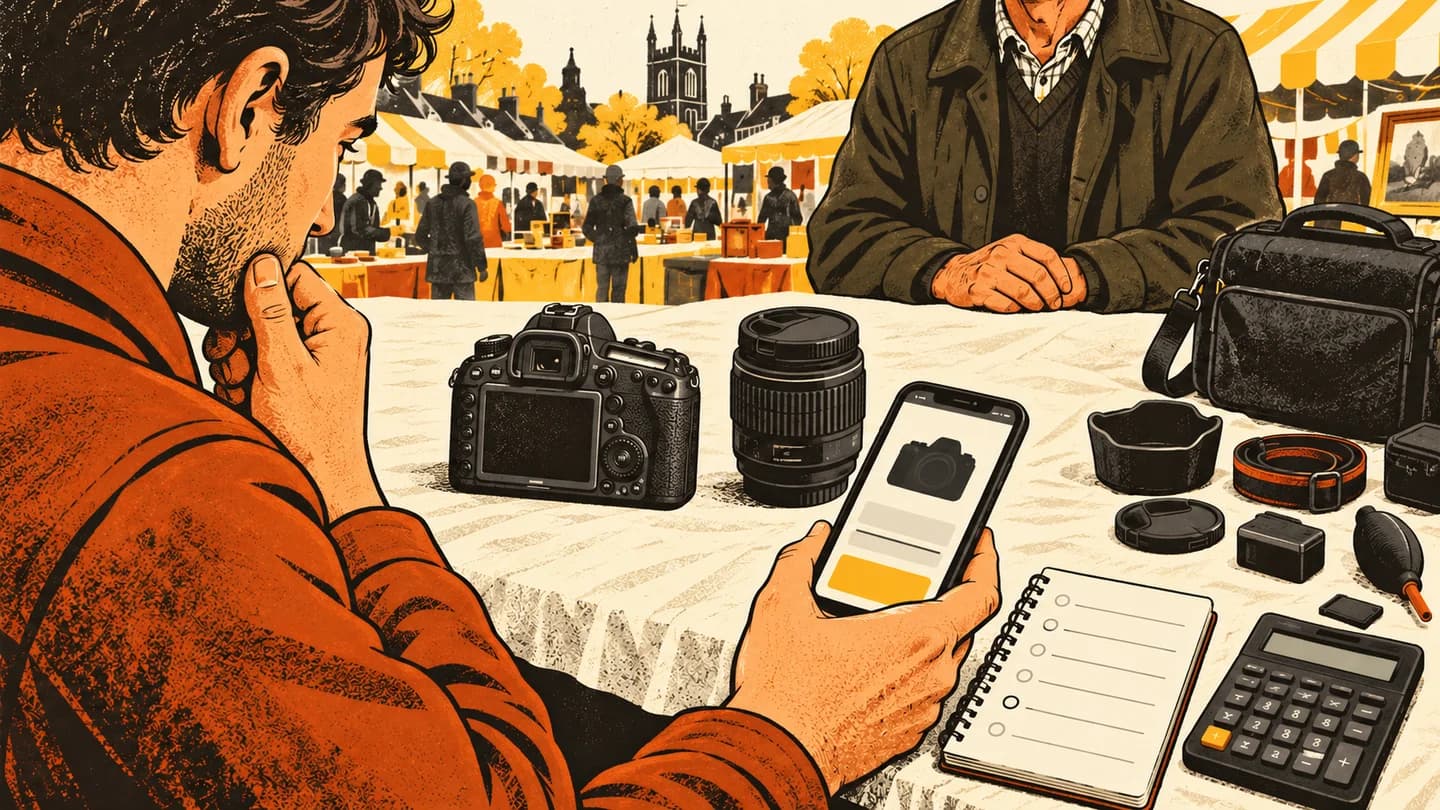
Camera bags often contain a valuable main item and extras with very different sale prospects. Write down each component, its conservative route to sale and its costs. Avoid valuing every small accessory at the highest individual marketplace asking price. Selling ten low-value pieces can require more work than the camera itself.
If only the lens supports the purchase price, assess the bundle on that basis. You can regard the remaining items as potential upside without counting them as money already earned. Conversely, do not discard unfamiliar accessories before checking them: the discipline is to identify their value, not assume either that everything is treasure or that everything is worthless.
Reasons to leave a camera on the stall
Walking away protects the buying budget for a clearer opportunity.
- The model or mount remains uncertain and the seller will not allow a proper check.
- The expected buyer has not confirmed acceptance of the actual condition.
- The margin depends on an unexplained repair being cheap.
- The seller cannot give a credible account of ownership.
- The purchase ties up money you need before inspection and payment could reasonably complete.
- Only the best possible outcome produces a worthwhile result.
Use completed deals to improve the next offer
After selling, record the final accepted amount, every cost, the original condition assumptions and the time spent. Keep unsuccessful purchases in the same record. A profitable lens and a faulty body bought in the same month belong in one honest assessment of your camera buying.
Start with equipment you can identify and test confidently. As your records grow, you may find that a particular model family or price range suits your knowledge and budget. That evidence is a better foundation than a rule that any camera below a certain price must be worth buying. The repeatable advantage is careful selection, not the MPB name alone.