Prepare the exact model, condition and accessories before requesting a quote for camera equipment.
A useful quote starts with a precise description
An MPB quote helps you evaluate selling photo or video equipment directly to a specialist buyer. To make it useful, you need to know exactly what you are offering and how accurately you can describe its condition. A number generated for a similar model or a more complete package can send your decision in the wrong direction.
Prepare the equipment information before beginning the quote request. You will make fewer guesses, spot missing accessories earlier and have a clear record if the assessment later differs. This guide focuses on the decisions around a quote rather than promising that every camera or lens will be accepted.
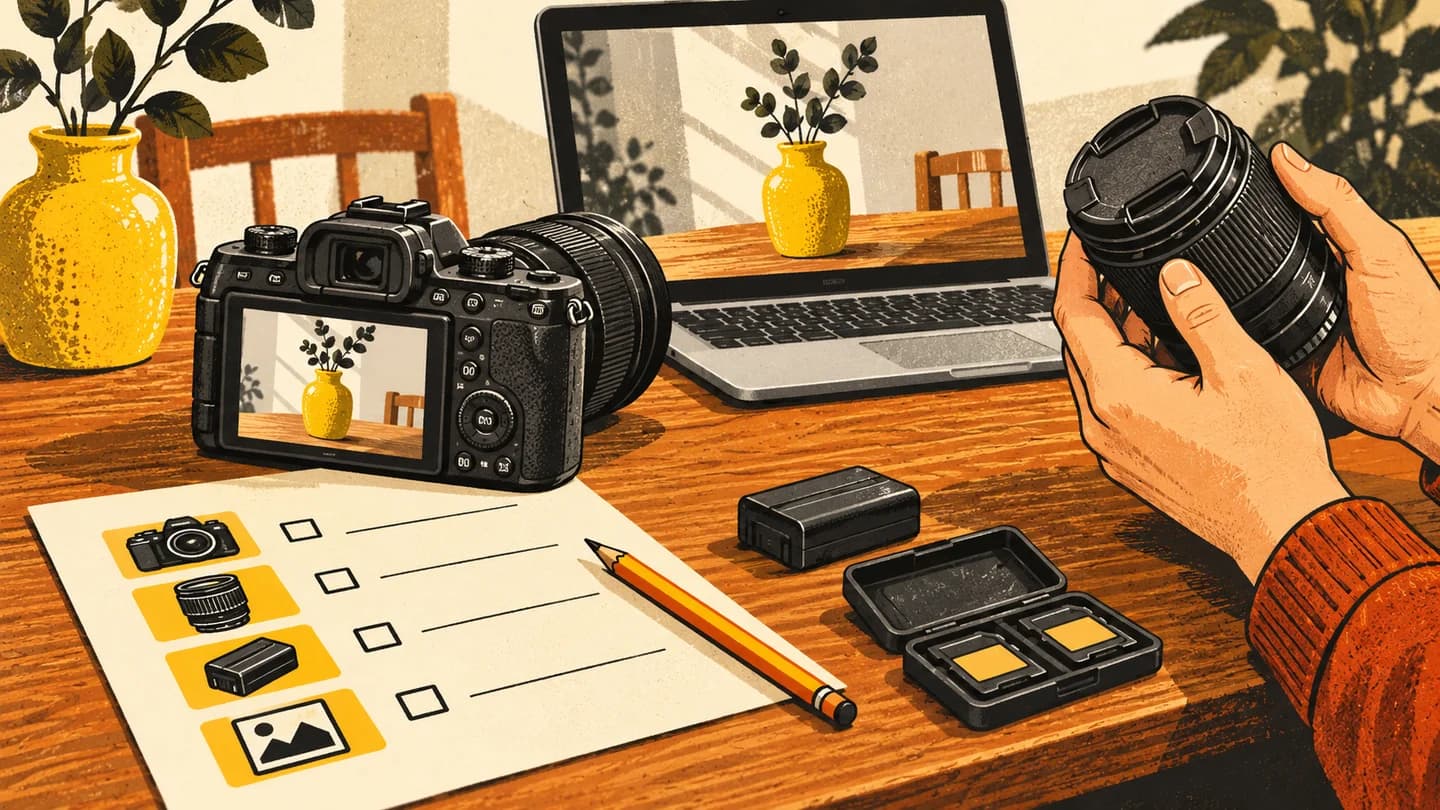
Gather these details first
Create one small record per item, even if you plan to send a whole kit together.
- The full model name as written on the equipment.
- For lenses, the native mount, focal length, aperture and version.
- Clear photographs of identification markings and overall condition.
- The accessories actually included, distinguishing original and replacement items where known.
- Known faults, repair history and tests you have performed.
- Your own serial-number record and purchase information where available.
Read the item rather than its box
A camera may have been stored in a different model’s box. A lens may have been sold with an adapter or a replacement cap that carries another brand. Treat packaging and loose accessories as clues, then confirm the identity from the equipment and reliable product information.
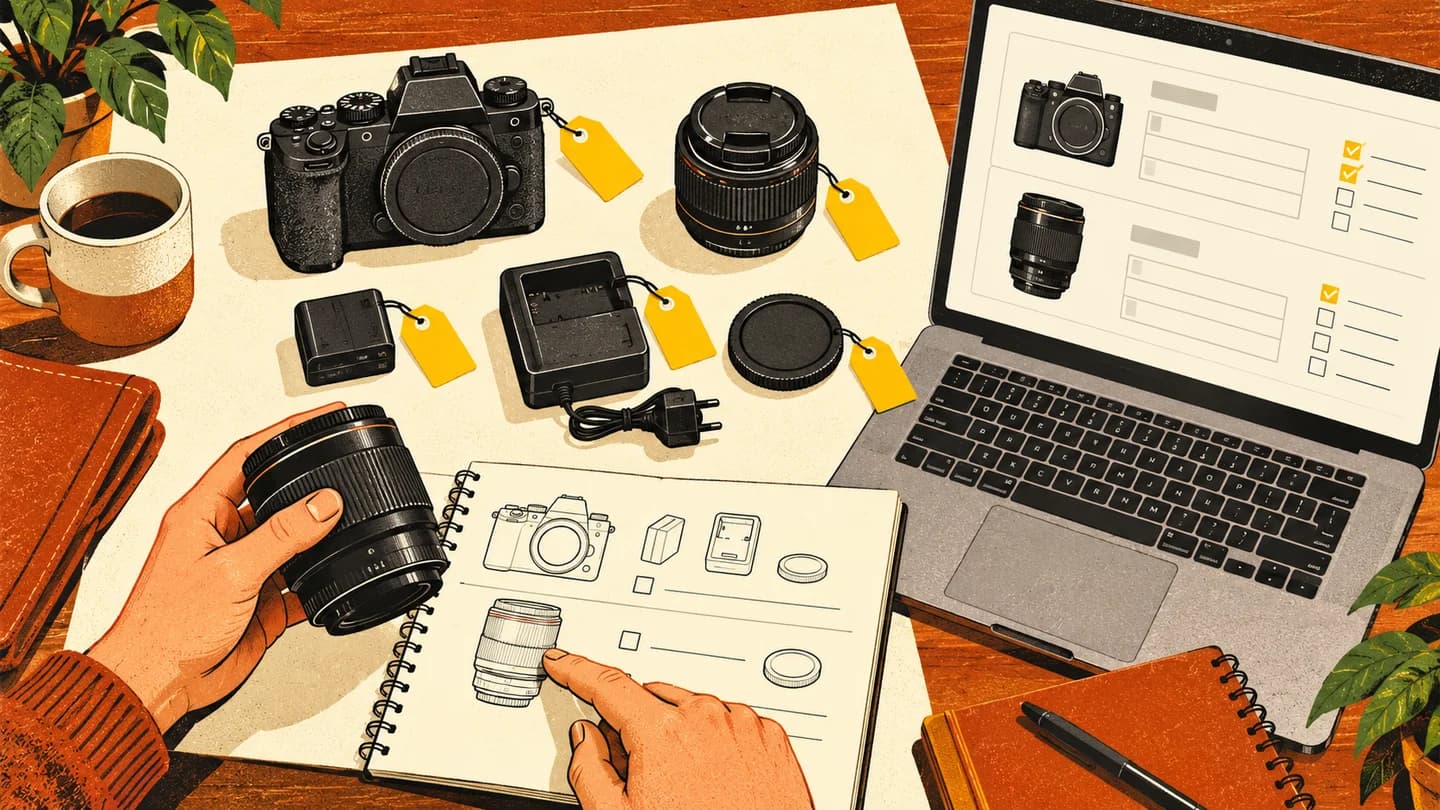
If you own two versions of the same lens, give them separate references immediately. A photograph of each serial label beside your stock reference can prevent accidentally sending the better example against the lower-condition quote. Keep private ownership records secure; you do not need to publish them to every prospective buyer to stay organised.
Request the quote in a deliberate order
Follow the current MPB selling flow, checking your selections before submission.
- Search for the exact equipment and confirm the matching model or ask for help if it is unclear.
- Read the condition guidance and choose the description supported by the actual item.
- Provide the requested information about faults and contents accurately.
- Review the equipment list, quantities and your contact details.
- Save the quote reference, amount and any applicable timing or dispatch instructions.
- Read the assessment and completion terms before arranging the next step.
Keep appearance and function separate in your notes
Cosmetic wear and operating condition answer different questions. A camera can look tidy but have an intermittent control. A heavily worn lens can still produce satisfactory pictures. Record both categories instead of using one broad phrase such as “good for its age”.
For appearance, describe what you see and where: rubbed edges, a scratched screen or a missing rubber cover. For operation, describe the test and result: a sample image recorded successfully, a control that did not respond, or a feature you could not assess. Those observations are more useful than an unsupported claim that everything works perfectly.
Do not improve the description to improve the number
Check the accessory assumptions
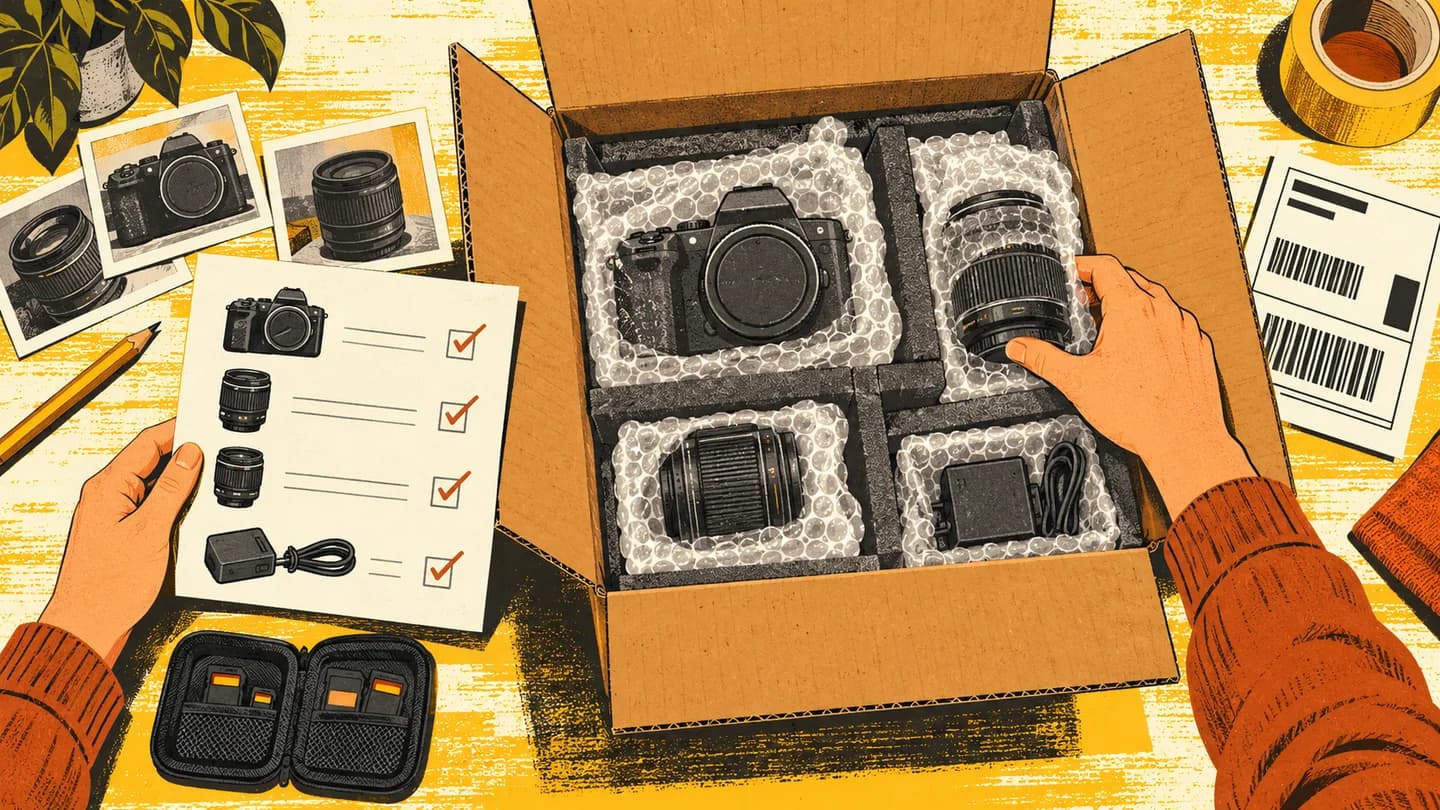
Lay out the battery, charging equipment, caps, hood and other parts you intend to include. Compare this list with the quote requirements. A battery in a camera bag is not necessarily compatible, and an empty charger box does not make the kit complete.
If something is missing, establish the effect before buying a replacement. Ask a specific question: “This body has the correct battery but no charger; is the quote based on those contents?” A precise contents question is easier to resolve than a general request for the best possible offer. Keep the answer with the transaction record.
Give uncertainty its own line
You may not have the compatible body needed to test a lens or the right cable to check an output. Write “not tested” beside that function and explain why if it matters. Do not turn a lack of evidence into a fault diagnosis, but do not silently turn it into a successful test either.
For valuable equipment, consider whether a competent assessment is worth arranging before deciding. You are buying information about the item, not merely chasing a better cosmetic label. If the cost of assessment exceeds any plausible difference between sale routes, it may be more sensible to describe the uncertainty and ask what options are available.
Make your comparison sheet useful
Keep the figures for the same equipment and contents on one page. This avoids comparing a body-only quote with an optimistic retail kit price.
| Field | What to record |
|---|---|
| Identity | Exact model, version and your stock reference |
| Condition basis | Observed wear, tests, faults and unknowns |
| Contents | Only the accessories you will actually send |
| Quote | Amount, reference and date |
| Costs | Any preparation or transaction costs relevant to you |
| Alternative | Realistic net proceeds from another available route |
Compare proceeds before choosing a route
Suppose, purely as an example, your direct quote is £160 and a realistic marketplace sale might bring £195. If packing, delivery and selling costs total £25, the marketplace leaves £170 before acquisition cost. You are deciding whether the additional £10 justifies creating and managing that sale.
Change the numbers to match your situation rather than borrowing them as a typical margin. If you bought the equipment specifically to resell, subtract that purchase cost from both routes. If you already own it, the historical price is useful for your records but does not establish what another buyer will pay today.
A quote and a completed sale are different stages
Plan around the equipment being checked rather than treating the first figure as money already received. Leave room in your schedule for dispatch, receipt, assessment and completion. Read the live instructions for the actual timing and steps; a previous transaction is not a guarantee for this one.
If an assessment changes the offer, compare the explanation with your records. Ask for clarification where necessary and review the available options under the current terms. Keep the discussion factual: identify the item, the condition point and the information you want explained. An organised record is more helpful than arguing from a remembered description.
Know what happens if the inspection changes the quote
Under MPB’s UK terms, an adjusted quote is sent by email for you to accept or reject. If you reject it, the products are returned free of charge under that process, although a failed delivery for which you are responsible can incur shipping costs. Unquoted extras may not be returned, so keep unrelated accessories out of the parcel.
Before deciding, read the explanation for each affected item and compare it with your record. A lower amount caused by a confirmed fault also changes what you can honestly ask elsewhere. Resolve questions before accepting the revised terms rather than treating acceptance as a temporary step while you continue negotiating.
Before accepting the next step
Use this short check to make sure the quote supports your decision.
- Confirm the model and contents still match what you intend to send.
- Resolve material eligibility, condition or accessory questions.
- Check that the quote and dispatch instructions remain current.
- Compare the likely net outcome with your alternative route.
- Keep personal memory cards and unrelated equipment out of the parcel.
- Save the final transaction details so you can reconcile the outcome.
Use the quote as evidence
The best quote is not necessarily the highest number you can generate by changing selections. It is a credible offer process for the equipment you actually have. With accurate identity, clear condition notes and a costed alternative, you can choose whether to proceed without relying on hopeful assumptions.