Put accurate identifying information first and use the language a buyer would search.
A good title identifies the item before it sells the idea
An eBay title has a practical job: help the right buyer recognise the item and decide whether to open the listing. “Amazing bargain, must see” uses space without explaining what is for sale. An accurate model, size or edition can answer a buying question in a few words.
eBay allows up to eighty characters in a listing title. Use that space for relevant information, but do not fill it with repetition just to reach the limit. The strongest title is specific enough to distinguish your item and readable enough for a buyer scanning search results on a phone.
Write the facts before writing the headline
Build a short fact sheet from the item itself. This prevents a convincing title from getting ahead of the evidence.
- Read the maker’s label and record the exact model, including significant letters and numbers. Check the physical item rather than trusting its box.
- Identify the ordinary item name a buyer would use: camera body, amplifier, cardigan, paperback or replacement lid.
- Record the specification that affects the purchase, such as capacity, mount, labelled size, material or edition.
- List important included accessories and significant limitations. Decide which must be obvious before the buyer opens the listing.
- Draft a plain title, check it against the photographs and condition field, then use eBay’s character counter to remove lower-value wording if necessary.
A flexible title structure
A useful starting order is brand or maker, model, item type, distinguishing specification, then a key inclusion or condition qualifier. Adjust that order for the category. A book may need its title and author first; an unbranded object needs its type and verified characteristics.
Identity
Name what the object actually is. Exact model codes, book titles and maker names can be more useful than a string of broad style words.
Purchase-critical detail
Include the specification a buyer needs to select the right version: size, capacity, mount, edition or another meaningful distinction.
Scope and limitations
Make body-only, incomplete, faulty or parts-only status clear when it changes the sale. Do not let an accessory photograph imply a complete product.
Before and after: useful title examples
These are writing examples, not claims about particular items. Use a detail only after verifying it on your own stock. The improved titles fit within the eighty-character limit without needing filler.
| Weak title | Clearer title | Why it helps |
|---|---|---|
| Lovely Nikon Camera Great Deal | Nikon D3300 DSLR Camera Body with Battery - Tested | Identifies the model, body-only scope and included battery |
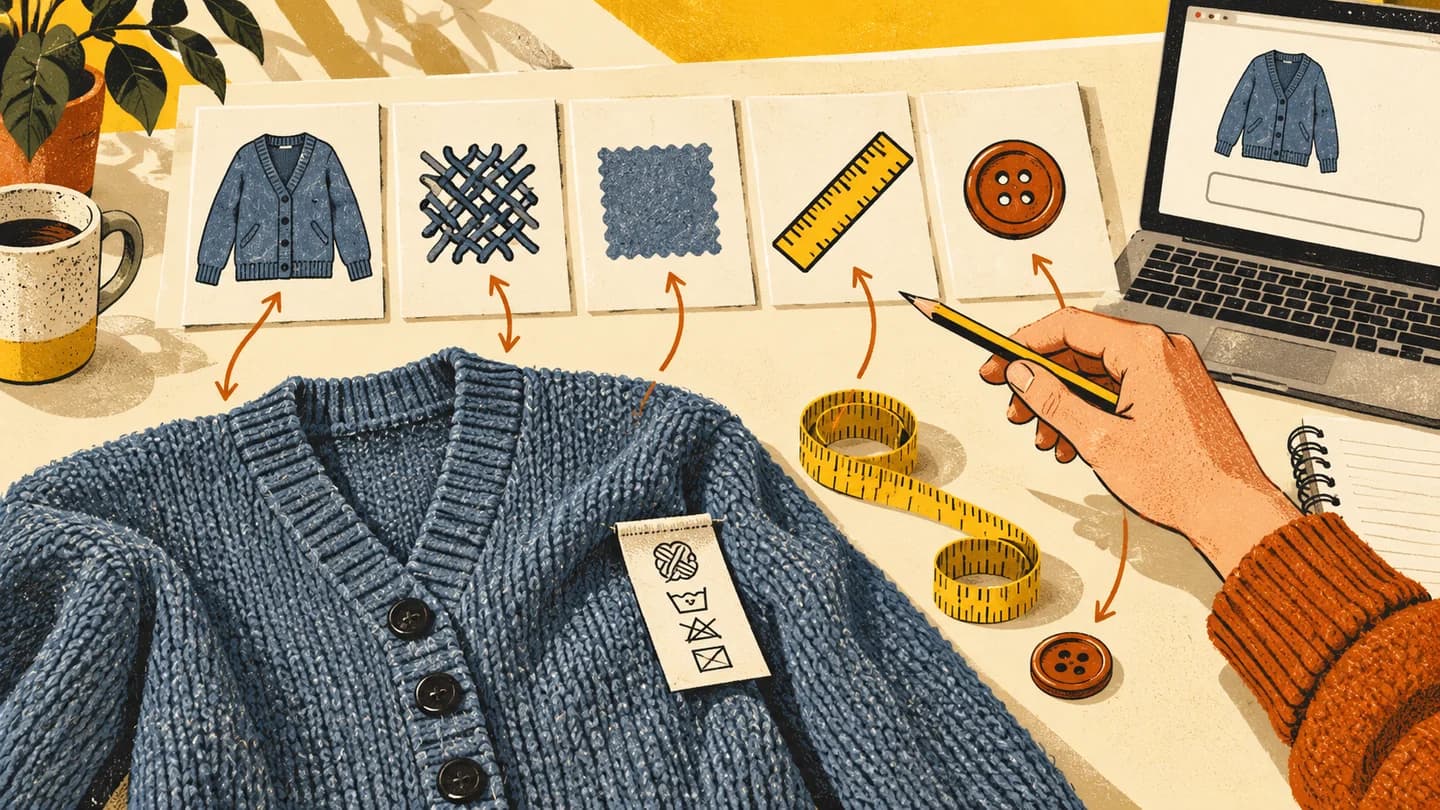
| Nice Blue Jumper Bargain | Wool Cardigan Blue Size M Button Front | Describes the item, material, colour, labelled size and fastening |
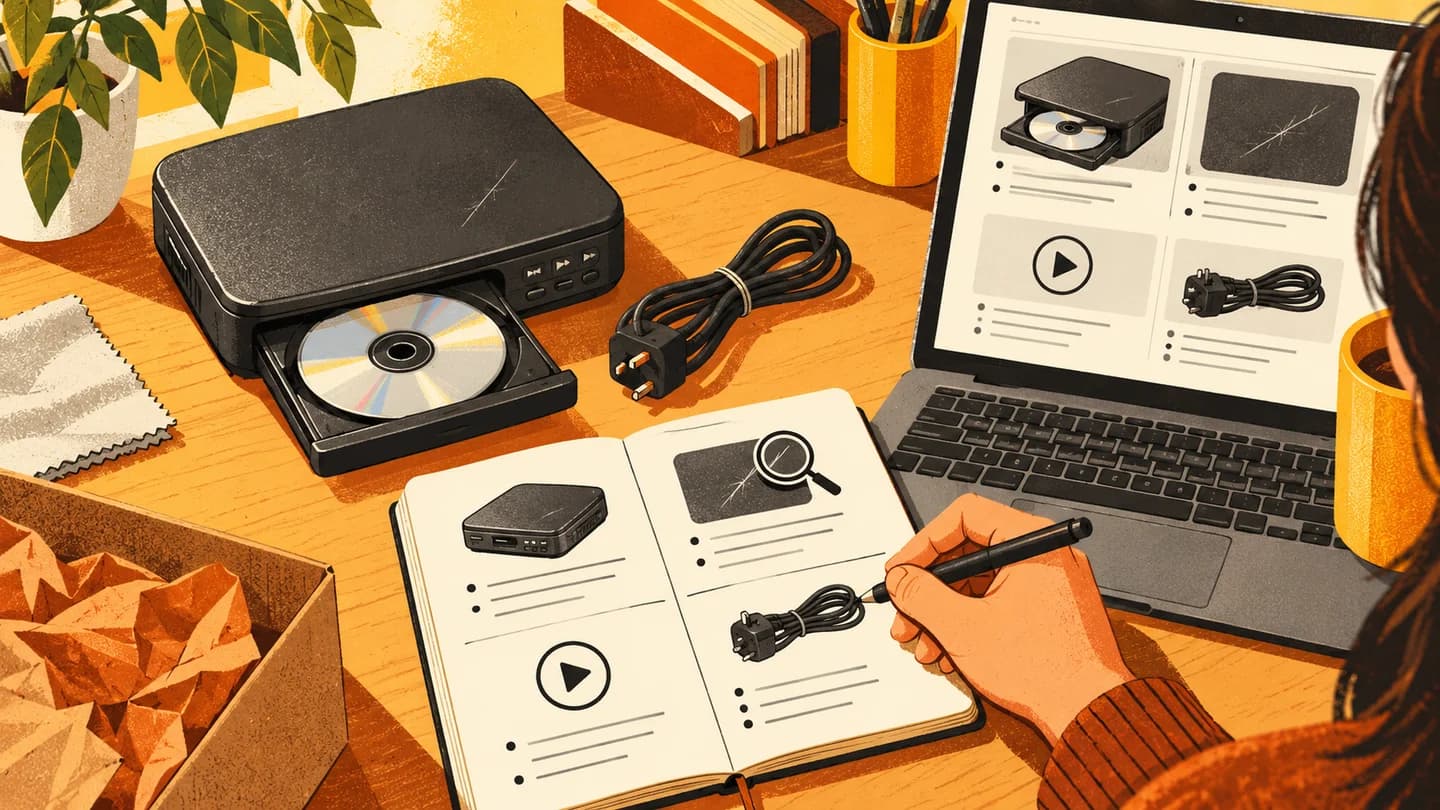
| Old Console Rare Collectable | Nintendo Wii Console White - Disc Read Fault - Console Only | States the product and the significant fault before purchase |
| Camera Lens Excellent | Canon EF 50mm f/1.8 II Lens with Front and Rear Caps | Distinguishes the version and names the included caps |
| Book Bundle Must See | Railway History Paperback Books - Job Lot of 6 | States the subject, format and actual quantity |
Put distinguishing words early
Search layouts vary, and a buyer may see only part of the title before opening the result. Put the product identity and essential qualification ahead of decorative wording. If the item is faulty or only one component of a larger product, do not bury that fact after a long list of less important terms.
There is no universal word order that guarantees a higher position. The practical test is whether someone can recognise your exact offer quickly. For a camera body, the model and “body” matter. For clothing, the garment type and size may matter more than the seller’s opinion that it is beautiful. Read your first few words in isolation and ask what a buyer would assume.
Choose language from buyers without copying sellers
Search the ordinary name of the item and inspect genuinely comparable listings. Look for recurring factual terminology: a recognised product family, a common garment name or the correct term for a component. Manufacturer documentation can resolve a model or feature; sold listings can reveal language buyers are likely to recognise.
Do not copy an entire title without checking it. Another seller may have identified the wrong edition, confused compatible and original parts, or described a synthetic fabric as wool. Build your own title from verified facts. A typo copied across ten listings is still a typo, and popularity does not turn an unsupported claim into evidence.
Make compatibility clear without borrowing a brand identity
An original branded accessory and a third-party accessory made for that brand are different products. Where relevant and permitted, wording such as “for” or “compatible with” should come before the compatible product name so the title does not imply that its manufacturer made the accessory. State the accessory’s own brand accurately if known.
Check compatibility from reliable specifications or appropriate testing, rather than guessing from a similar connector. eBay’s policy has category-specific restrictions, including clothing, jewellery and universally compatible items, and vehicle parts have their own compatibility tools. Do not apply a generic “for Brand X” formula to every category or add a list of unrelated brands for visibility.
Remove words that make the title less trustworthy
Every claim should help identify the actual item.
- Remove “rare” unless you can support the scarcity claim; it is not a substitute for an edition or model number.
- Remove unrelated brands, competing products and speculative names followed by question marks. Uncertainty belongs in your research, not in misleading search keywords.
- Replace “fully tested” with an honest claim you can substantiate. A power-on check alone does not demonstrate every function.
- Avoid repeating the same noun in singular and plural forms while omitting a useful size or specification.
- Remove decorative symbols and breathless sales language if they crowd out facts. Clear punctuation is useful; visual noise is not.
Keep condition claims consistent across the listing
The title, selected condition, photographs and description should describe the same object. If the title says “working” but the description says the disc drive is untested, the buyer has to resolve a contradiction. Change the claim or complete an appropriate test before publishing. A disclaimer at the bottom does not make the headline accurate.
Use the description to explain test scope and defects in detail. The title need not list every small mark, but it should flag a major limitation that changes what someone is buying. “Console only” is useful when leads and controllers are absent; the description should then enumerate the contents and exclusions so there is no ambiguity.
Shorten a long title in the right order
When the draft exceeds eighty characters, remove opinions and repeated ideas first. Next remove details that are already obvious and less important than the version or condition. Keep the exact model and purchase-critical information. If you abbreviate, use terms that your target buyer is likely to understand rather than inventing a compressed code.
For example, “Gorgeous Excellent Quality Blue Wool Button Front Cardigan Medium Size M” repeats the size and spends space on opinions. “Wool Cardigan Blue Size M Button Front” preserves useful information. If the label shows a blend rather than pure wool, revise that wording too. Saving characters must never remove a qualification that makes the claim true.
A title works with item specifics and photographs
The title is one part of discovery. Complete accurate item specifics so buyers using category filters can understand the offer. Use the correct category, show the actual item clearly and describe it properly. A carefully written headline cannot compensate for an incorrect mount field or a first photo showing a different version.
Also check what the main image implies. A camera beside several lenses may look like a complete kit even if the title says body only. Photograph included items clearly and explain any display props where needed. The buyer should not have to choose between believing the picture and believing the words.
AI can draft a title, but it cannot verify your stock
Review performance without chasing a magic keyword
After publishing, check that the listing presents correctly and allow a sensible observation period for the category. If views are low, review the item identity, category and specifics before assuming a cleverer adjective will help. If people open the listing but do not buy, compare price, condition, delivery and competing stock as well.
Record meaningful title changes and their dates. A later sale does not prove the wording caused it; price, seasonality and new buyer arrivals may have changed too. Over time, a consistent approach makes listing faster: factual identity first, relevant distinguishing details next, clear limitations throughout. That helps the right buyer find the right item and reduces avoidable misunderstandings.