Price the packed parcel and the required service before setting the buyer’s delivery charge.
Price the parcel you will actually send
Postage mistakes often start before the item is listed. A seller weighs the bare object, guesses a box size and chooses the cheapest-looking service. Once the item is protected, the parcel may fall into a different band or exceed a carrier’s limits. The extra cost then comes out of a margin that already looked settled.
Build the delivery plan while you still have control over the listing. Establish the packed dimensions and weight, the permitted contents, the service you can use and who pays for the label. A correct postage figure is part of the buying decision, especially for heavy, fragile or low-value stock.
First identify which delivery arrangement applies
The options shown in your listing depend on your account, item and programme eligibility. Do not assume every seller can set postage in the same way.
Seller-arranged postage
You select an available service and set the delivery offer, subject to the listing tools and policies. Budget the actual label, packaging and any relevant extras before choosing the charge.
Simple Delivery
Eligible private UK listings use eBay’s delivery programme, with a recommended parcel size and a supplied label after sale. Check and correct the size where needed; do not buy a second label by habit.
Collection or specialist delivery
For unsuitable parcels, a permitted collection or specialist transport arrangement may be more practical. Confirm the listing options, handling requirements and evidence needed for the chosen route.
Measure before choosing a service
A finished sample parcel is the strongest basis for the calculation. For repeated stock, keep a verified packing specification.
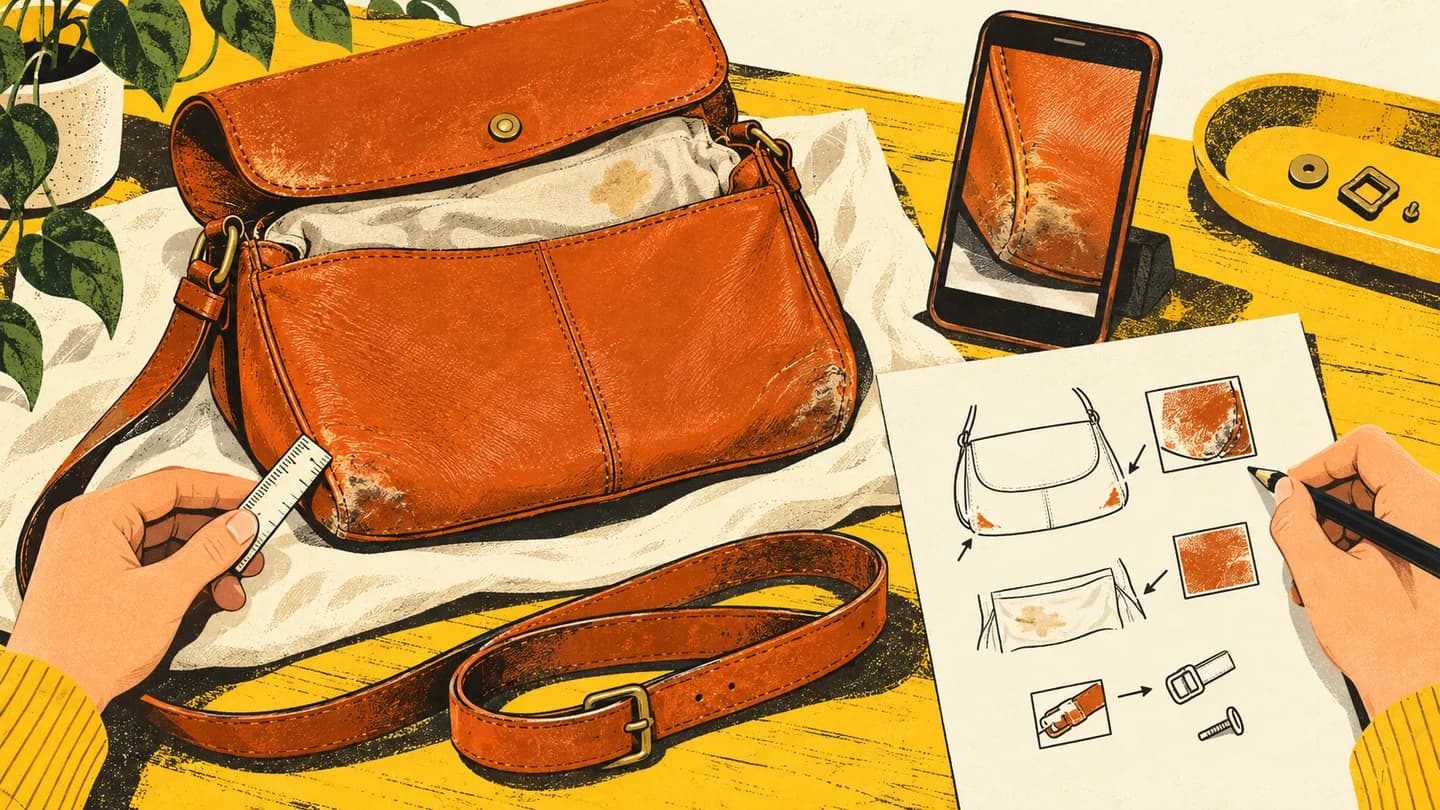
- Inspect the object and identify vulnerable parts, detachable accessories and any restricted contents such as batteries or liquids.
- Choose suitable packaging and include everything that will travel with the item. Do not sacrifice protection to fit a cheaper band.
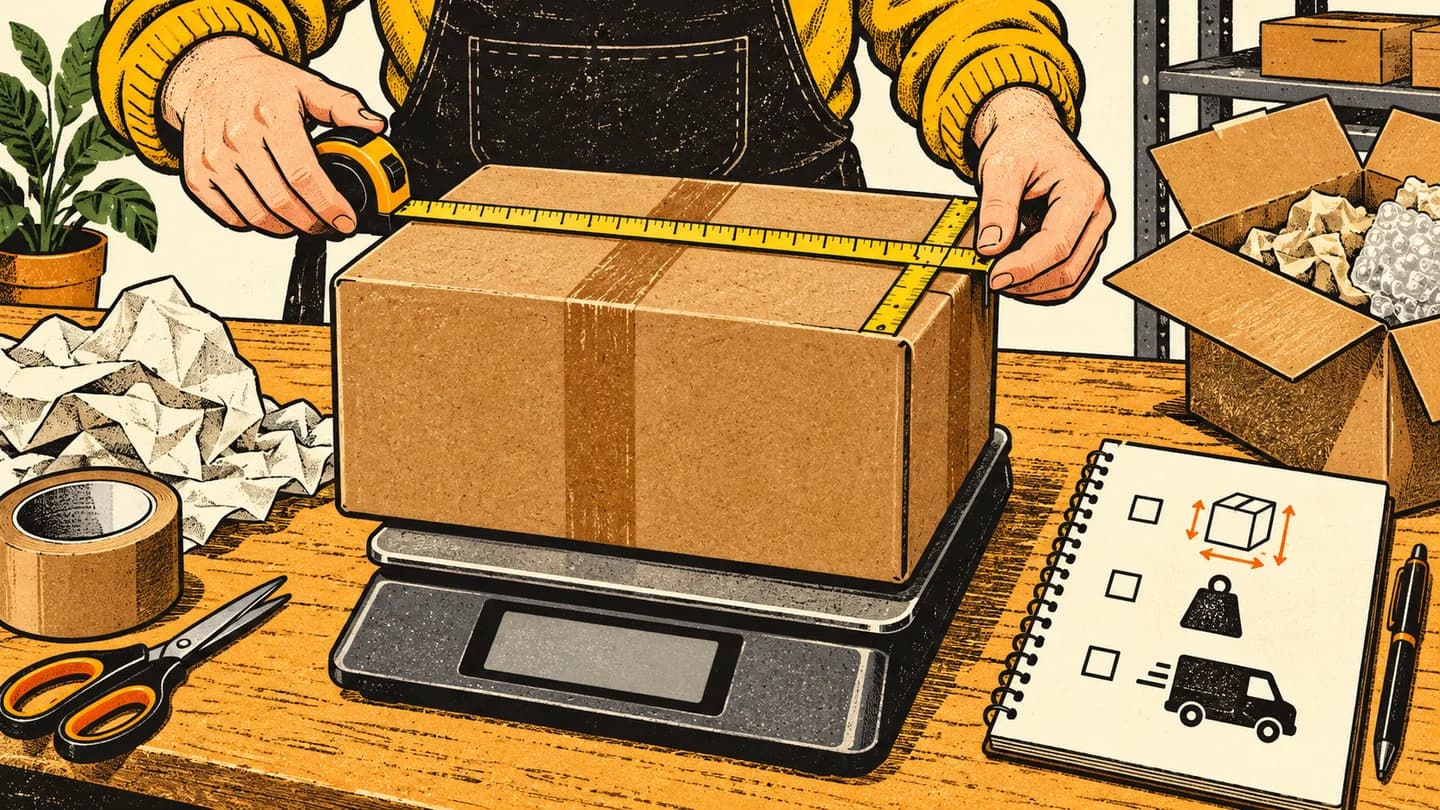
- Weigh the complete package, including the box, padding, tape and accessories. Use scales suitable for the weight and check their zero reading.
- Measure the outside at its widest points, including bulges or protrusions. Record length, width and depth with units.
- Check the chosen service’s size, weight, content, destination and compensation rules. Check the booking channel too, as options can differ.
- Enter the correct parcel details and an achievable handling time. Review the final listing rather than relying on an automatic suggestion.
Both dimensions and weight matter
A light parcel can be too large for a small-parcel service, while a compact one can be too heavy. All the relevant limits must be met. Measure the outer package rather than the manufacturer’s product dimensions or the nominal size printed on an empty box. Packing can change the finished shape.
As a concrete UK example, Royal Mail’s published small-parcel limits are 45 cm by 35 cm by 16 cm and up to 2 kg. Check the current requirements for the exact service you are booking. A box that passes the weight limit but exceeds one dimension does not become a small parcel because the other dimensions are comfortably below their limits.
A packing calculation that changes the service
This example uses invented stock and packaging weights to show why weighing the bare item is insufficient. It is not a postage quote.
| Component | Weight |
|---|---|
| Used item with included accessories | 1.85 kg |
| Suitable box | 0.22 kg |
| Protective material and tape | 0.09 kg |
| Finished parcel | 2.16 kg |
Do not squeeze the example into the wrong band
At 2.16 kg, the example exceeds a 2 kg limit even if its dimensions otherwise fit. Select an appropriate service rather than rounding down. If you can use a lighter but equally protective box, reweigh the completed alternative. Removing necessary cushioning to save postage can turn a small cost problem into a damaged order.
A separate parcel measuring 46 cm by 32 cm by 15 cm would exceed the example small-parcel length limit despite fitting the other dimensions. Check the three measurements and weight independently. Keep a modest practical margin where packaging can bulge, rather than relying on a measurement taken with the box compressed.
Check restrictions before you promise delivery
Carriers can distinguish between prohibited contents, restricted contents and items they carry without particular compensation cover. Those are different rules. A service accepting a parcel at a counter does not prove that every item inside is eligible for compensation or that the packaging meets its conditions.
Batteries, perfumes, aerosols, liquids and fragile goods require particular attention. The rules can depend on type, condition, quantity, whether a battery is installed and the destination. Check the current service-specific guidance before listing. Do not assume that because a similar item arrived through a carrier, your own shipment is permitted under the same conditions.
Match protection to the actual sale
Tracking, signatures, delivery speed and compensation are separate features. A tracked service may provide useful delivery events without covering the full value of your item or every kind of damage. Read the cover, exclusions, evidence requirements and packaging conditions for the booking you intend to use.
For expensive or unusually fragile items, compare suitable specialist services or a collection route before committing. Extra packaging and an appropriate service belong in the original margin calculation. A “fragile” label can communicate handling needs, but it does not strengthen a weak box or override a compensation exclusion.
Understand who pays for a Simple Delivery label
For an eligible Simple Delivery listing, check the recommended parcel size against the packed item. Recommendations are a starting point, not a measurement of the object on your table. Review the available size options and correct a mismatch before the item sells wherever possible.
The listing’s “Who pays?” setting determines whether the buyer pays the delivery charge or you offer delivery at your cost. After sale, use the supplied label or QR-code workflow shown on the order. Do not count a buyer-paid programme label as income you receive, and do not assume that buying a separate label will refund the programme charge. Follow the current order guidance if there is a problem.
When you arrange postage yourself, compare the whole job
The cheapest headline label is not always the cheapest workable fulfilment plan.
- Include the label price for the correct destination and parcel, with any applicable surcharge or service option.
- Budget packaging materials and preparation. Charging the buyer only the label price does not make the box free.
- Check drop-off or collection availability, opening hours and whether the parcel fits the chosen locker or location.
- Allow for the journey or collection arrangements you actually need. A distant drop-off can consume the saving from a cheaper service.
- Use a suitable tracked service and the correct carrier information where needed for eBay’s delivery evidence requirements. Keep proof of handover as well as the label purchase.
Free delivery changes presentation, not the expense
For seller-arranged postage, £30 for an item plus £5 delivery and £35 with delivery included can produce the same buyer total before other applicable charges. The label and packaging still need paying in either case. Compare your proceeds after the relevant selling charges instead of assuming “free delivery” creates or destroys a fixed amount of profit.
If you accept offers, calculate the outcome using the actual delivery arrangement. A lower item price with postage included reduces the money available to cover that label. Do not evaluate only the discount percentage. The useful number is what remains after stock, charges, preparation and fulfilment.
Set a handling promise you can keep
Handling time is the time you need to dispatch, not the carrier’s entire journey. Consider when you can pack, print or obtain a label, and hand the parcel over. Buying a label at home is not the same event as the carrier receiving the parcel.
Choose an available service whose description matches what you will use. If you offer a faster option, know its extra cost and practical cut-off before a buyer selects it. Do not advertise a next-day outcome merely because you plan to visit the parcel shop tomorrow. Delivery estimates depend on the service and other factors as well as your handling time.
Do not improvise a new address from a buyer message
Finish the order with accurate records
Before dispatch, verify the paid-order status, package contents, address and service. Retain the handover receipt or collection evidence and ensure the correct tracking is associated with the correct order. A tracking number entered against another buyer’s parcel does not provide useful information to either customer.
After delivery, record the actual label and packaging costs against the item. If your estimate was wrong, update the packing specification and future buying limit. Repeatedly undercharging by a small amount can consume a meaningful share of a low-margin business. A reliable postage routine makes the next sale easier and keeps the profit calculation honest.