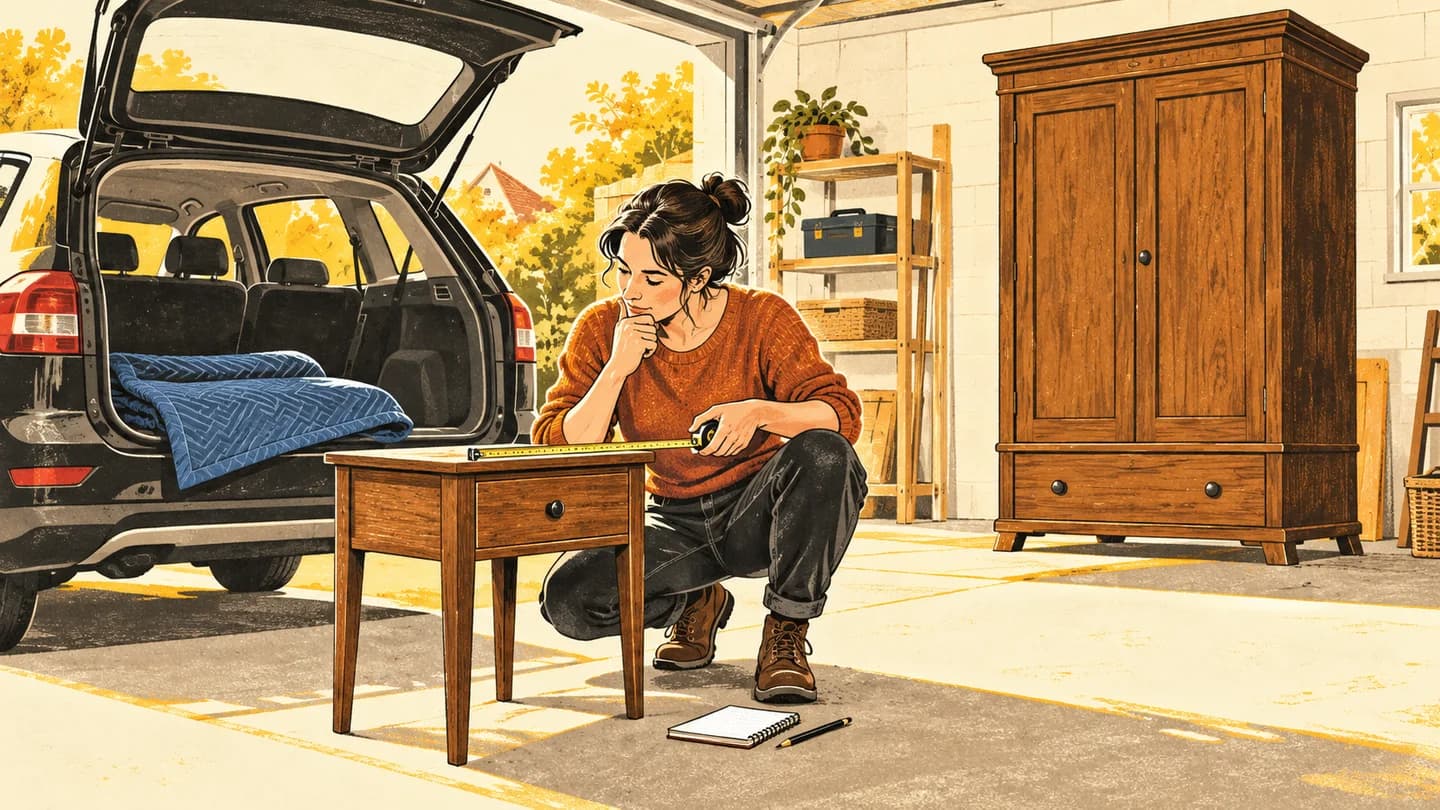
Calculate transport, cleaning, repairs and storage before accepting furniture with a zero purchase price.
Free is the purchase price, not the project cost
A free side table can be a useful resale project. A free wardrobe can occupy a van, a weekend and most of your storage space before you discover that few local buyers want it. The difference is usually visible before collection if you ask the right questions.
Judge free furniture as you would paid stock: establish what it is, the condition you can deliver, the likely buyer and the total work required. The absence of a price removes one cost. It does not remove transport, preparation, selling expenses or responsibility for supplying a safe item.
Start with the easiest complete job
For an early project, manageable size and clear condition matter more than a dramatic transformation.
A defined object
You know the dimensions, material, construction and intended use. The photographs show the whole item, including its back and underside.
A defined task
The work is specific and within your competence, such as appropriate gentle cleaning or replacing a confirmed missing non-structural fitting.
A defined exit
Comparable local sales support the price, and you can photograph, store and hand over the finished item without blocking your home or workshop.
Find out why it is free without making assumptions
Someone may be moving, changing a room or clearing space quickly. That can be a perfectly genuine reason to give away usable furniture. It can also mean the item needs work, is awkward to remove or has been left outdoors. Ask about its condition and where it has been stored.
Confirm that the person offering it owns it or is authorised to give it away. An object beside a house or on a pavement is not yours to take merely because it looks unwanted. Agree which item you are collecting and whether any contents, shelves or fittings are included.
Ask these questions before arranging transport
A short exchange can save a wasted journey.
- What are the height, width and depth, including handles or other projections?
- Can I see current photographs of the front, back, underside and any damage?
- Are the joints firm, and do doors and drawers open and close properly?
- Are all shelves, fixings and removable parts present?
- Has it been stored outside, in damp conditions or around persistent smoke or pet odours?
- What floor is it on, how narrow is the access, and is help available for loading?
- Is there a specific collection deadline, and may I inspect it before deciding to take it?
Use local demand as the starting point
Research furniture that a buyer could reasonably collect from your area, with similar size, material, style and condition. A national asking price for a professionally restored designer piece is a weak comparison for an unidentified cabinet with local collection only.
Check completed sales where you can, then consider current local alternatives. An old listing with an ambitious price tells you what the owner wants, not what another person paid. Larger pieces narrow the pool of buyers who have both the space and transport. That affects the time you may need to hold them.
Compare the cash return with the hours
These invented examples assume the buyer collects and no selling fee applies. Replace every allowance with your actual route and costs.
| Item | Small table | Large cabinet |
|---|---|---|
| Expected sale receipt | £60 | £110 |
| Purchase | £0 | £0 |
| Collection | −£12 | −£45 |
| Preparation materials | −£8 | −£25 |
| Contribution before time and overhead | £40 | £40 |
| Estimated total work | 2 hours | 7 hours |
| Contribution divided by those hours | £20/hour | About £5.71/hour |
Treat the hourly figure as a comparison, not wages
The table’s hourly figures exclude tax, general overhead, an unsold outcome and any extra delivery or return work. They help compare projects but do not promise an earnings rate. If the cabinet sells for £85 instead of £110, its contribution falls to £15 before the same seven hours of work.
Set a maximum total spend and a maximum amount of work before collecting. Include a realistic plan if the item cannot be sold. Paying for a van twice, buying more materials than expected or using paid storage can erase the apparent advantage of a zero purchase price.
Inspect structure before admiring the finish
Look at joints, legs, backs, drawer runners and mounting points. Check for swelling, split panels, loose components and previous repairs. A cosmetically rough but sound piece presents a different job from a polished piece that is unstable. Do not load an item first and postpone the inspection because the owner is in a hurry.
Identify construction before planning work. Veneer, solid timber, laminate and painted composite board need different treatment. Sanding through thin veneer or wetting damaged board can make the project worse. Where instability or damage affects safe use, obtain competent repair advice or decline the item.
Keep hygiene and storage problems out of your stock area
Strong odours, visible mould, signs of infestation or damp damage should change the decision. An unknown problem can affect other furniture and cost much more than the item could return. Avoid assuming that a spray, a coat of paint or a few days in the garage will resolve it.
If you notice a concern during inspection, leave the item until it has been appropriately assessed. If a problem emerges after collection, keep it separate from other stock and arrange suitable advice. Do not list it as ready for use while hoping the buyer will be less particular than you.
Upholstered furniture needs more than a quick clean
Protect an original surface before attempting a makeover
An original finish may contribute to an object’s historical and resale value. Stripping or repainting can remove that evidence permanently. Identify the piece and its market before deciding that a fashionable colour will make it more valuable.
For sound surfaces, begin with the least intervention needed and a method appropriate to the material. Stop if the finish flakes, transfers or reacts unexpectedly. Valuable or uncertain finishes need specialist advice. Do not turn the article’s resale calculation into a reason to undertake chemical stripping or structural repairs beyond your competence.
Make collection a planned part of the job
Confirm arrangements again before travelling.
- Measure the vehicle opening and the access route, not just the space inside the vehicle.
- Arrange enough capable help and suitable equipment for the actual weight and shape.
- Inspect and confirm the agreed contents before loading.
- Remove loose parts only where appropriate and label them with the main item.
- Protect surfaces and secure the load for transport.
- Take the furniture to an appropriate dry inspection and storage space rather than leaving it exposed.
Know when reuse becomes a waste issue
Accepting reusable furniture and agreeing to remove someone’s waste are different activities. If the item is discarded, unusable or part of a wider clearance, check whether waste-carrier and disposal requirements apply in your location. A free transfer does not by itself resolve its status.
Upholstered seating that has become waste can have additional restrictions because of persistent organic pollutants. Assess the intended reuse and condition before accepting it, and use the appropriate local guidance or authorised service for waste. Do not collect a doubtful piece on the assumption that a household tip will accept business material later.
Sell the finished item with the information buyers need
Photograph the actual item in even light, with a clear view of its shape and condition. Give dimensions, material where known, repairs, remaining marks and included parts. Show any flaw in context as well as close up. Accurate information reduces wasted collection appointments.
State whether the item is assembled, where it can be collected and what help is available. If offering delivery, price the journey and access requirements explicitly. Agree a suitable handover and payment method, and keep your stock record connected to the final receipt and any additional costs.
Let completed results decide the next collection
Record the hours and money spent on each project, including the ones still waiting for attention. If a supposedly simple table took four evenings, find out why before accepting another. The most valuable lesson may be a size limit, a material to avoid or a stricter preparation budget.
Only collect the next item when you have room to inspect, finish and sell it. Free furniture can be worthwhile when it is a manageable job for a real buyer. Choosing fewer suitable pieces is often the practical way to keep both your cash and your space working.