Answer the musician’s practical questions before they have to message you.
The best checklist starts before the photographs
A musical-equipment listing should let a buyer answer three questions: is this the right version, does its condition suit my use, and can the seller deliver what is described? A few attractive photographs do not answer those questions on their own. This checklist helps you gather the facts once and carry them consistently through the advert.
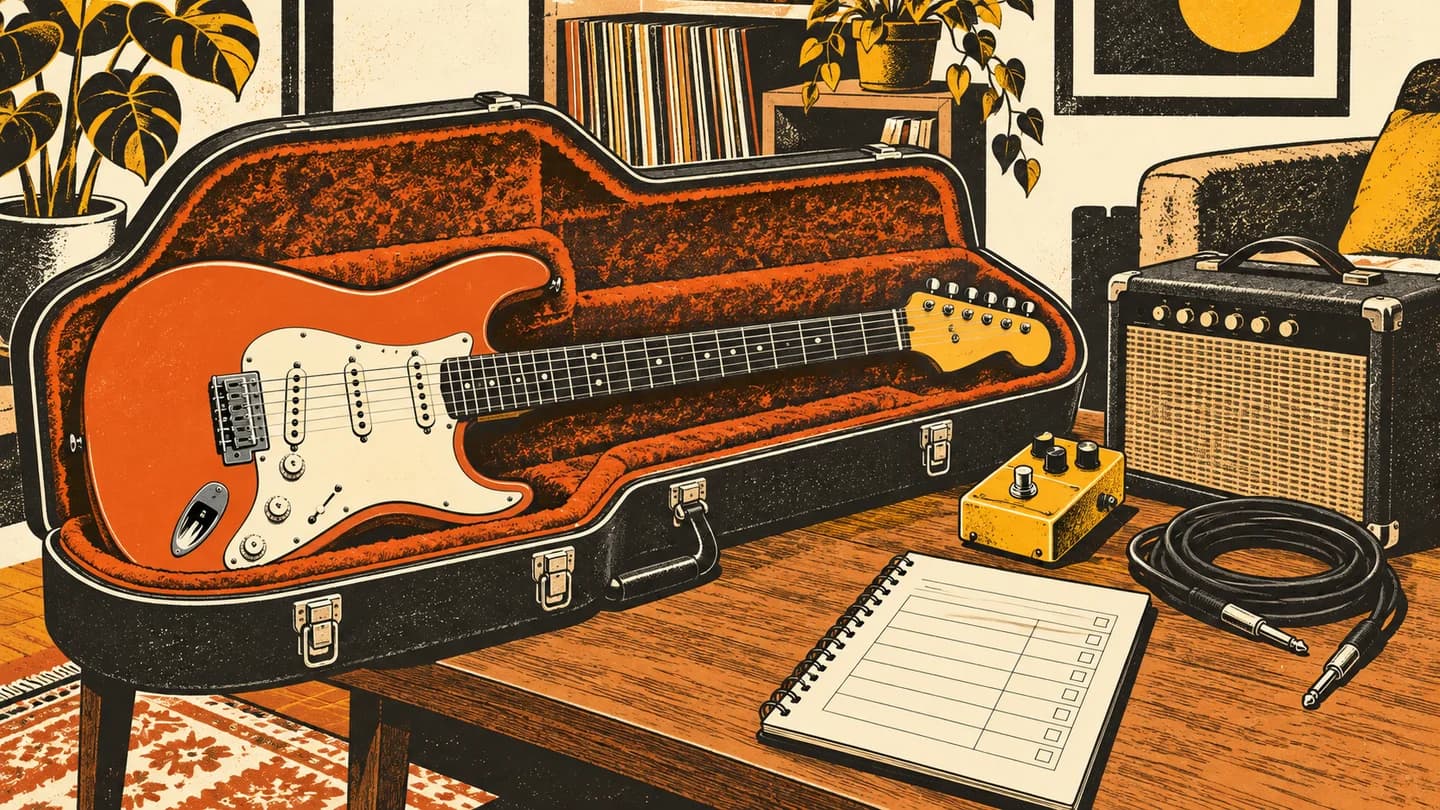
Work from the physical item rather than copying another listing. Similar model names, stock photographs and manufacturer specifications can hide differences in revisions, modifications and included accessories. Keep a fact sheet beside you while you photograph and draft so the title does not drift away from what you actually own.
Prepare an identification sheet
Give the item a stock reference if you handle more than one piece of gear.
- Copy the maker and complete model or series.
- Record the version, configuration or revision where established.
- List known repairs and modifications, separating documentation from a previous owner’s account.
- List every accessory in the sale and important exclusions.
- Record the tests you can support and unresolved questions.
- Keep private transaction and serial records without publishing unrelated personal information.
Photograph the entire object first
Choose even light, a stable surface and a background that makes edges and condition clear. For a guitar, show the complete front and rear rather than starting with a dramatic close-up. For a pedal, show the top and base, then connections and model details. Keep colour and wear faithful; avoid filters that change finish or hide marks.
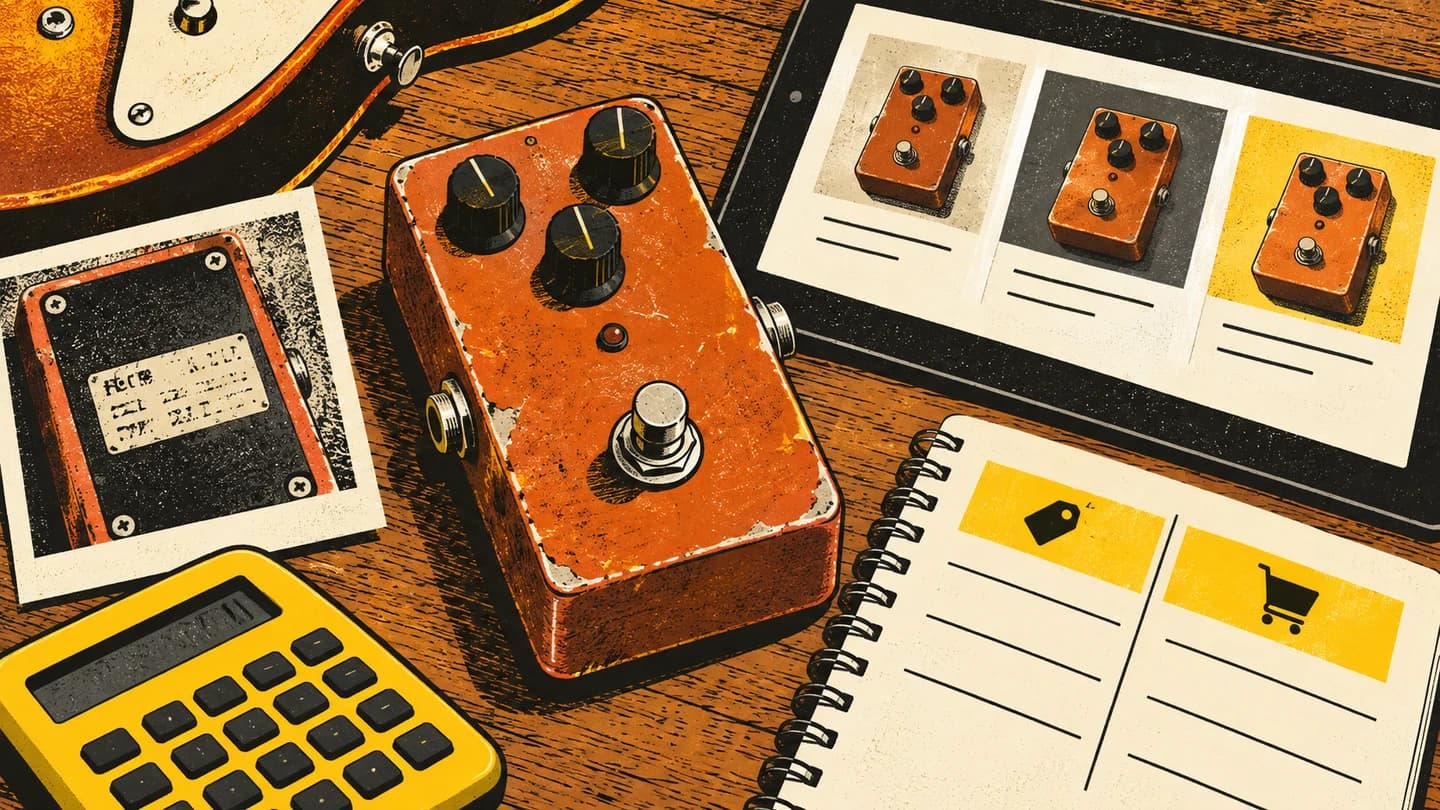
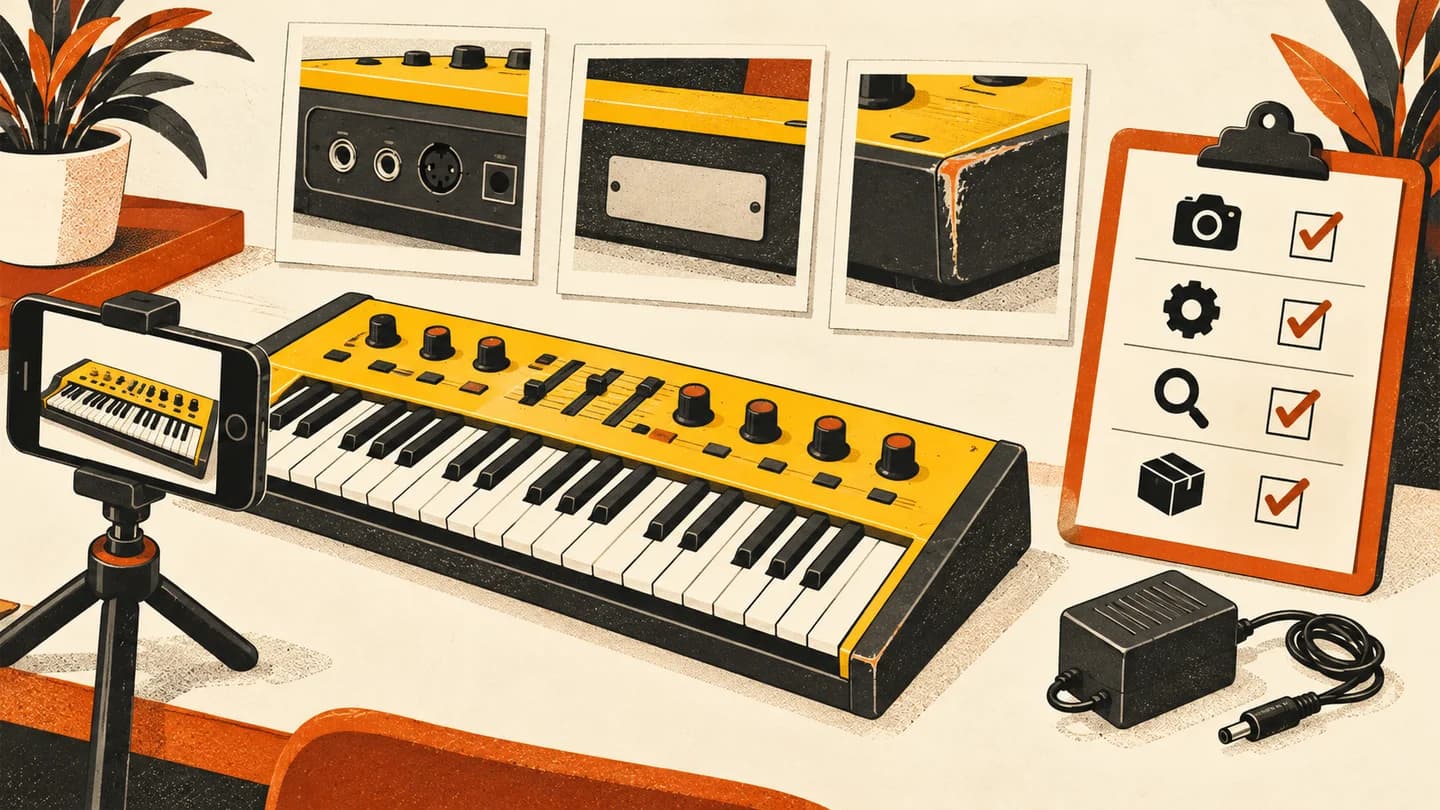
The main image needs to work as a thumbnail. Secondary photographs should each add information: a repair, the fret area, a socket, a label or the included case. Repeating the same flattering angle does not help a musician assess what cannot be seen. Retake blurred identifying details before dismantling the setup.
Make defects easy to locate
Use a wider image to show where a defect sits, followed by a focused close-up.
- Finish dings, buckle wear, scratches and areas of discolouration.
- Known cracks or repaired areas, with the repair history if available.
- Changed hardware, pickups, knobs or other components.
- Damage to connections, switches, case latches or handles.
- Missing covers, feet, screws or accessories that a buyer might expect.
Record testing in observable language
Describe what you actually checked. For example: “Bypass and every control tested through an amplifier using a compatible supply; no intermittent output found during that test. Supply not included.” This is illustrative wording, not a claim to paste into an untested pedal listing.
For an instrument, identify known playability issues and explain any professional assessment. Do not turn a brief trial into “fully serviced”. If a device powers on but other functions were not tested, state that plainly and choose a condition category that does not imply more. A buyer should be able to distinguish cosmetic wear from a functional limitation without sending a message.
Choose measurements that answer a real question
Give measurements where they help with fit, use or transport. Depending on the item, buyers may need overall dimensions, instrument weight, case dimensions or another specification. Use the correct units and explain whether the measurement includes a case or protruding part. Do not invent manufacturer specifications from a similar model.
For guitars, distinguish a specification taken from a reliable model reference from a measurement of this instrument. Modifications may make the reference incomplete. If an important specification cannot be verified, explain the gap or obtain a competent assessment rather than filling the space with a plausible number.
The condition field is part of the description
Write the advert in four short sections
Start with identity and contents: what exact piece of equipment is being sold and what comes with it. Next give condition and material defects. Then describe testing, repairs and modifications. Finish with dispatch or collection arrangements. That order puts the buyer’s decision before promotional language.
For example, a useful opening might be: “Used model ABC effects pedal, revision shown on the base. Includes the pedal and original box; no power supply. Cosmetic marks on the underside are photographed.” The rest should explain the actual tests and any limitations. This fictional example illustrates the structure; it is not a specification for a real product.
Avoid unsupported “rare”, “mint” or “all original” claims. If originality is important, document it or qualify what you know. A replacement component can be a selling point for one buyer and a drawback for another, so make the fact visible instead of deciding silently that nobody needs to know.
Review the price beside the whole offer
A number only makes sense in context.
- Compare exact-version sold examples with similar condition and contents.
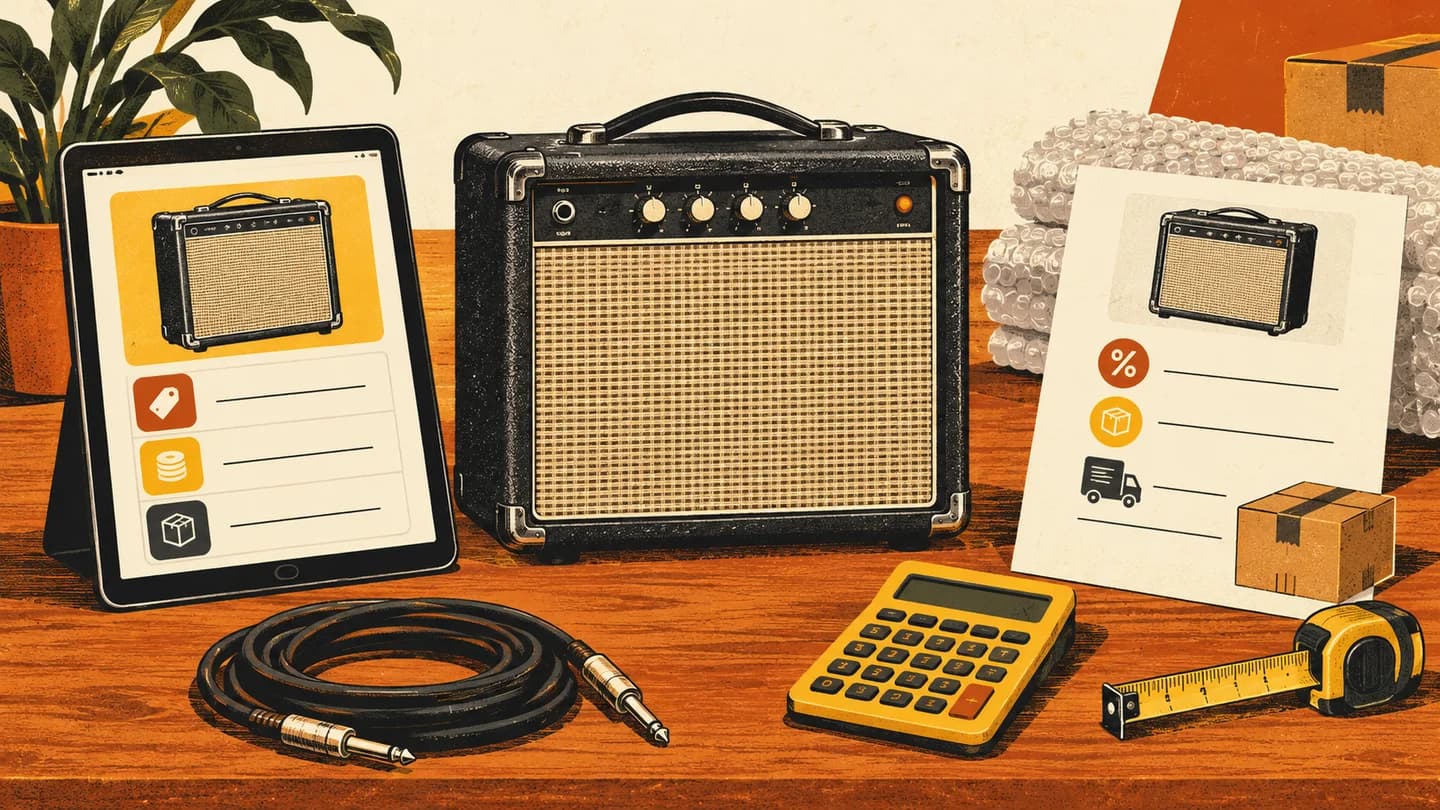
- Check current alternatives and the buyer’s total delivered cost.
- Include the actual packing plan and applicable charges in your net calculation.
- Choose an offer floor that leaves a result you can accept.
- Do not price an undocumented repair as though it were a professional service.
Prepare the shipping details before listing
Build a realistic packing plan and measure the finished parcel. Appropriate internal protection matters as much as the outer box. A loose accessory can damage an instrument inside a case; a soft gig bag alone does not establish adequate parcel protection. Use suitable item-specific packing guidance and check the service’s acceptance and compensation requirements.
State only a dispatch time you can meet. If collection is the practical route, describe location broadly, access and any lifting or transport needs, then use the platform’s supported arrangement. Do not promise a delivery service and assume you can work out its price after the order arrives.
Read the listing as someone who has never seen the item
Compare title, selected condition, specifications, description and pictures. Does “with case” refer to a hard case, a gig bag or only a box? Is an accessory in the photograph explicitly excluded? Does the model name in the title agree with the rear label? Fix contradictions now, while the buyer has not relied on them.
Use a second pass for unanswered practical questions. Can a buyer tell whether a pedal needs a supply they already own? Can they see a guitar’s repair area? Are measurements useful and legible? A concise factual addition often prevents more messages than another enthusiastic paragraph.
Keep the final record through dispatch
The listing is one part of the transaction record.
- Save the final description and original photographs.
- Verify the paid order in the platform before releasing the item.
- Match the physical contents to the promised contents.
- Photograph condition and packing where useful and retain dispatch evidence.
- Respond to any issue through the supported order process.
- Update the stock record with the actual sale and costs, including subsequent adjustments.
Use questions to improve the next listing
Repeated questions about the same missing detail are useful feedback. Add that detail to future fact sheets and correct the current listing where appropriate. Over time, a consistent checklist should make adverts more accurate and faster to prepare. The aim is a buyer who understands the gear before paying, not a listing that looks impressive while leaving the important uncertainties unresolved.