Prepare accurate specifications, honest testing notes and a workable delivery plan for musical equipment.
Start with a sale a musician can understand
Reverb is a marketplace for musical instruments and equipment. You create an offer for another buyer rather than accepting a direct trade-in quote. That gives you control over the asking price and presentation, but you also take responsibility for describing the gear, answering questions and delivering what you promised.
A worthwhile first sale is something you can identify and assess properly: perhaps your own pedal, a familiar guitar or an accessory you understand. An unidentified amplifier with an intermittent fault is a much harder introduction. The purpose of this guide is to help you turn an actual piece of gear into a clear, costed sale, whether you are clearing a cupboard or investigating resale stock.
Build a fact sheet before opening the listing form
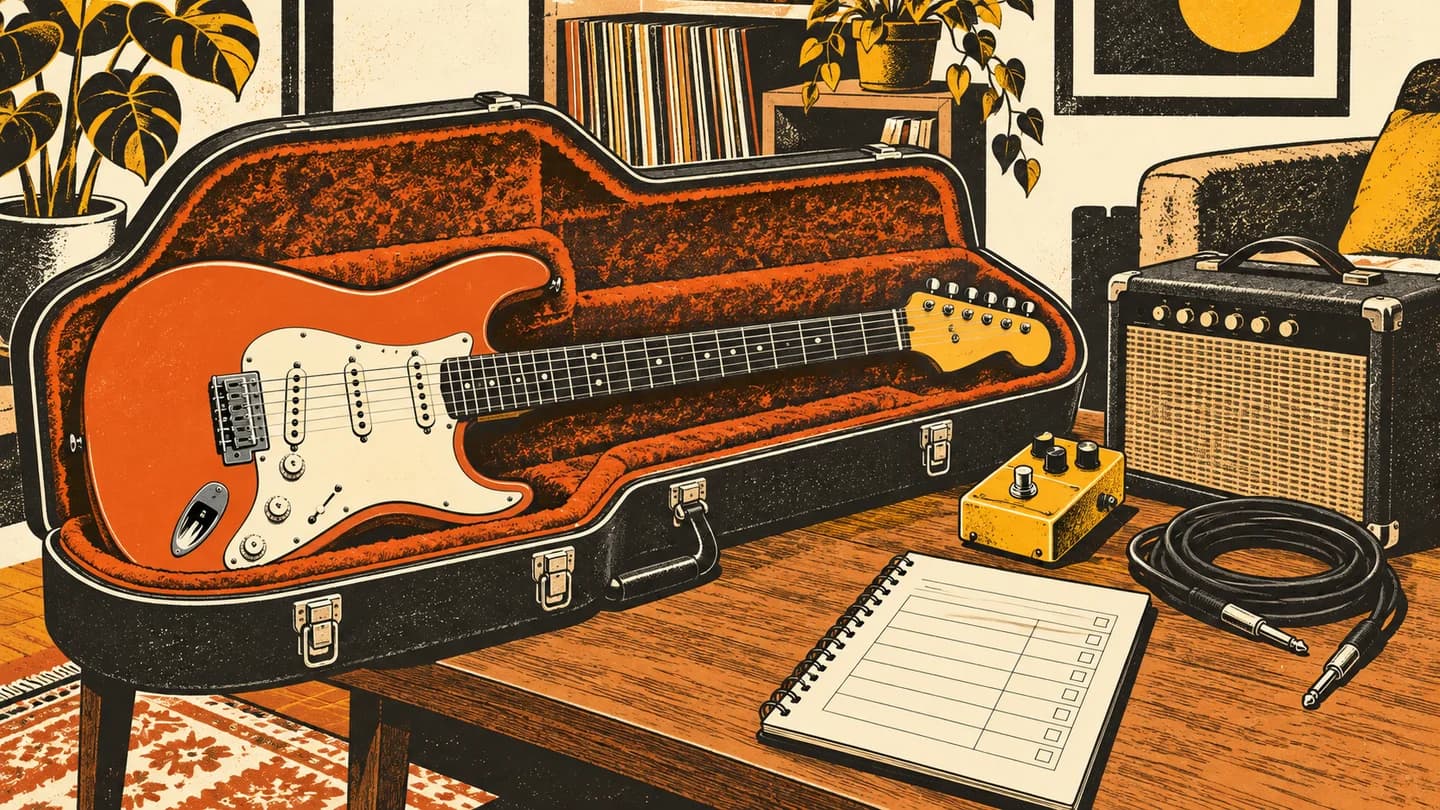
Keep these details with your own stock reference. They will feed the advert, price research and packing plan.
- Maker, full model name and any version or revision.
- Known production information, supported by labels or reliable documentation.
- Cosmetic condition, functional faults and repairs.
- Modifications and replacement components, with original parts included only if you have them.
- The exact case, power supply, cables or other accessories in the sale.
- Tests performed and anything you have not assessed.
Identify the particular version
A familiar product name can cover several generations. A pedal may have different circuitry, connections or functions across revisions. A guitar model can differ by manufacturing series, pickups or specification. Copy the full markings and compare manufacturer information before using another seller’s title.
Do not infer a precise year from appearance alone. If the information is uncertain, say what you know and what you could not establish. A buyer can evaluate a clear uncertainty; they cannot reliably evaluate an invented specification. Keep serial information in your private records and show identification details appropriately without including unrelated personal documents.
Test what you can, and describe that boundary
A pedal’s light coming on does not establish that it passes audio or that its switch works reliably. Use a suitable power source, known-good cables and an appropriate instrument/amplifier setup. Try the relevant controls and listen for intermittent behaviour. Record the actual test, including limitations.
For a guitar, inspect tuning hardware, controls, output, visible fret wear and known repairs. If playability or structural condition is beyond your expertise, obtain a competent assessment. Do not open mains equipment or undertake unfamiliar electrical work to make a resale margin. An accurately described fault is more useful than an unsupported claim that repair will be easy.
Condition labels need to agree with the description
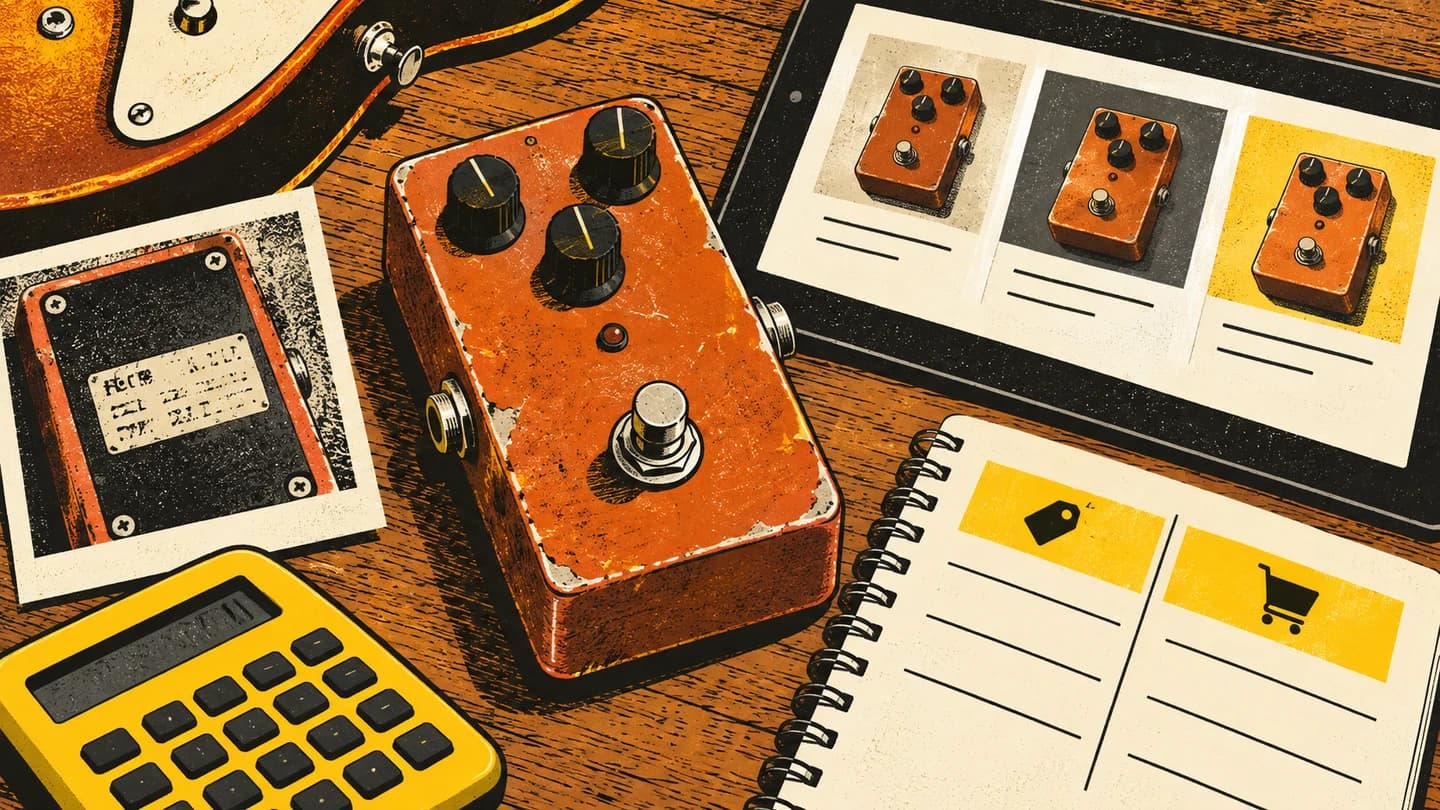
Research a realistic selling range
Use the same identity and condition throughout the comparison.
- Search the exact model and version in Reverb’s Price Guide or sold-listing results where available.
- Read relevant examples rather than comparing only thumbnail prices.
- Separate modified, repaired, incomplete and dealer-serviced examples.
- Check current competing offers and total delivery cost to the buyer.
- Write down a supported asking range and a minimum acceptable outcome after your costs.
Price research is evidence, not a promise
A price guide can help locate the market, but your particular example still needs a comparison. A guitar with its original hard case differs from one without any case. A desirable discontinued pedal may have few relevant sales, which makes a precise-looking average less dependable as a prediction.
Keep the source date and the assumptions beside your estimate. If you are buying specifically to resell, use a conservative achievable price for the purchase calculation. If you already own the gear, separate the amount you once paid from the amount buyers are currently willing to pay. An old retail receipt does not set today’s market.
Work out what the sale leaves you
Reverb currently states an all-in 5% selling fee for UK sellers, with no separate payment-processing fee. Additional taxes may apply, while optional Bump promotion and postage cost extra. A sale to a buyer outside the UK adds a 1% cross-border fee. Check the current listing estimate for your transaction; do not add an old international processing rate to the UK structure.
Here is an invented calculation: a £220 total sale, less £130 acquisition, £15 assumed platform/transaction charges and £25 packing and delivery, leaves £50 before preparation, other expenses and time. If the instrument needs a £40 service, the contribution falls to £10. Substitute actual charges and a real service quote before buying.
Also test a lower sale. If £190 is a plausible outcome, repeat the calculation at £190. A profitable-looking asking price is not sufficient if a modest negotiation or necessary repair consumes the margin. Decide your offer floor before messages arrive so you can respond without recalculating under pressure.
Create a useful photograph set
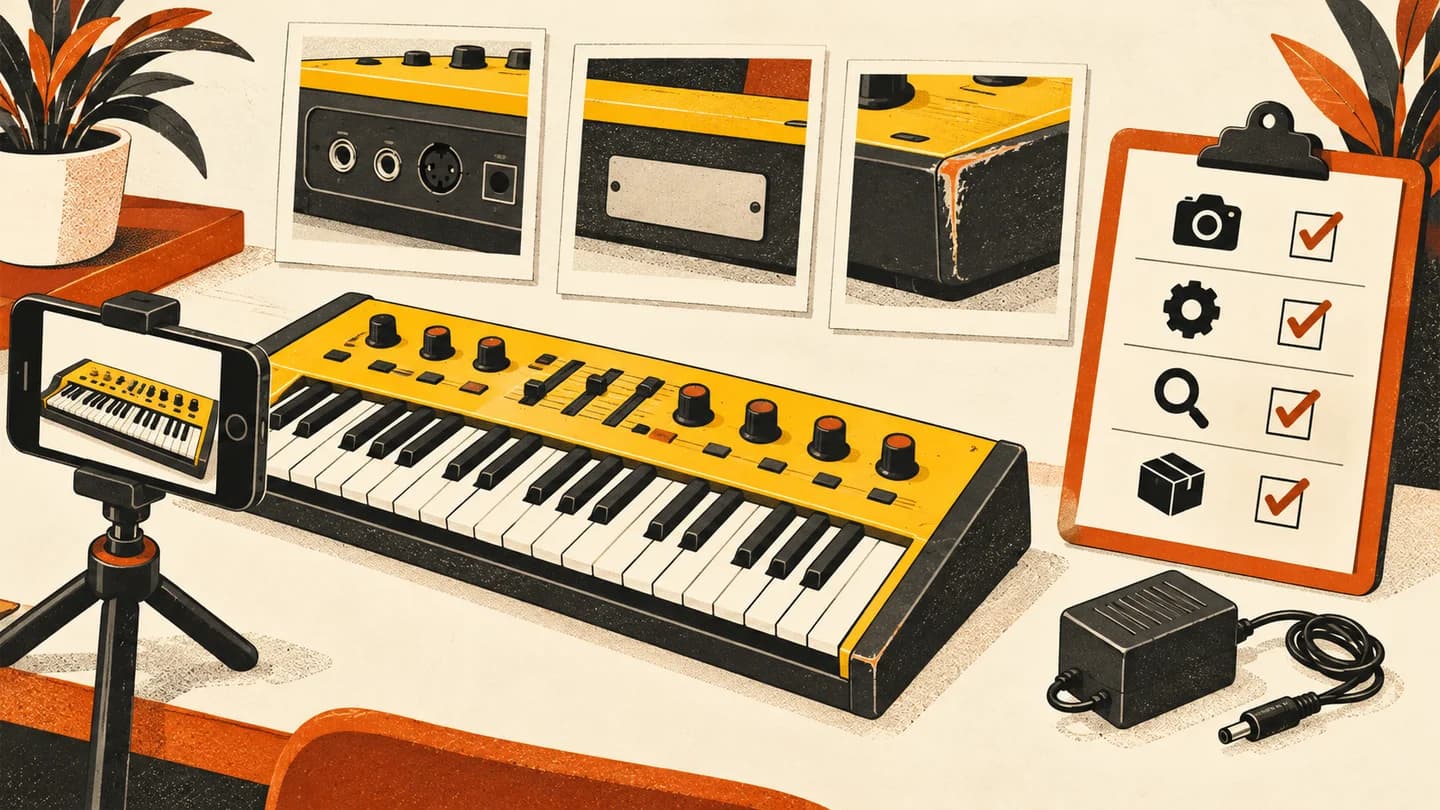
Use the actual item and keep colour and condition faithful.
- A clear full view that identifies the gear at thumbnail size.
- Rear, sides, connections and readable model information.
- Close-ups of wear, repairs and modifications, with a wider view locating them.
- Every included accessory laid out clearly.
- Relevant measurements or details that a buyer cannot judge from scale alone.
Write the description in a practical order
Lead with the exact item and what is included. Follow with condition, testing, repairs or modifications, then collection or dispatch information. For example: “Used effects pedal, version shown on base label. Bypass and all controls tested through an amplifier. Scratches underneath; power supply not included.” Replace this example with your observations.
Avoid subjective claims doing the work of evidence. “Sounds incredible” tells a buyer little about a crackling socket. A demonstration recording may be helpful, but microphones, playing and the rest of the signal chain influence what it communicates. Keep material faults in the written description even when they are shown elsewhere.
Arrange delivery before accepting the order
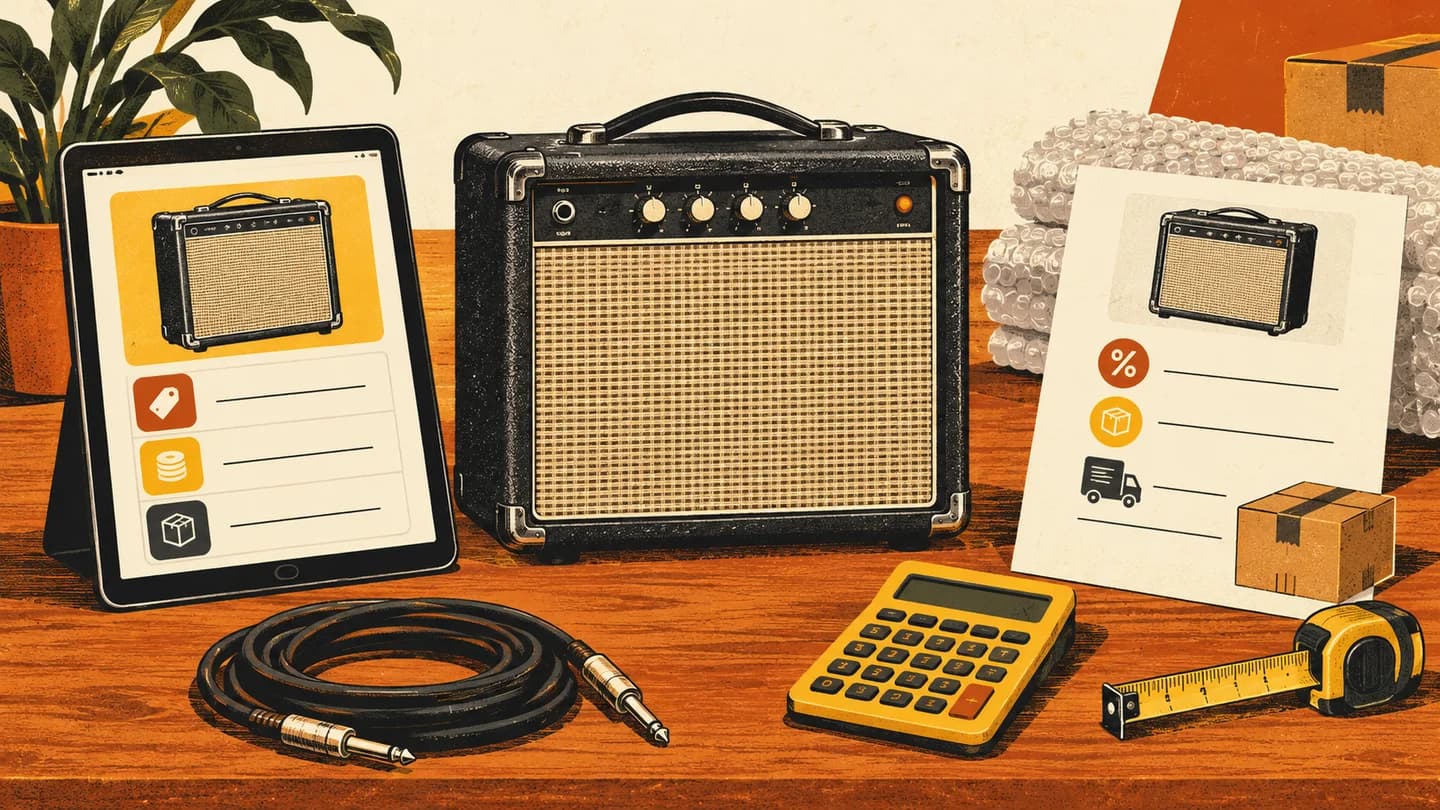
Measure and weigh the packed parcel, not just the instrument. A soft bag or original retail box is not automatically adequate shipping protection. Follow suitable packing guidance for the item and check the carrier’s acceptance, packaging and compensation terms. Protect the object and its case from movement and pressure.
For large amplifiers or awkward instruments, investigate an appropriate collection option and the platform’s current completion requirements. Do not promise cheap nationwide delivery before discovering that a safe package is heavy or oversized. Shipping can turn a reasonable local purchase into an uneconomic resale.
Complete the transaction and learn from it
Keep the record tied to the item rather than relying on memory.
- Verify the order and payment status within the platform.
- Check the agreed contents and delivery details before packing.
- Retain condition photographs, packing evidence and proof of dispatch.
- Answer problems through the supported transaction process.
- Reconcile final proceeds and actual expenses, including any adjustments.
- Record time to sell and preparation effort before buying similar stock again.
A sensible first batch
If you intend to resell regularly, begin with a few models you understand and can test. Track the whole batch, including the item that sits unsold or needs unexpected work. One unusually good sale is a useful result, but not proof that every instrument carrying the same badge is profitable stock. Build your next buying limit from completed outcomes and the work they actually required.