Match specialist books to the edition and reader who still needs them.
Find the person who still needs the information
A specialist book can be useful resale stock when it solves a specific problem for a reader. That might be a student needing a stated edition, an enthusiast researching a particular subject or an owner looking for a manual for older equipment. The original cover price is much less useful than that current need.
These books reward accurate identification. A general title such as “Engineering Handbook” tells you little compared with the author, edition, subject coverage and intended audience. Before buying, work out exactly what the book offers and what a buyer would otherwise use.
Three markets with different buying questions
Do not apply one rule about age or editions to every specialist book.
Textbooks and study guides
Is this the edition and specification the intended course requires, and what digital resources are included or excluded?
Equipment and workshop manuals
Does it cover the precise model, version and configuration the owner needs, with the relevant diagrams intact?
Specialist reference books
Does it contain information or illustrations a reader still wants, and are adequate alternatives readily available?
Identify the publication before looking at prices
Record the full title, author or editor, publisher, edition, year, format and ISBN where present. Check those details inside the book as well as on its cover. Similar-looking volumes can have different content, and a different edition can change the buyer’s requirements.
Search the exact identity first. A barcode lookup can narrow the results, but inspect what the listing represents. A printed book alone is not equivalent to a bundle with an online course, workbook or accompanying media. Keep that distinction visible in both the valuation and the eventual description.
For textbooks, verify the requirement rather than assuming it
A newer edition does not automatically make every older copy worthless, but you should not promise that an old edition will satisfy a current course. Look for the relevant publisher information and, where available, the course’s stated reading requirement. Let the student or instructor determine suitability when you cannot establish it.
For exam and qualification materials, check the specification, subject, level and edition. Avoid advertising a book as current merely because it was printed recently. A cheap study guide is not useful stock if the title attracts buyers who need a different specification or compulsory resource.
A used book does not automatically include usable online access
Describe access limitations before the buyer commits
If you cannot verify a digital entitlement, state that the sale is for the physical book and that online access is not promised. A vague “code included” can create the wrong expectation even if you later explain that you do not know whether it works.
Do not redeem a code just to test it unless the publisher provides a supported checking method that does not consume the entitlement. Read the product-specific instructions. If the buyer needs online homework or assessment access, a low-priced used text may still leave them with a separate expense.
Inspect a technical manual for useful completeness
The most valuable pages to its reader may be the easiest to overlook.
- Check the covered model numbers and any version or date range.
- Compare the table of contents with the sections present.
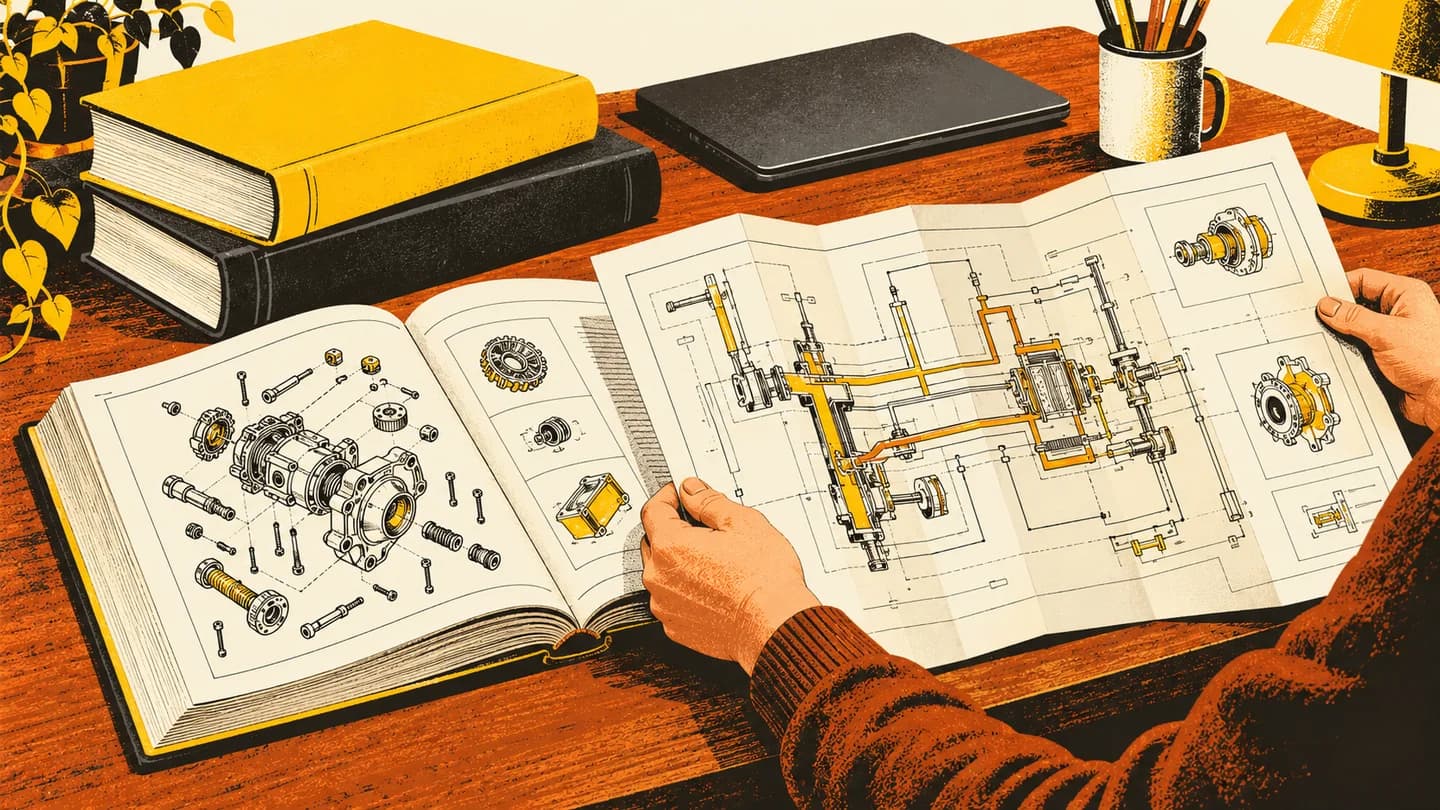
- Inspect foldout diagrams, charts and parts lists carefully.
- Look for oil, water damage or marks that obscure information.
- Check whether loose supplements or updates are expected.
- Record missing pages, substitutions and reproduction status where known.
Separate an original manual from a later copy
A bound original, an authorised reprint and a loose photocopied collection are different products. Identify what you have rather than describing every set of pages as an original workshop manual. Do not create or sell unauthorised copies as a shortcut to completing a damaged volume.
For a loose-leaf manual, check that the binder’s title agrees with the pages inside. Different updates can become mixed over time. If you cannot establish a complete version, describe the actual contents and limitations rather than claiming the set covers everything a technician might need.
Research specialist demand with the right vocabulary
Use the subject’s specific terms: model series, named process, region, artist, collection or technical field. This can reveal relevant buyers and comparisons that a broad title search misses. A concise accurate description helps the eventual buyer for the same reason.
Current publisher availability matters too. If a new or authorised digital version is readily available at a modest price, a used copy needs a reason to compete. Conversely, an unavailable edition still needs evidence of demand. Do not convert “I cannot find another” directly into a high valuation.
Match condition to how the book will be used
The significance of wear depends on the content. Describe it specifically rather than using one broad grade for every problem.
| Issue | Why to investigate |
|---|---|
| Highlighting and notes | May obscure diagrams, answers or important text |
| Completed workbook pages | The buyer may need an unused exercise book |
| Missing foldout | Could remove the manual’s main practical reference |
| Damaged binding | Heavy use may make an already weak binding fail |
| Absent supplement | The book may not contain the advertised coverage |
| Library or ownership marks | Must be disclosed; comparisons may differ |
Compare like-for-like offers and achieved sales
Open the details of each comparison. Check edition, format, included resources, condition and delivery. Exclude new learning bundles when valuing a standalone used textbook, and exclude complete multi-volume works when you own only one volume.
Specialist bookseller asking prices can help you understand the market, but they are not proof of a completed sale. If reliable achieved-sale evidence is limited, choose a conservative estimate and a sensible holding period. Your buying price should leave room for uncertainty rather than depend on matching the highest available listing.
Cost a heavy book as a packed parcel
These invented figures demonstrate the arithmetic. Replace them with the actual charges, dimensions and service for your sale.
| Line | Amount |
|---|---|
| Expected proceeds | £40 |
| Selling charges | −£5 |
| Protective packaging and delivery | −£9 |
| Purchase price | −£12 |
| Contribution before tax, time and other expenses | £14 |
Include the time needed to check the contents
The example leaves £14 before your time and other costs. A clearly identified, complete book might be straightforward to prepare. A manual with hundreds of loose pages, missing updates and uncertain coverage may take much longer. Do not treat the two as equivalent because the asking prices look similar.
Set a lower buying limit when the inspection is complex, or ask for time to check the material properly. For a collection, separate the readily saleable books from those needing detailed research. Buying the entire pile can make sense only if the realistic return supports the work on the whole purchase.
Give the buyer the information they need
Use photographs of your actual copy and make important limitations easy to find.
- Full title, author or editor, publisher and exact edition.
- ISBN and format, checked against the physical book.
- Relevant model coverage, subject scope or stated specification.
- Condition of text, binding, diagrams and supplementary material.
- What physical resources are included.
- A clear statement about digital access and any unverified entitlement.
Use completed sales to choose your next niche
Track the purchase cost, preparation effort, achieved return and time to sell. You may find that a narrow hobby reference sells more efficiently for you than heavy academic textbooks, or that manuals in a field you understand are easier to identify accurately.
Build on that knowledge without assuming every related book will behave the same way. Specialist stock rewards precision: the right edition, complete useful content and a description that reaches the reader who needs it. The bargain is the gap between a sensible buying price and that evidenced demand, not the difference between a charity-shop sticker and an old cover price.