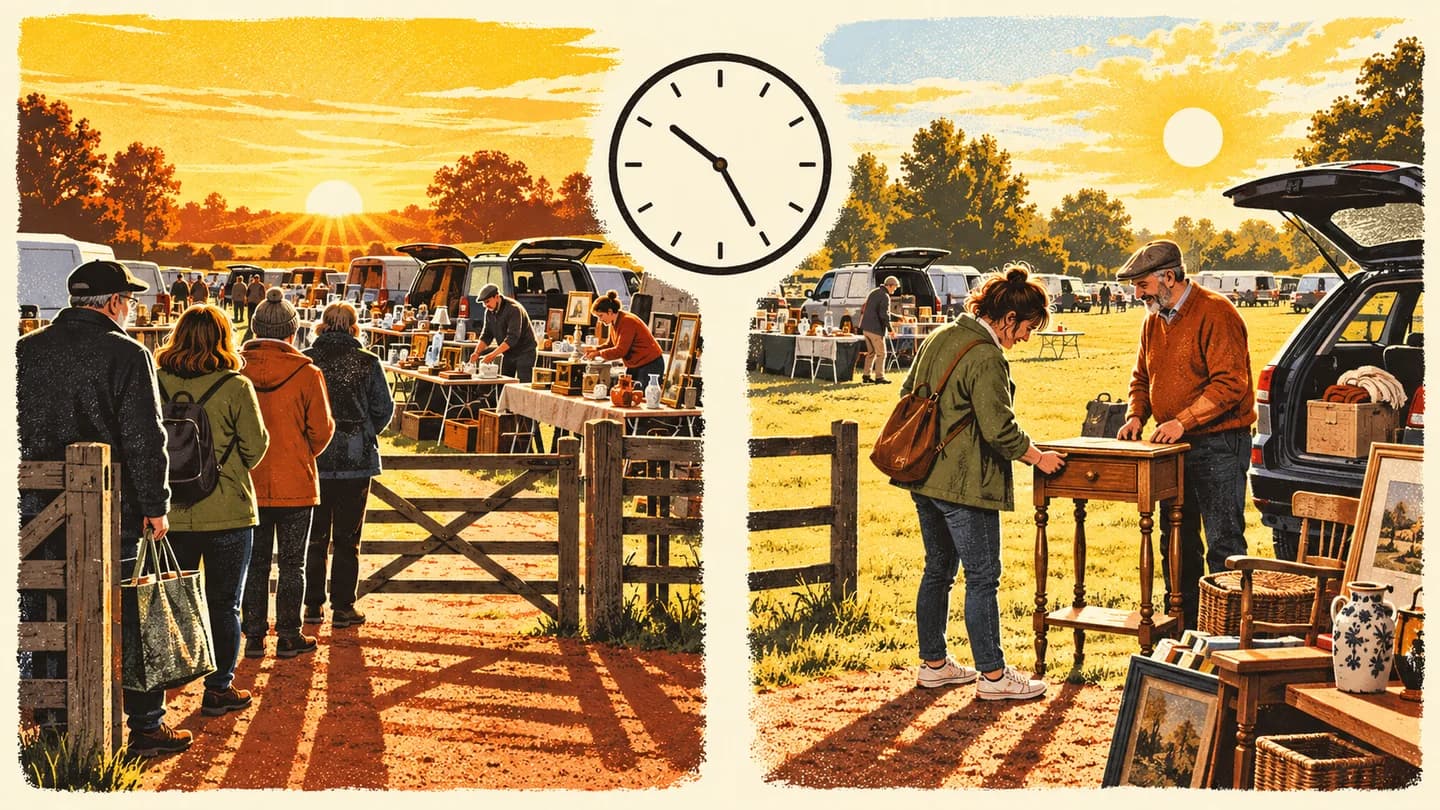
Prepare for research, safe inspection and carrying purchases home without spending your whole margin on the trip.
Use a checklist at the moments you are most likely to rush
A useful car boot sale checklist covers more than what goes in your bag. It helps before the journey, while an item is in your hands and after you have paid. Those are different decisions: whether the trip is worthwhile, whether the purchase makes sense and whether the item reaches home in the condition you bought it.
Keep a short version on your phone or a small card. The aim is to make important checks repeatable without turning every ordinary purchase into a lengthy inspection. For a high-value or unfamiliar item, slow down or pass rather than allowing a queue of other shoppers to set your buying standard.
The night before: confirm the trip
Check the organiser’s current information rather than relying on an old social post or a previous visit.
- Correct date, venue and entrance for buyers.
- Public opening time, any early-entry option and the actual charge.
- Weather or ground-condition updates and the latest cancellation notice.
- Parking, accessibility and any practical restrictions relevant to your visit.
- A realistic travel plan and a time to finish.
- Your two or three target categories and the faults that make you decline them.
Put travel and stock on different lines
Decide how much the outing can cost before withdrawing cash. If you allow £40 for stock and expect £8 of travel and entry costs, the planned cash exposure is £48 before any later packing or selling expenses. Do not silently move the travel money into the stock allowance when an attractive item appears.
Keep enough money available to complete any purchases through inspection, preparation and dispatch. Check the remaining buying balance as the morning progresses. Several £3 and £5 purchases are easy to forget, especially if you make a second circuit or buy from more than one person in the group.
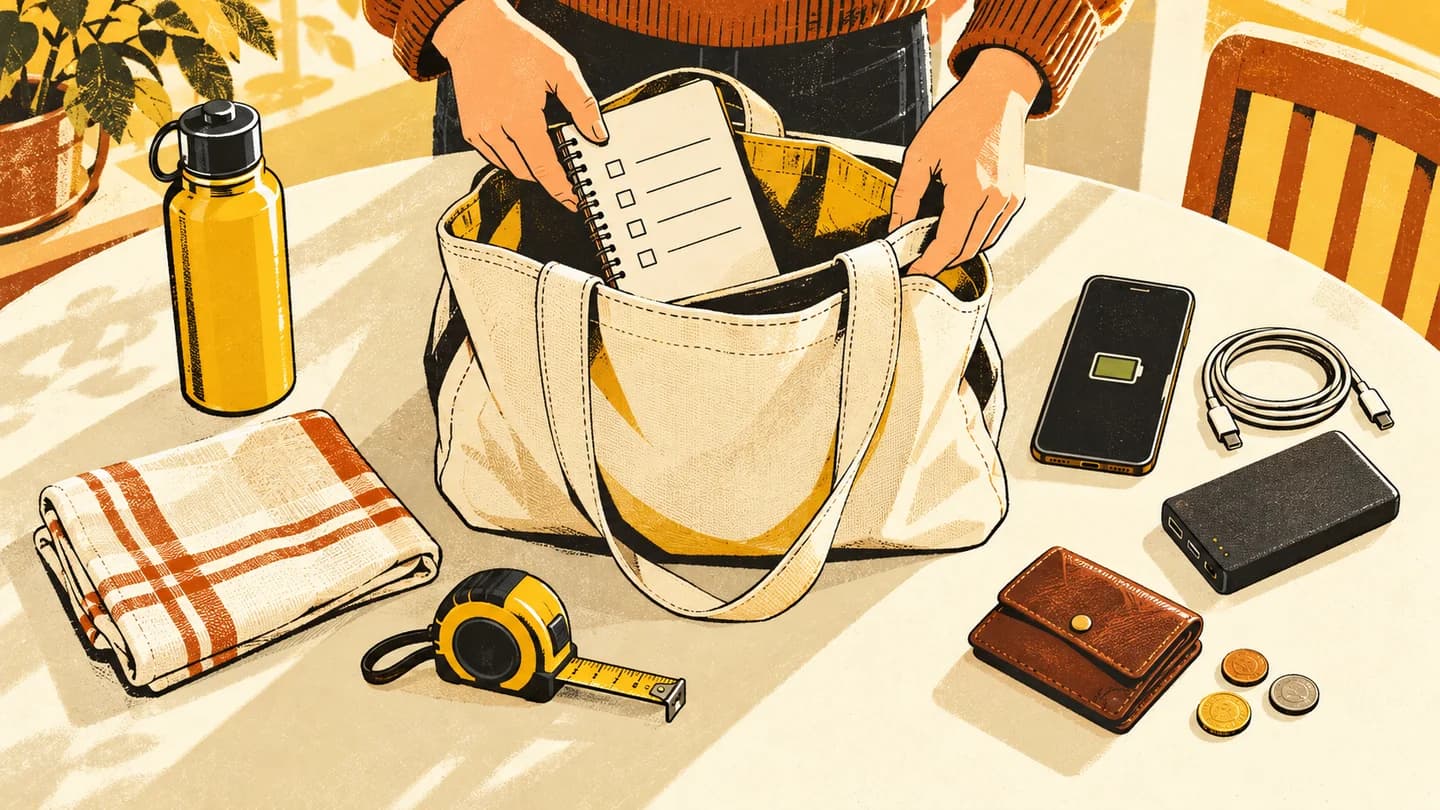
Pack a small kit with a job for every item
Take what supports your actual categories and the conditions. A heavy bag of hypothetical testing tools can become more hindrance than help.
| Item | What it helps you do |
|---|---|
| Charged phone and power bank | Identify models, compare evidence and record purchases |
| Small notes and coins where suitable | Pay agreed amounts without relying on abundant change |
| Strong bags or a suitable trolley | Carry purchases without dropping or overloading them |
| Clean wrapping and a rigid container | Separate fragile goods from heavy or sharp objects |
| Tape measure | Check size, transport and likely packing requirements |
| Notebook or prepared phone note | Keep price, condition and contents together |
| Weather-appropriate clothing and water | Remain comfortable enough to make careful decisions |
Add category tools only when you know their limits
A small torch can help you see a model label or the inside of a bag. A known-compatible battery may help with a specific check if the seller permits it. Neither turns a brief stall inspection into a full test. Bring only equipment you know is suitable for the exact object and safe to use.
Do not plug unknown mains equipment into an improvised supply or dismantle goods on a stall. Ask permission before opening a compartment, removing a lens or unfolding delicate paper. If meaningful testing needs a controlled setup, decide whether the untested purchase still makes sense without borrowing the value of a fully checked example.
At the stall: run six checks in order
Keep the object and its accessories together while you inspect. Do not open a sealed package or begin a test without the seller’s agreement.
- Price: ask the amount and confirm the items included.
- Identity: read the model, edition, maker, size or other distinguishing detail.
- Condition: inspect the important wear points, damage and repairs.
- Completeness: check essential pieces, matching accessories and correct contents.
- Evidence: compare achievable sales for the version and condition you actually have.
- Limit: decide the maximum you can pay after costs, then accept, offer or decline.
Write a useful note rather than a vague memory
For a book, a good purchase note might read: “£4, third edition, fold-out present, dust jacket torn, paid cash.” For a camera: “Model confirmed, charger missing, battery compartment clean, powers on only; no image test.” These are examples of a record, not conclusions that either purchase is profitable.
Capture the actual checks and the source of any claims. “Seller says used last month” differs from “tested all functions.” If taking photographs at the stall, ask where appropriate and avoid collecting unrelated personal details. Keep any receipt and link the note to a stock code when you get home.
When the signal fails, change the decision rather than the evidence
Download a concise reference list before leaving: identifiers, known compatibility requirements and limits you have already researched. Keep the date on price notes. An old comparable sale can help orient you, but it is not a current guaranteed exit price.
If you cannot establish a reasonable range for an unfamiliar item, either leave it or stay within a small learning budget you are prepared to lose. Do not describe that experiment to yourself as a researched bargain. Saving a photo to investigate later is useful only if you accept that the item may no longer be available when you return.
Checks that should stop a purchase
These are reasons to pause even when the asking price is low. They do not become less important because another shopper is interested.
- The item is not the model or version that supports your expected price.
- Essential contents cannot be checked and the unknown cost is too large.
- There are signs of unsafe damage, a recall concern or a category you cannot assess competently.
- Authenticity is central to the resale plan but remains unverified.
- The object is too awkward for your transport or storage.
- The margin depends on an unpriced repair or free packaging you do not have.
- You cannot explain the buyer, selling route and likely outcome in a few clear sentences.
Before paying: agree the complete handover
Point out which accessories belong in the purchase and confirm any bundle total. Ask practical questions before money changes hands: can you carry it now, is a second trip to the car needed, and has the seller actually agreed to hold it? Do not assume an unattended object has been reserved because you expressed interest.
Have the agreed payment ready and count the contents into your possession. If a payment method is not available, let the seller know and make a new agreement rather than promising a process you cannot complete. Do not rely on an unstated right to return uncertain goods after testing at home.
At the car: protect the value you just bought
Separate heavy objects from fragile pieces and avoid leaving loose tools beside glass or screens. Put purchases in stable containers and secure them against movement. Keep pressure away from handles, corners and controls. Protect paper, textiles and electronics from rain, damp packaging and avoidable exposure while you continue browsing.
Check the remaining carrying space before buying another bulky item. An object that requires an unsafe load or improvised lifting plan is not ready to come home. Take suitable help when needed, and do not let a low price turn into damage to the purchase, vehicle or someone’s property.
A one-minute check before leaving the site
Back home: finish the checklist before the next outing
Buying creates work. Close the loop while the details are fresh.
- Check the purchases against notes and receipts.
- Photograph the original condition and inspect contents more fully.
- Identify safe testing or preparation still required.
- Assign stock codes and storage locations.
- Prepare accurate listings once identity and condition are established.
- Record the whole trip’s costs, including days with no worthwhile purchases.
- Add any missed fault to your next checklist.