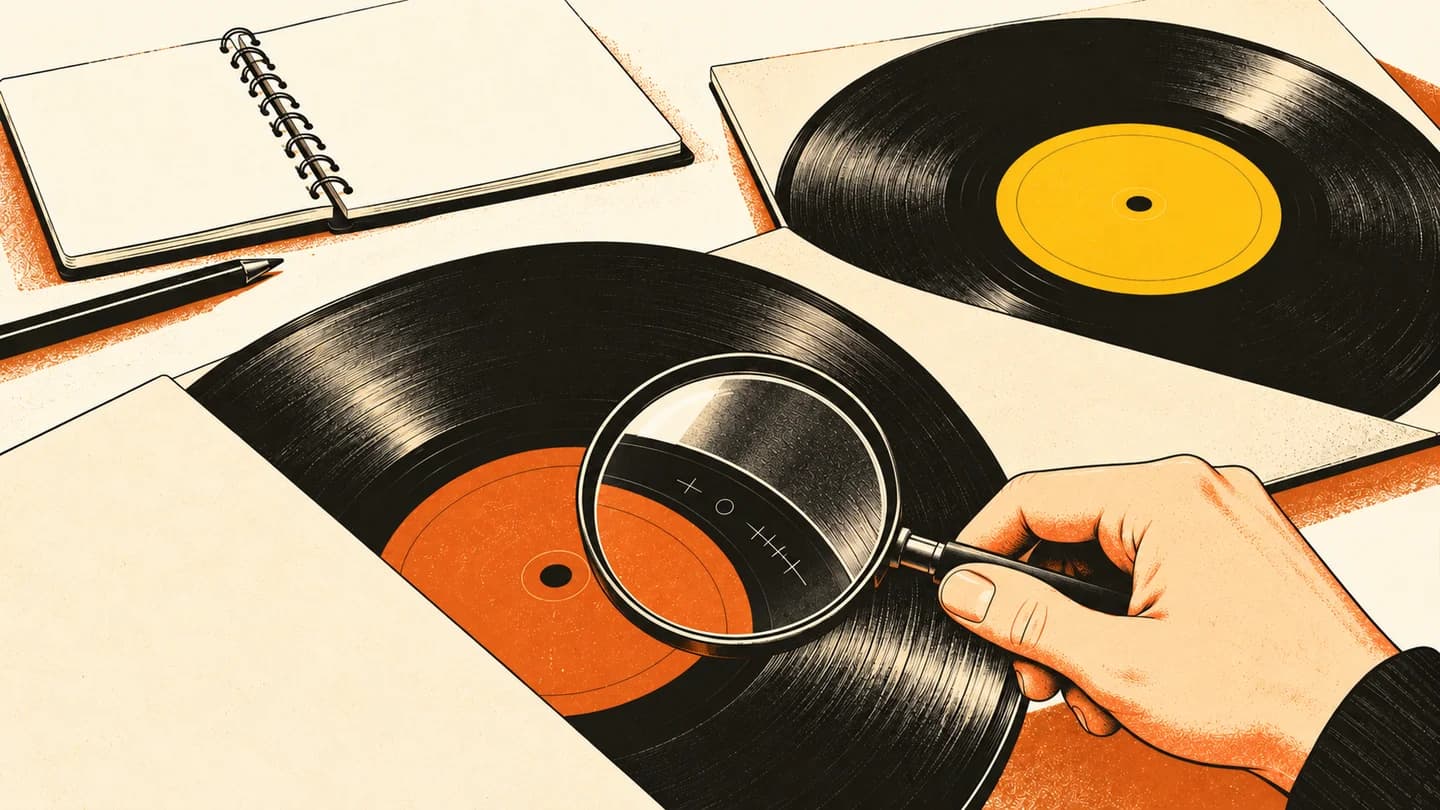
Use catalogue numbers, labels, sleeves and runout information together to identify a record release.
The album title is only the beginning
Two records with the same music and almost identical covers can attract very different prices. They may be different editions, different cuts or simply copies in very different condition. Before assuming one is a bargain, establish what you have and what the comparison actually represents.
Pressing research is useful because it narrows uncertainty. It should not become a hunt for any detail that allows a more expensive description. A sensible result might be a well-supported identification of a common reissue. That is still better information than an unsupported claim that an ordinary record is a rare first pressing.
Separate the questions collectors are asking
These working distinctions help organise your research. Terminology can vary between catalogues, so read the relevant database notes before treating a label as conclusive.
Which release?
The particular published version: format, label, territory, packaging and other identifying details.
Which manufacturing details?
The markings and physical features that may distinguish production variants or help establish a cut or pressing source.
Which copy?
The condition, completeness and history of the actual record in your hands. A correct edition match does not establish its grade.
Start with the visible information
Photograph the front, back, spine and both centre labels. Copy the artist, title and catalogue number exactly, including suffixes. Note whether the record is a single disc or part of a set and whether the packaging agrees with the contents.
Use those details to make a shortlist in a specialist release database. Compare images and notes instead of stopping at the first familiar cover. A barcode can be a useful starting point, but a search result still needs checking against the physical item. Database information is a research aid, not a certificate supplied with your record.
Read the runout without guessing
The runout is the area between the recorded grooves and the centre label. It can contain stamped or etched letters, numbers and symbols. Photograph it in angled light and transcribe what you can actually see. Keep side A and side B notes separate.
Record uncertain characters as uncertain. A small mark that might be a numeral, a letter or a scratch should not silently become whichever character matches the valuable listing. Check the entire set of relevant details, and read how a database distinguishes variants within that release. One different character needs investigation; it does not by itself prove a different valuable edition.
Compare a candidate release methodically
Work through the same fields each time rather than making a decision from one promising match.
- Confirm artist, title, format and number of discs.
- Compare label, catalogue number and centre-label design.
- Read the release notes and documented distinguishing features.
- Compare the runout information for both sides.
- Check sleeve construction, printing and expected inserts.
- Record agreements, contradictions and unresolved details.
- Only use the identification confidently when the important evidence agrees.
Do not use the copyright year as the manufacturing date
A record can retain dates connected with the recording or original publication while being manufactured later. Treat a printed year as one piece of information, not a universal first-pressing test. A later issue can reproduce much of an earlier design.
Likewise, a seller’s description of “original” may mean only that it is a genuine record rather than a copy of the music. Ask what evidence supports the specific edition claim. For an expensive purchase, a vague word in a title is not enough to bridge an identification gap.
Check the sleeve and record as separate objects
Collectors sometimes replace a damaged sleeve or put a disc into a similar jacket. An early sleeve around a later disc does not automatically create a complete early edition. If an insert matters to the comparison, establish whether it is present and appropriate to the copy.
Make a component record for unusual packages: disc, outer sleeve, printed inner, poster, booklet and any other documented contents. Describe a mismatch openly. There can still be a buyer for an incomplete or assembled package, but its description and valuation should reflect what is actually included.
“First pressing” needs a specific, supported meaning
Understand why a version might attract demand
A collector may want a particular mix, presentation, packaging variation or documented early issue. Another buyer may prefer an affordable later version in better condition. These are different reasons to buy, and neither can be reduced to the age printed on the sleeve.
Colour, heavyweight vinyl and a limited-edition description can distinguish a product, but they do not establish a valuable resale market by themselves. Look for actual demand for that version. Avoid treating an unusual appearance as a price multiplier without evidence of completed comparable transactions.
Use a comparison sheet before using a price
Imagine two search results for the same album. These examples are hypothetical and intentionally contain differences that prevent a direct valuation.
| Detail | Copy in your hands | High-priced search result |
|---|---|---|
| Edition evidence | Later label design | Documented early issue |
| Disc condition | Visible marks; not played | Fully assessed, excellent condition |
| Packaging | Replacement inner | Original printed inner and insert |
| Seller description | Unverified pressing claim | Detailed identifying photographs |
| Useful conclusion | Research this version separately | Do not copy this price |
Look behind the headline price statistics
Discogs displays low, median and high figures derived from recent sales of a release. Open the underlying information available to you and consider condition and sale dates. A median combines individual transactions; it is not a guaranteed offer for any copy with the same catalogue number.
Cross-check with relevant completed marketplace sales where useful, keeping currency and delivery treatment consistent. Exclude signed copies, bundles and unusually complete packages unless yours matches. If only one old result exists, acknowledge that the evidence is thin rather than presenting an exact market value.
Set a limit on unresolved research
Some copies will resist a quick identification. Keep a list of unresolved features and ask a knowledgeable specialist a focused question with useful photographs. “Which of these two label variants matches this copy?” is easier to answer than “Is this valuable?”.
Do not invent a new database identification or sell under a convenient existing entry simply because the exact match is hard to find. If you cannot resolve the point before buying, price the purchase for the evidence you have, or leave it. An uncertain rare-pressing story is not a dependable margin.
Keep an evidence file for the listing
Save the useful work so you do not repeat it when a buyer asks for details.
- Clear label and sleeve photographs.
- Runout transcription with uncertain characters flagged.
- The release reference and the features that support it.
- Separate notes on disc condition and sleeve condition.
- A list of original, replacement and missing contents.
- Relevant sale comparisons and when you checked them.
Write a precise listing without overselling the research
Give the verified release details prominently, then explain the actual condition. If a particular identifying feature is central to the price, photograph it. Avoid unsupported sound-quality claims based only on age or appearance. Your testing can describe what you heard on your setup without declaring a universal best pressing.
Good edition research makes the transaction clearer for both sides. The buyer can assess the evidence, and you can defend the description without relying on a chain of other sellers’ claims. That clarity is more valuable to a repeatable resale business than an impressive title that the physical record cannot support.