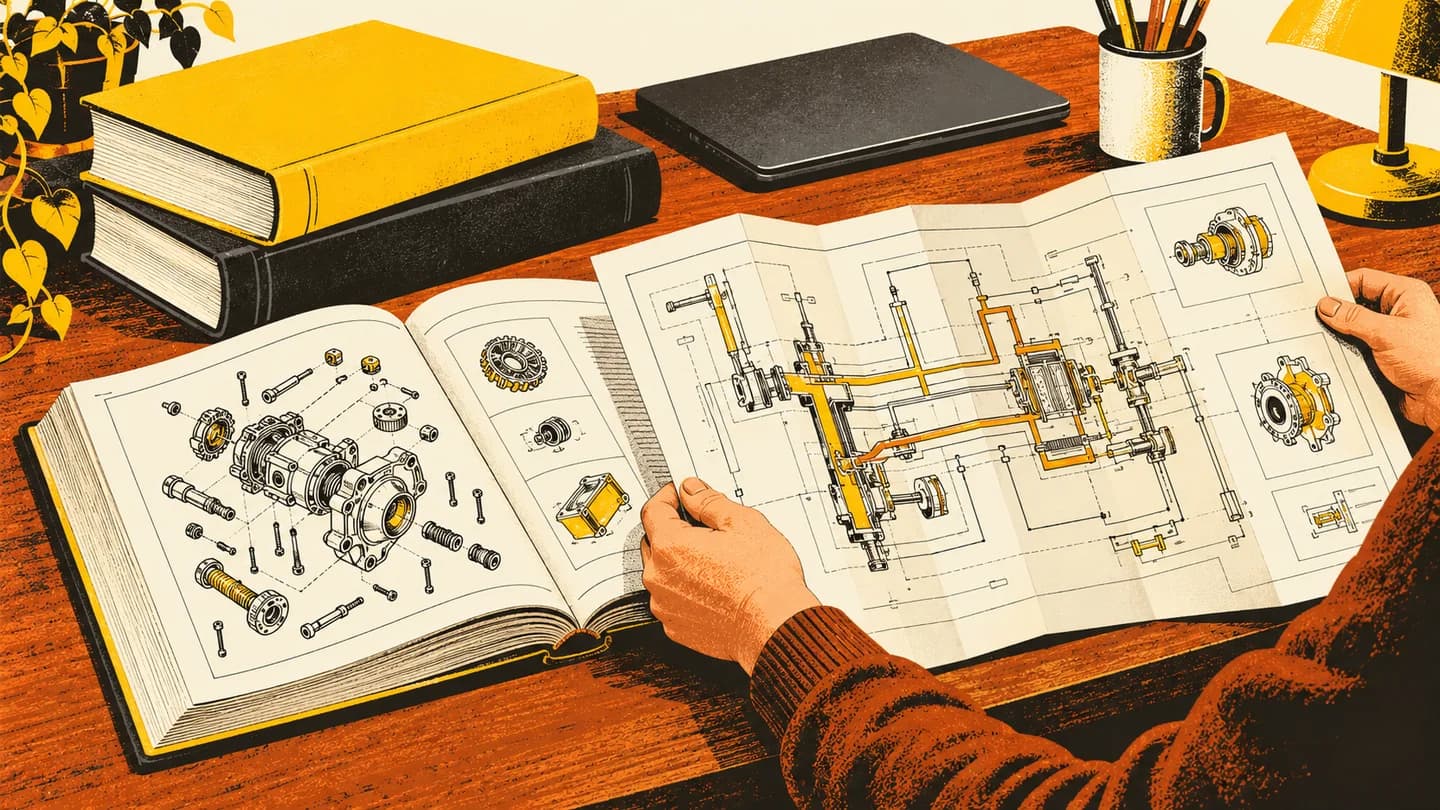
Prioritise identifiable specialist books and interesting editions, then inspect condition before buying.
Look for a reader or collector, not just an old date
A faded spine can make a book look promising, but age alone does not tell you whether it will sell. A useful specialist title, an interesting edition or a complete illustrated volume can deserve attention even when the books around it look more impressive. Start by asking who would want this particular book and why.
That question keeps a book-buying trip manageable. You are not trying to become an expert in every author or subject before leaving the shop. You are choosing a few candidates you can identify, inspect and research well enough to make a sensible buying decision.
Three different reasons a book might sell
Keep these routes separate when researching. A buyer who wants information may care about different details from a collector.
Useful content
The book answers a specific need: a specialist craft, a local subject, an artist’s work or instructions for particular equipment.
Collecting interest
The attraction is an identifiable edition, author, illustrator, binding or documented association. Claims need evidence.
Presentation and completeness
A buyer wants the particular illustrated volume or set, with its jacket, plates, maps or accompanying material intact.
Shelves worth a second look
These are research leads, not a list of categories guaranteed to make money.
- Local history covering a small place or specialist community.
- Detailed hobby references with information beyond a general introduction.
- Art, photography and design monographs with identifiable editions.
- Technical or workshop books for specific equipment.
- Small-press titles that serve a clear audience.
- Illustrated books whose expected plates and maps are present.
Read the title page rather than trusting the spine
Record the author, full title, publisher, publication details and format. Then inspect the copyright or publication-history page for edition information. A jacket can be swapped and a familiar cover can appear on several printings, so the outside of the book is only a starting point.
An ISBN is useful where present, but it does not describe condition and can persist across unchanged reprints. Check the physical copy against the search result. For an older book without an ISBN, search a combination of title, author, publisher and date, then refine using the actual edition details.
Decide what would make this copy desirable
For a local-history book, the specific town, railway, industry or organisation may be the useful search term. For an art book, identify the artist, exhibition or series. For a technical manual, record the model and version it covers. These details help you find a relevant audience.
Do not add a fashionable collecting label simply because it produces expensive results. A modern reprint of an illustrated work is a different product from an early copy; an ordinary owner’s inscription is not an author’s signature. When the distinction changes the buying price, resolve it before paying.
Inspect beyond the first attractive page
Use clean, dry hands and support the book without forcing the binding flat.
- Check the boards or covers, spine and joints for damage.
- Look for loose sections, detached pages or an opening that feels unstable.
- Browse through the text and illustrations for missing or damaged material.
- Check any contents list of plates, maps or inserts against what is present.
- Examine the jacket separately, including flaps and hidden tears.
- Record writing, stamps, highlighting, stains, odours and signs of damp.
Completeness can matter more than cosmetic appeal
A book of maps with a missing foldout may be much less useful than a scruffier complete copy. An art book can lose its main attraction when a plate has been removed. Do not call a volume complete just because the page numbering appears to run from beginning to end: separate illustrations and inserts may need their own check.
If you cannot establish the expected contents, keep that uncertainty in your assessment. A quick inspection can identify a promising research candidate, but it is not the same as a careful collation. Valuable or complex books may deserve specialist assessment before purchase or sale.
Leave restoration experiments out of the buying plan
Research the same edition in comparable condition
Use specialist bookseller listings to learn terminology and distinguish editions, but remember that their prices are asking prices. Look for achieved sales where available and inspect the details behind them. A signed, fine copy with its original jacket is not a fair comparison for an unsigned copy without one.
Watch for ex-library marks, replaced bindings, missing material and later printings in the results. These are not minor footnotes if they explain the price difference. Keep a short list of relevant comparisons rather than averaging everything with a matching title.
Be cautious when the only evidence is scarcity
Finding no other copy for sale does not establish an eager buyer. The title may be uncommon because few people want it, difficult to identify, or usually sold through a specialist channel. Ask what evidence supports both supply and demand.
If you cannot find completed sales, use current alternatives and specialist advice to frame a cautious range. Decide how long you can hold the book and what a lower-price exit might look like. Avoid committing a large part of your budget to one speculative title because an online search produced no competition.
Work backwards from the likely sale
These invented figures illustrate a buying decision for a specialist book. They are not current market prices or postage rates.
| Line | Amount |
|---|---|
| Cautious expected proceeds | £32 |
| Selling charges, packaging and delivery | −£10 |
| Desired contribution before tax and time | −£10 |
| Allowance for uncertainty | −£4 |
| Maximum buying price | £8 |
Weigh the work as well as the book
Heavy art books and multi-volume sets can be expensive to protect and send. Measure the likely parcel, not only the bare book, and check the actual service you would use. A £5 purchase does not become a good deal simply because the cover price was £80.
Also allow time for identifying the edition, checking contents, taking photographs and answering questions. If a low-value book needs more work than the return can support, leave it or consider a coherent bundle. Mixing unrelated books together may reduce listing work but does not automatically create demand.
Photograph the details a buyer cannot inspect
A short, deliberate set of photographs is more useful than many flattering views of the cover.
- Front, spine and back of the actual book.
- Title and publication-history pages where edition matters.
- The dust jacket, including important damage or a clipped flap.
- Representative illustrations and any special included material.
- Writing, library marks, loose pages or other condition issues.
- The complete group for a set, showing volume identities.
Describe precisely and store carefully
Use the verified title, author, publisher, edition and format in the listing. State relevant defects plainly. If you are unsure about a signature or edition, do not turn that uncertainty into a confident claim in the title and a quiet qualification further down.
Keep the book in a clean, dry, stable storage area where the binding and corners are supported. Protect it from damage while it waits to sell. A careful purchase can lose its margin if an overfilled box or careless dispatch creates a condition problem that was not present when you photographed it.
Build a small reference file from real outcomes
Record which details helped you identify the book, what it cost, the final proceeds and the time it took to sell. Save useful references for subjects you encounter repeatedly. Over time, this turns a broad interest in books into specific buying knowledge.
Your best starting niche is often one you can explain accurately and inspect confidently. That might be local history or a specialist hobby rather than famous literary firsts. A modest book bought for a clear audience can be a better resale decision than an imposing old volume supported only by wishful thinking.