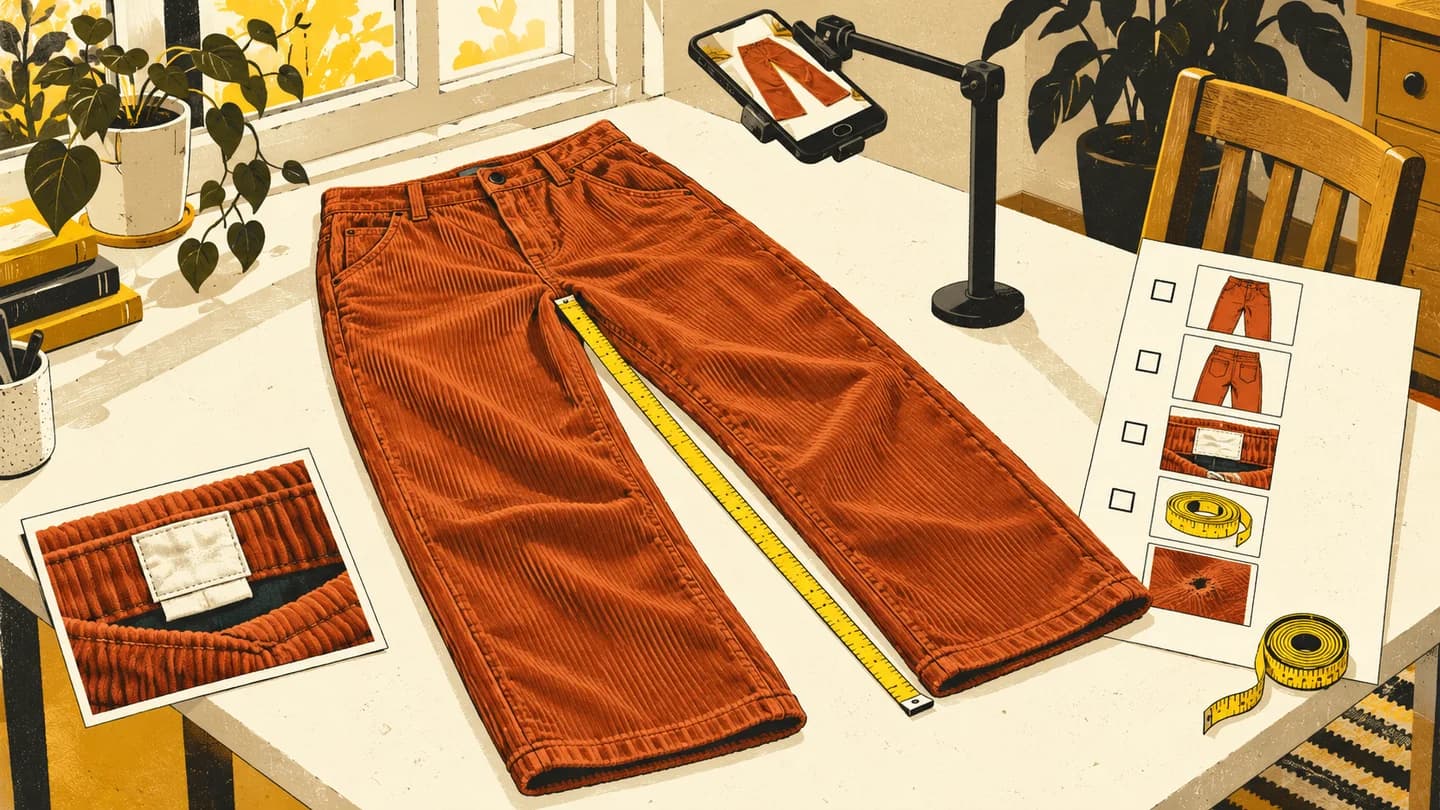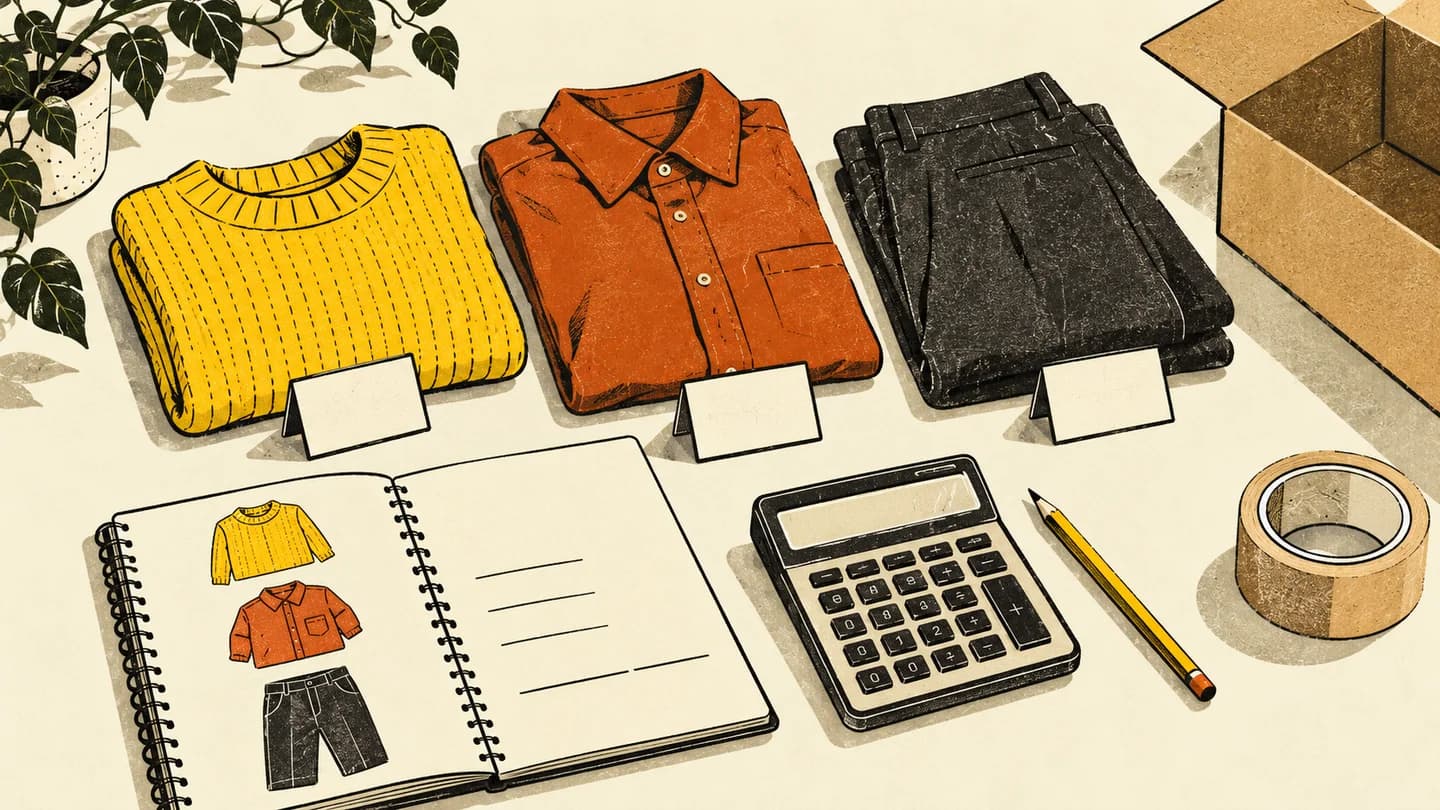
Price a garment using its exact brand, style, size and condition rather than the original retail ticket.
The original ticket is not today’s selling price
A garment’s value on Vinted depends on what a buyer is likely to pay for that particular item now. Brand, style, material, size, condition and available alternatives all matter. The original retail price can provide context, but it cannot make an ordinary used item worth a fixed percentage of its old shop price.
Start by identifying the garment and then build a range from relevant evidence. The aim is not to find one flattering number. It is to choose a realistic asking price, understand your minimum acceptable result and know what you will do if the garment attracts little interest.
Create a short garment profile
These details make your searches more useful and reveal where comparisons may be weak.
- Verified brand and product line, with any readable style or product code.
- Garment type, cut, colour and pattern.
- Material from the label, rather than a guess from texture.
- Labelled size and useful actual measurements.
- Condition, alterations, missing parts and any remaining preparation.
- Included accessories such as a belt, detachable hood or matching piece.
Search narrowly before broadening
Begin with the closest description: for example, the exact brand and product code if available. If that produces few relevant results, widen to the same type, material and style. Keep track of which features changed when you broadened the search. A different fabric or line may explain a large price difference.
For an unbranded garment, useful descriptive terms still matter. A well-made wool skirt and an unlabelled synthetic skirt may appeal to different buyers, but do not claim wool without evidence. If the material label is absent, describe the observable construction and state the uncertainty rather than borrowing a more valuable specification.
Read listings beyond the headline
Open promising comparisons and examine condition, measurements and included components. A matching coat with a missing belt may be a weaker comparison for a complete one. A jacket with worn lining may justify a different price even if the first photographs look similar.
Avoid comparing a single garment with a matching suit or coordinated set without adjusting for the contents. Likewise, separate unusual collector interest from ordinary brand demand. If you cannot explain why a comparison is relevant, do not let its high price dominate the range.
Asking prices are evidence of competition
Build a sensible starting range
Use several relevant examples where possible, not just the most expensive result.
- Record the closest comparable garments and their condition.
- Separate active asking prices from any verified completed-sale evidence.
- Note the total buyer cost and whether delivery differs materially.
- Exclude unsuitable sizes, bundles or different product lines where they distort the comparison.
- Choose a plausible lower and upper outcome for your own garment.
- Set an initial asking price within a range you can explain.
Account for the condition you actually have
A small repair can be straightforward, but the cost and time still belong in the calculation. A missing button may also mean finding a matching set rather than buying one generic replacement. For a stain, distinguish “has been washed and remains visible” from “will probably wash out”. Only the first describes what you know.
Compare the garment before and after proposed preparation. If an invented £8 cleaning bill might increase proceeds from £15 to £20, you spend £8 to gain £5. There may be other reasons to clean it, including suitability for sale, but the financial improvement alone does not support the decision. Do not buy stock that relies on an untested transformation.
Separate the three prices in your decision
Giving each number a purpose prevents you from treating an optimistic advert as a purchasing budget.
Asking price
The amount you advertise, supported by the garment and current competition.
Offer floor
The lowest result you are prepared to accept after considering costs and your objective.
Buying limit
The most you can pay for stock while leaving room for preparation, uncertainty and a worthwhile return.
Work backwards when buying to resell
Imagine a garment you cautiously expect to sell for £20. Allow £3 for preparation and packaging, £2 for possible optional services or other relevant costs, and £7 as your desired contribution before tax and time. That leaves an £8 maximum purchase price under those assumptions. These are invented figures; your costs and objective may differ.
Now repeat the calculation with £15 proceeds. The buying limit falls to £3 if you keep the same allowances and target. That difference matters at a charity-shop rail. If only the highest plausible sale makes the purchase work, you have identified a fragile deal rather than a reliable margin.
Consider season without making a forecast
Some garments solve a more immediate need at particular times of year. You can consider whether buyers are currently shopping for the use the garment serves, but do not assume a calendar month guarantees a higher price. Competition, weather, style and size still matter.
If you intend to store stock for later, account for the space and money it occupies. A coat that might earn more next winter is not necessarily better than a modest sale now if you need the cash or storage. Set a deliberate holding plan instead of letting “waiting for the right season” become a permanent explanation for unsold purchases.
Use enquiries to improve the listing
Repeated questions about length, fit or fabric may reveal missing information. Add accurate measurements or a clearer label photograph so the next buyer can decide without messaging. A price reduction cannot fully compensate for uncertainty about what the item is.
Likes and views can indicate attention, but they do not establish an achieved value. Likewise, one very low offer is not a market verdict. Look for patterns across relevant enquiries and actual offers, then compare those patterns with your price and presentation. Keep the evidence proportional to what it can tell you.
Review an unsold garment methodically
Choose a review date that fits your space and cash needs.
- Check that the title, category, size and condition fields are accurate.
- Improve any unclear photographs or missing measurements.
- Look again at close alternatives and genuine new sale evidence.
- Decide whether to adjust the price, consider a suitable bundle or choose another route.
- Record the change and give it a reasonable chance before changing several variables again.
Do not let the purchase price trap you
Paying too much for a garment does not oblige the next buyer to reimburse the mistake. Your cost is essential for measuring the result, but demand sets the available selling opportunity. Sometimes accepting a smaller return or loss releases space and cash for better stock.
Keep a note of why the original estimate failed: wrong comparison, overlooked condition, an expensive repair or simply a weaker market than expected. That lesson is valuable when it changes your next buying limit. A wardrobe full of hopeful asking prices teaches less than a clear record of what actually sold and what it took to sell it.