Use these 25 categories as research prompts, then check the exact item, condition and likely demand before paying.
Use the list to narrow your search
The best things to buy at car boot sales for resale are the ones you can identify, inspect and sell for enough after costs. A category name cannot establish a margin. A desirable model with missing parts can be worse stock than an ordinary complete item with a clear buyer.
These 25 ideas are research prompts, not a ranking of guaranteed profits. Pick two or three that fit your knowledge and storage. Learn their identifiers and common faults before visiting a sale, then use current comparable sales to decide whether the particular object in front of you is worth buying.
Books: check the edition and the useful contents
Open the book with permission. A clean cover does not establish that diagrams, supplements or essential pages are present. Heavy books also need a realistic postage allowance.
1. Specialist reference books
Look for an identifiable subject, author and edition serving a particular reader. Check the contents and index, binding, annotations and any plates or maps. Research that edition; a familiar title may exist in versions with different content and demand.
2. Repair and workshop manuals
Match the manual to the exact machine, vehicle range or equipment revision it covers. Check publication details, fold-outs and oil-damaged pages. A manual is useful when it answers the buyer’s actual technical question, not simply because it looks old.
3. Out-of-print hobby books
Research the exact title and edition rather than treating “out of print” as proof of value. Inspect patterns, diagrams or inserts that make the book usable. A scarce title still needs enough interested buyers to justify its price and storage.
Recorded media: the version matters
Read the identifiers on the object itself. A case, sleeve or box can contain a different disc from the one its artwork suggests.
4. Identifiable vinyl pressings
Use the label, catalogue number and runout markings together to investigate the release. Examine the record and sleeve separately for wear, damage and substitutions. A famous album is not automatically a valuable pressing, and visual inspection cannot prove how it plays.
5. Complete CD box sets
Count the discs and match their titles or numbers to the set. Check booklets, inner packaging and disc condition. Price an incomplete set as incomplete; one missing disc or a damaged presentation box can change the audience and the return.
6. Film collections
Verify format, region information, edition and the films actually included. Look for missing discs, damaged hubs and packaging mismatches. Do not price a physical set as though used digital redemption codes will still provide extra value to its next owner.
Games and construction toys: completeness is a buying question
The box photograph is a claim to check. If a full count is impractical, identify the costly or essential components and keep the remaining uncertainty in your price.
7. Console games
Match the platform and release to the disc or cartridge, not just the case. Inspect condition and establish a suitable test at home. Check whether the advertised experience depends on an unavailable service, account or used code before treating every feature as transferable.
8. Complete board games
Find the rulebook’s component list and check the edition. Boards, specialist dice, cards and unique pieces may matter more than replaceable counters. A seller saying it was complete when last played is useful history, but it is not a current contents count.
9. Game expansions
Identify the expansion and the base game or edition it requires. Confirm that the box actually contains the expansion rather than spare pieces. Explain dependencies when selling; an expansion that cannot be played alone should not be advertised as a standalone game.
10. LEGO sets
Use the set number to find the correct instructions and expected build. Check distinctive components, figures and obvious substitutions before valuing it as complete. A bag of similar-coloured bricks or a matching instruction booklet does not establish that the full set is present.
11. Genuine LEGO minifigures
Inspect the combination of head, torso, legs and accessories, plus cracks and printing wear. Mixed boxes can contain assembled combinations that do not match a documented figure. Confirm the exact variant and authenticity before borrowing the price of a scarce complete example.
12. Model railway items
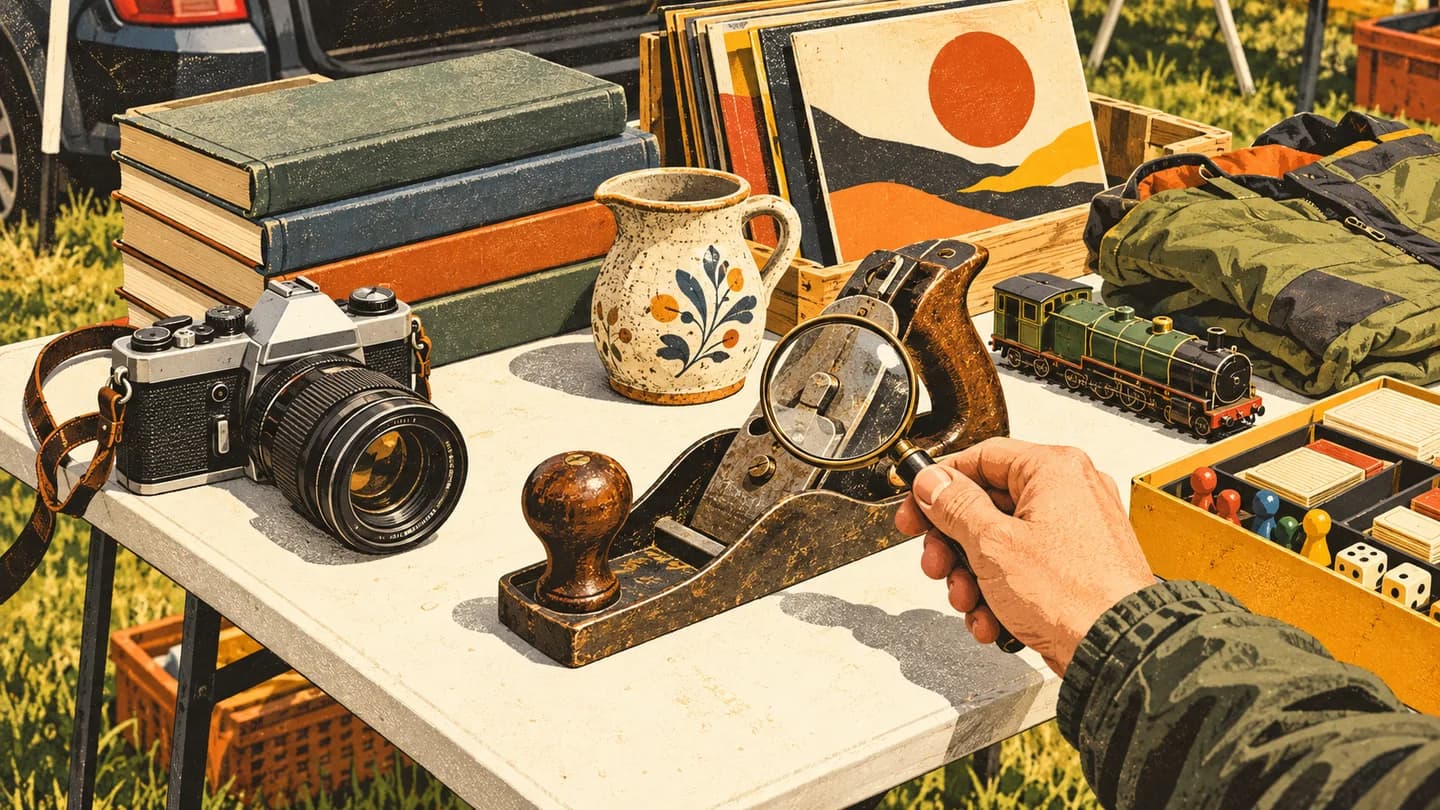
Identify scale, product number and the actual model inside any box. Look for missing couplings, damaged details and signs of repair. Electrical operation needs an appropriate test; an attractive locomotive should not be valued as a proven runner simply because its wheels turn.
Hand tools: inspect the working surfaces
Brand recognition is only the beginning. Missing components, wear and damage can turn a cheap tool into a parts-search project.
13. Hand planes
Check the body, sole, blade, adjustment parts and handles. Distinguish superficial dirt from damage affecting use. Identify the exact type before comparing sales; buying a restoration project makes sense only when the parts, work and likely final condition are understood.
14. Branded spanners
Read the maker and size, then inspect the jaws and ring for rounding, spreading or damage. Check metric versus imperial sizing and whether the pieces form a useful group. Avoid assuming every tool carrying a recognisable name commands the same price.
15. Complete socket sets
Count the sockets and check drive sizes, ratchet, extensions and any specialist bits. A fitted case may hide missing or substituted pieces. Price the useful contents you can verify, and allow for the weight of the packed set before planning a postal sale.
Camera and music equipment: match the system
These categories reward technical familiarity. Do not let a high working-item price substitute for checks you cannot perform at a stall.
16. Camera lenses
Record the full lens name, focal length, aperture and mount. Inspect accessible glass and mechanical condition without dismantling it. Confirm compatibility and a testing route; a similar-looking mount or included adapter does not establish full function on a buyer’s camera.
17. Camera bodies
Identify the exact model and included battery, charger and other accessories. Examine the mount, compartments and visible damage. Establish what has actually been tested, then budget for missing parts and further checks. Avoid pricing an untested body as a dealer-tested example.
18. Tripod heads
Check the head type, mounting connection, controls and matching quick-release plate. A missing proprietary plate can be more troublesome than it first appears. Test movement and locking only with permission and without risking the seller’s equipment or overstressing the mechanism.
19. Guitar effects pedals
Read the model and power requirements, inspect sockets and accessible battery space, and confirm a suitable functional test. Do not improvise a power supply because its plug fits. Revisions, faults and missing accessories should be reflected in the comparable examples you choose.
20. Hi-fi components
Identify the component and its role in a system. Check included remotes and leads, visible damage and the seller’s testing history. A power light is a limited observation. Weight, fragile controls and appropriate electrical assessment can materially affect the cost of resale.
Clothing and homeware: look beyond the attractive surface
Useful photographs and accurate condition descriptions matter to the next buyer. Check the less visible parts before becoming attached to a maker’s name or an appealing colour.
21. Specialist outdoor clothing
Check the exact model, size, labels, zips, seams and inner surfaces. Inspect for wear, odour and deterioration. Do not promise original waterproof performance from appearance alone. Keep protective or safety-critical equipment outside casual resale assumptions and research its requirements separately.
22. Marked studio pottery
Photograph the maker’s marks and compare the form and decoration with reliable references. Inspect rims, handles, bases and repairs. A mark resembling a famous potter’s initials is a lead to investigate, not a completed attribution or a reason to pay that maker’s prices.
23. Identifiable glassware
Check shape, measurements, decoration and any documented marks. Inspect rims and contact points for chips or repairs. Avoid attributing an unsigned piece from colour alone. Fragile packing and the risk of a condition mismatch belong in the buying calculation.
24. Vintage sewing patterns
Match the pattern number, garment and size to the envelope. Check instructions and whether tissue pieces are present, cut or altered. An attractive illustration cannot replace usable contents. Describe what was checked rather than claiming completeness from a quick glance.
25. Small solid-wood furniture
Confirm the construction, stability, joints and condition of surfaces, drawers and fittings. Measure it and plan transport, storage and the selling route. Small enough to carry does not always mean economical to post. Avoid assuming restoration will automatically increase its net value.
Turn a promising category into one buying decision
Use the same final checks whichever part of the list caught your eye.
- Identify this exact example and the next buyer it could serve.
- Separate verified condition from claims and unknowns.
- Find suitable completed-sale evidence, allowing for variant and completeness.
- Subtract purchase, preparation, selling and fulfilment costs from a cautious outcome.
- Compare the remaining contribution with the time, storage and risk.
- Buy within the resulting limit, or keep the money for a clearer opportunity.