Find opportunities through specialist knowledge while allowing for researched prices, condition and the cost of the visit.
Go looking for a specific advantage
An antique fair can offer a remarkable choice of objects in one place. That does not make it a warehouse of cheap stock. Many stallholders have already researched, transported and carefully selected what they sell. Your opportunity needs a clear explanation: perhaps you understand a particular maker, can recognise a useful variant, or already serve buyers looking for that object.
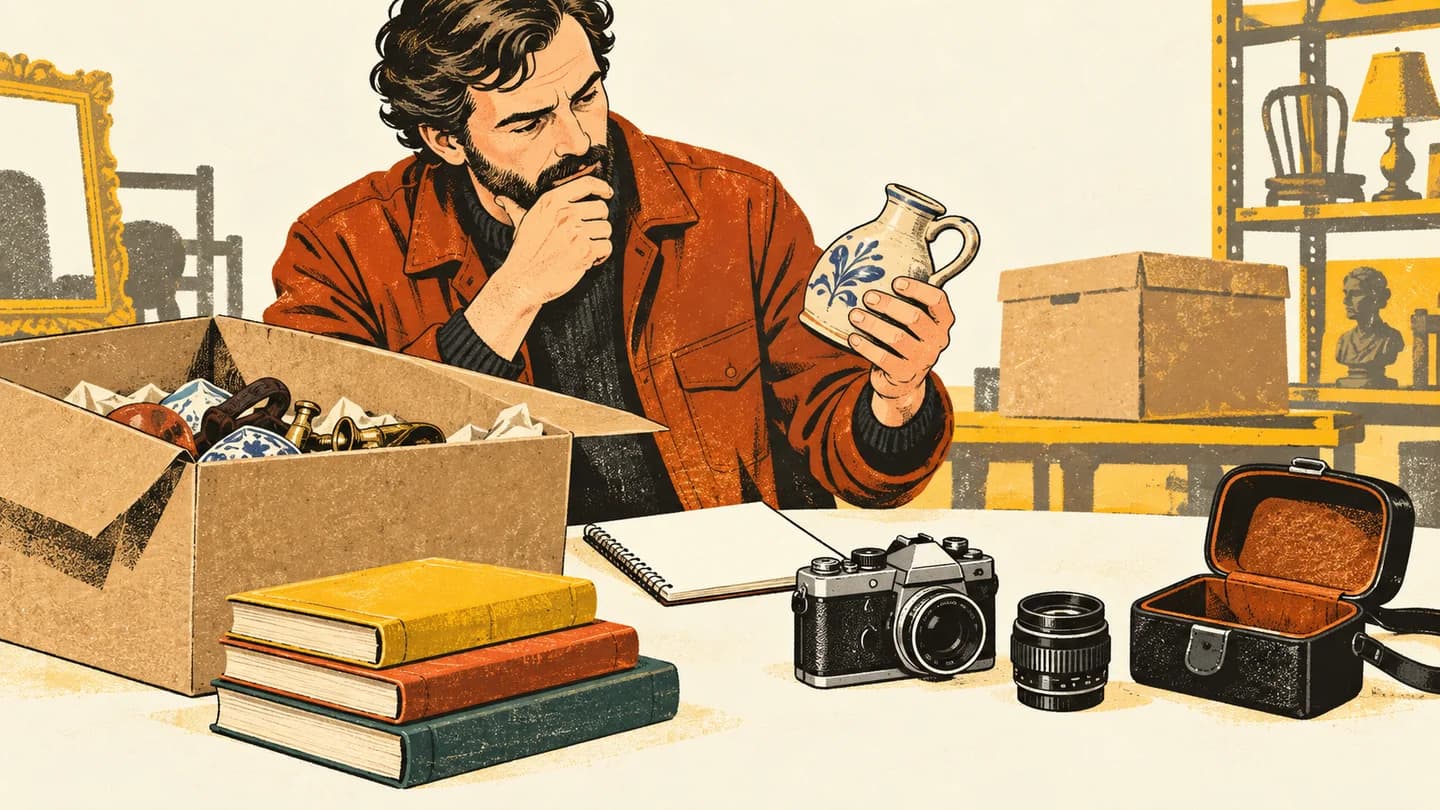
Start with a category you can assess. A small marked ceramic, a specialist reference book and a repaired clock demand very different knowledge. An attractive display can make unfamiliar things feel desirable, but your next buyer will judge the actual object, its condition and the price you ask.
Three reasons a fair purchase might work
Treat these as questions to investigate, not automatic advantages over the dealer.
You can identify it more precisely
A pattern, edition or component matters to a specialist buyer, and you can support that distinction with references and appropriate sold comparisons.
You have a suitable audience
Your existing buyers want this type of object. You understand their condition expectations, likely price range and how long similar pieces take to sell.
You can finish a defined job
A known missing component or modest preparation task has a confirmed cost. The opportunity does not depend on discovering later whether a major fault is repairable.
Choose the fair to suit the stock you sell
Read the organiser’s description, exhibitor information and current visitor arrangements. A large outdoor antiques market, a small specialist collectors’ fair and a carefully presented decorative-arts event can offer very different stock and price levels. Look at actual dealer categories rather than deciding from the word “antiques” alone.
Confirm the date, buyer entry time, admission, access and loading arrangements before leaving. An early ticket may buy more choice, but it also raises the cost of the visit. Decide what benefit you expect from that extra spend. Check individual dealers’ payment methods; the method accepted at the entrance does not establish what every stall accepts.
Pack for inspection and the journey home
Keep your kit proportionate to the objects you intend to buy.
- A charged phone and a small reference list of makers, measurements or variants you know.
- A tape measure, notebook and magnifier where close inspection is appropriate.
- Clean wrapping and a firm container for small fragile purchases.
- A practical carrying or loading plan for larger pieces, agreed with the organiser where necessary.
- A separate allowance for admission and travel, plus a firm stock budget.
- Comfortable footwear and suitable protection if part of the fair is outdoors.
Inspect the whole object with permission
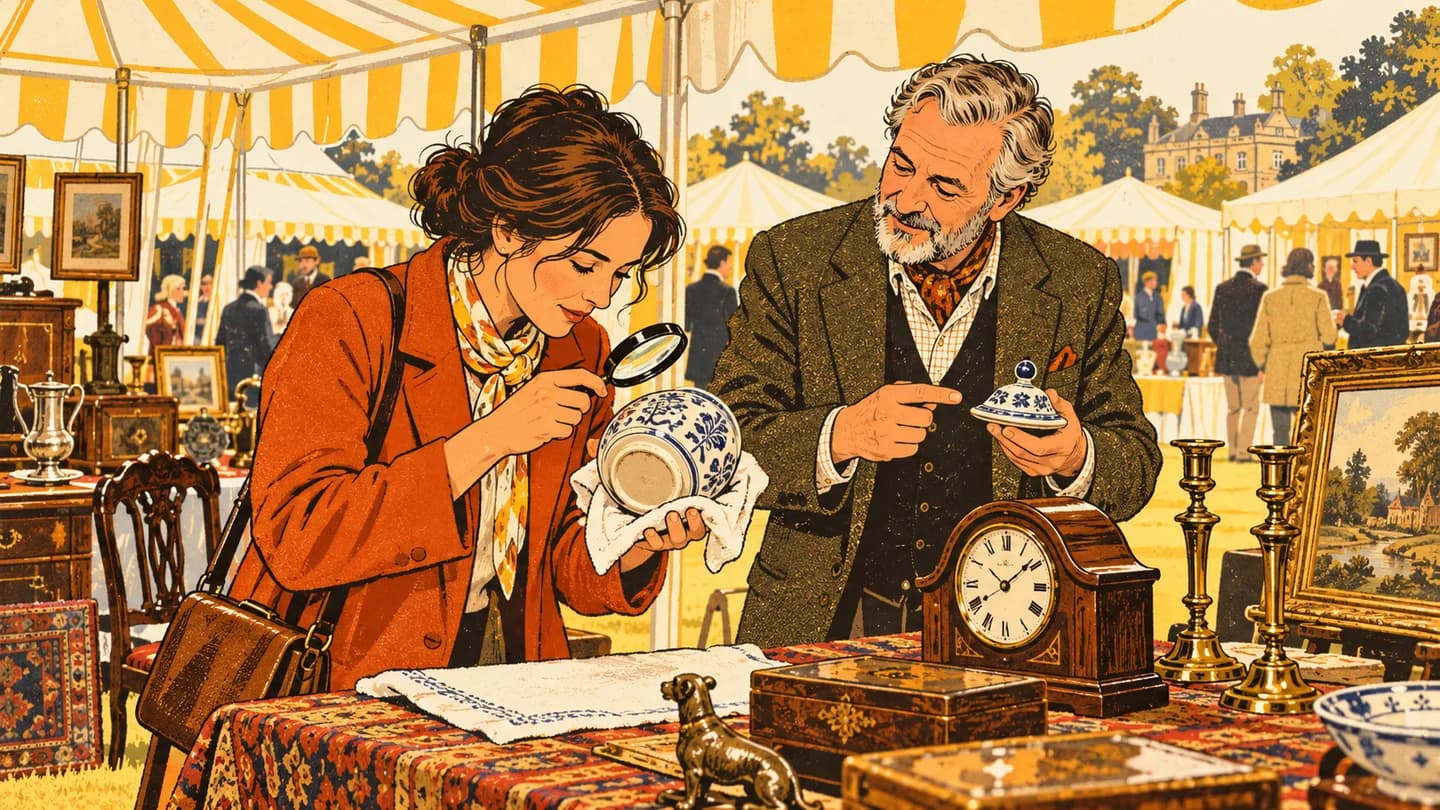
Ask before lifting a lid, opening a case or turning an item over. Support the main body rather than lifting ceramics by handles or carrying a heavy object by a decorative fitting. A crowded stall is a poor place to improvise a technical test or dismantle an unfamiliar mechanism.
Examine the base, back, underside and joints as well as the display surface. Look for mismatched wear, repairs, missing components and differences between paired pieces. Describe what you actually see. A clean-looking surface does not establish an untouched finish, and an old-looking mark is not enough to identify a maker confidently.
Questions that produce useful answers
A focused question gives you something concrete to investigate. Keep the dealer’s answer separate from your own observations.
| Instead of asking | Ask about |
|---|---|
| “Is it in good condition?” | Repairs to the handle, chips on the rim, or missing fittings |
| “Is it old?” | The evidence for the stated period and any later alterations |
| “Does it work?” | Which functions were tested, when, and what remains untested |
| “Is the set complete?” | The expected contents and which pieces are included in the price |
| “Does it have provenance?” | Documents or records that identify this particular object |
Do not turn a tentative attribution into a fact
Read the exact wording on the label and any supporting paperwork. “In the style of” and a firm attribution are different claims. A family story can be interesting background, but it does not by itself establish the maker, age or previous ownership that would justify a higher price.
If the valuable version and the ordinary version look similar, identify the feature that separates them before paying. When you cannot establish it, research and price the object at the level you can support. Passing on a possible rarity is preferable to making your resale margin depend on an assertion you cannot defend.
Compare like with like before negotiating
Look for completed sales of comparable examples: same maker or reliable attribution, similar size, form, decoration and condition. An intact pair is not a sound comparison for a single repaired piece. A specialist gallery’s asking price also reflects its service and audience; it is not evidence that you will receive the same amount.
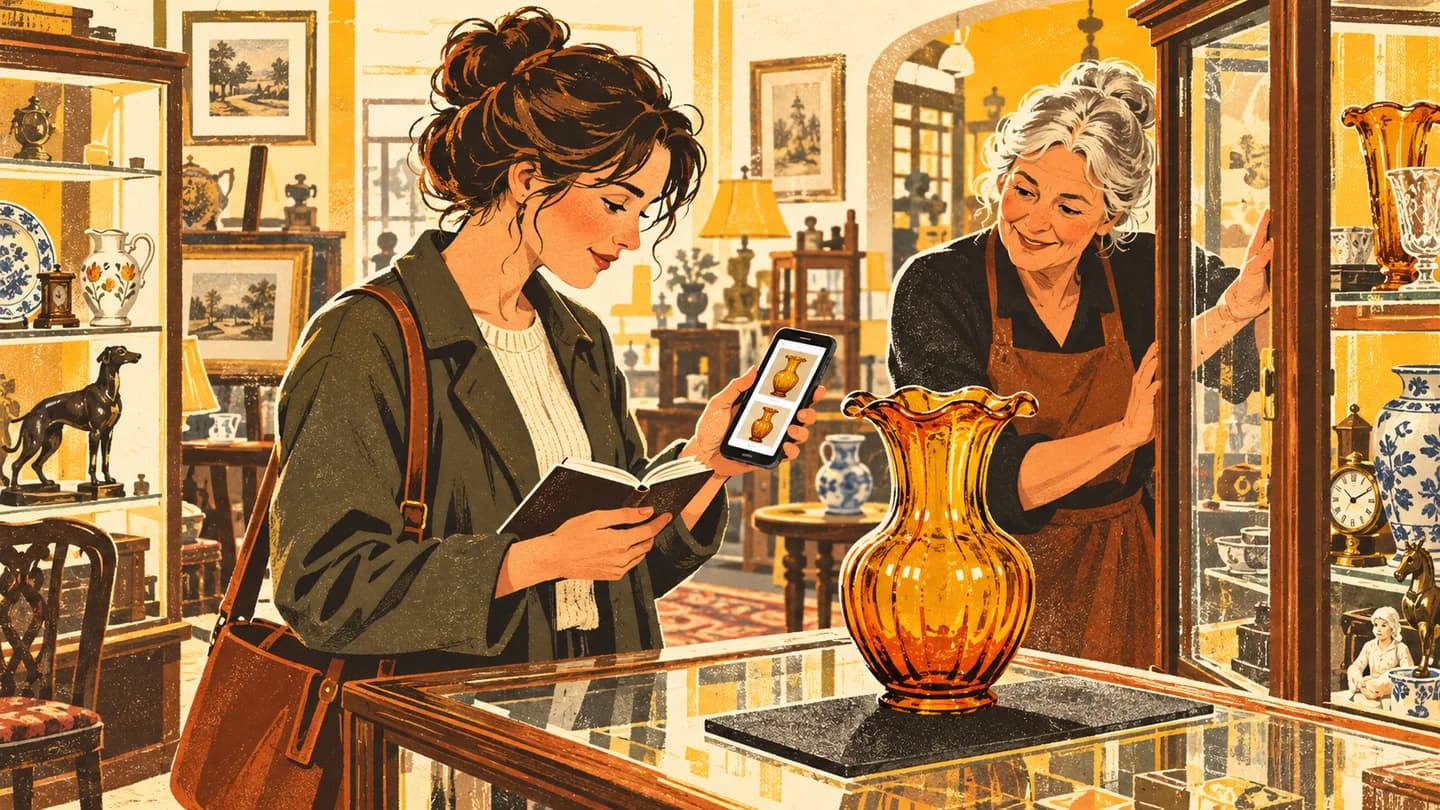
Record more than one result where possible and notice how widely they vary. If appropriate sales are scarce, acknowledge the uncertainty rather than choosing the most exciting figure. Bargain Bandit can help begin identification and valuation research, but the photograph cannot verify concealed repairs or guarantee an attribution.
Work backwards to your buying ceiling
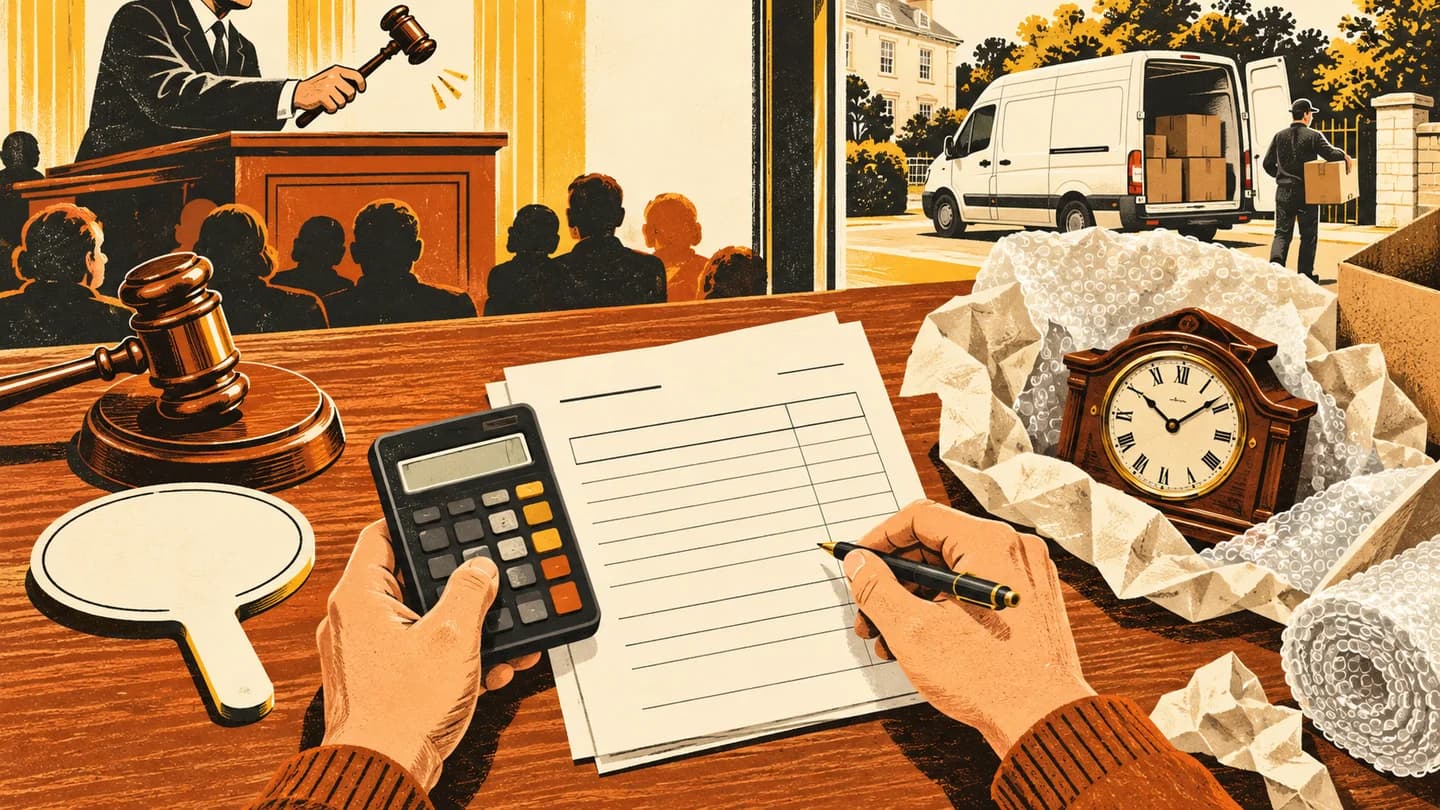
Here is an invented example for a small decorative object. It illustrates the calculation rather than a typical antique-fair return.
| Allowance | Amount |
|---|---|
| Cautious expected resale receipt | £95 |
| Estimated selling, packing and delivery costs | −£18 |
| Preparation | −£5 |
| Share of admission and travel | −£7 |
| Contribution wanted before your time and other overhead | −£25 |
| Maximum purchase price | £40 |
Stress-test the price, not just the best outcome
If the example sells for £80 instead of £95 and those costs stay the same, a £40 purchase leaves £10 contribution rather than £25. That change matters if the object requires lengthy research or ties up your buying money for months. You may prefer to pay less, choose a different item or leave it.
Include the practical costs of the route you actually expect to use. A fragile item may need more substantial packaging or specialist transport. A local sale can avoid a parcel but introduce storage and collection arrangements. Do not value an object for a national audience while budgeting only for the easiest local handover.
Make a clear, respectful offer
Negotiate after inspection and research, while you still have a genuine choice to walk away.
- Confirm the ticket price and exactly what it includes.
- Choose an offer below your researched ceiling, with room only if you can justify it.
- Ask politely whether the dealer would accept that amount.
- For a group purchase, identify every included piece before agreeing a combined price.
- Accept the answer without inventing faults or claiming another offer you do not have.
- Confirm payment, paperwork and any collection agreement before completing the purchase.
A discount does not create a margin
Keep the purchase identifiable after you leave
Ask for a receipt with the dealer’s details, date, amount and a useful description. Keep any written attribution or agreed condition information with it. Photograph the item and relevant label with permission, especially if several similar objects are being purchased. Check that removable lids, stands and paperwork reach your bag with the main object.
If you will collect later, agree where, by when and who will release the goods. Pack objects so that they cannot strike one another during the journey. Once home, record the purchase before cleaning or preparing it, and retain an accurate account of repairs or uncertainty for the eventual listing.
Judge the fair by completed results
A successful visit may produce one suitable item and several useful dealer contacts. Record what you spent on the entire trip, how many purchases became finished listings and what ultimately sold. A full bag is only the beginning of that calculation.
Over several visits, compare fairs by the stock you can actually sell and the work each purchase requires. Keep returning where your knowledge, budget and audience fit the available objects. The aim is to build a repeatable buying process, with enough room for an interesting find, rather than relying on a dramatic discovery every time.