Make dimensions, condition and collection arrangements clear so local enquiries turn into practical sales.
A bulky-item advert needs a transport plan
Selling a wardrobe, desk or dining table on Gumtree is partly about finding a buyer and partly about making collection possible. The buyer needs to understand the dimensions, access, condition and lifting requirements before arranging a vehicle. An attractive photograph cannot answer those practical questions.
Start by deciding what you can reasonably offer. If the item is collection-only, say so. If you can dismantle it, establish what that involves before promising it. A clear advert and a realistic handover plan help turn interest into a completed sale without discovering at the door that the furniture will not fit.
Measure more than the longest edge
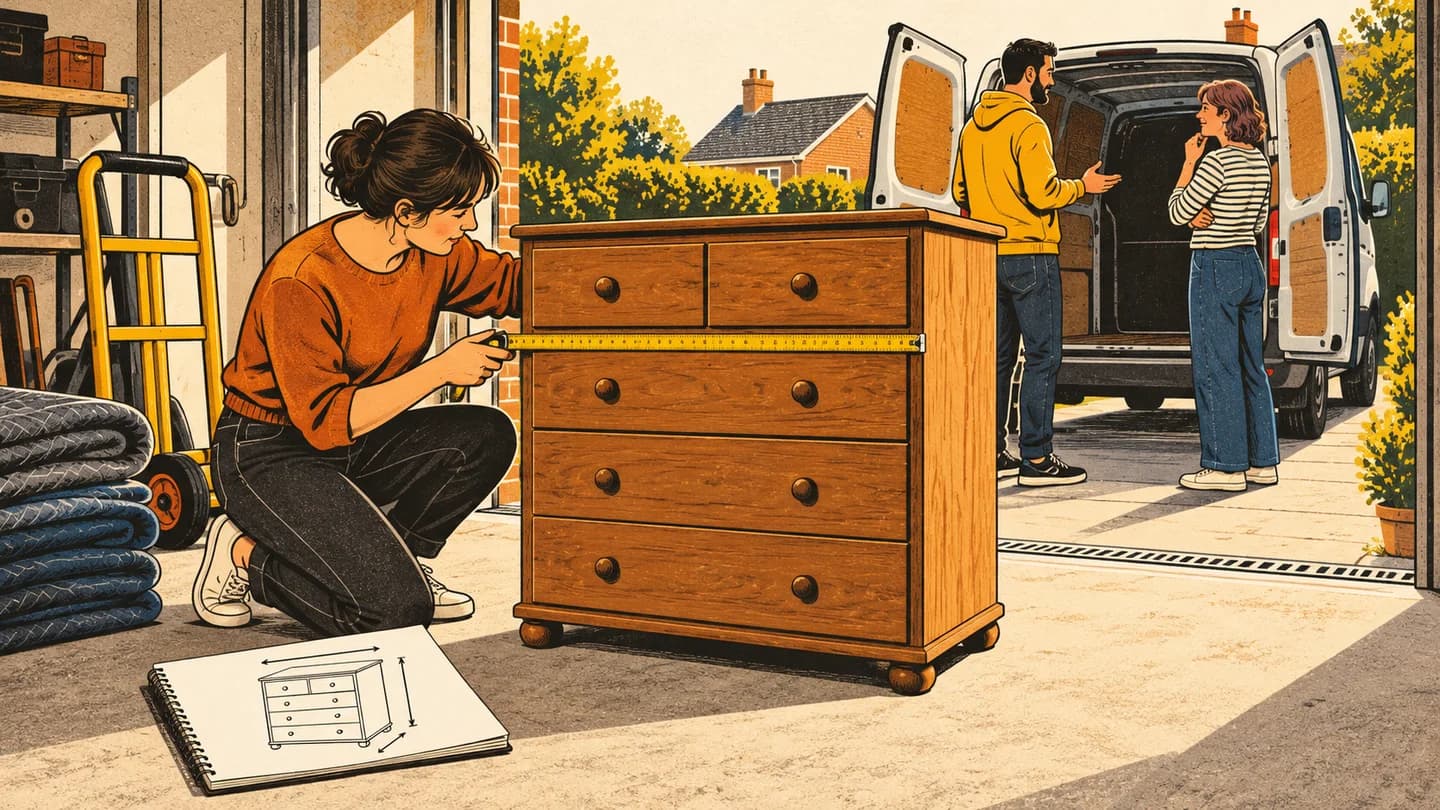
Use actual measurements rather than an estimate from the original retailer’s description.
- Overall width, depth and height.
- Relevant internal dimensions, such as shelf space or desk clearance.
- The largest component if the item can be dismantled.
- Any projections or fixed parts that affect transport.
- The narrowest relevant doorway or access restriction at collection.
- Stairs, tight turns, parking distance and other practical obstacles.
Inspect the object before pricing it
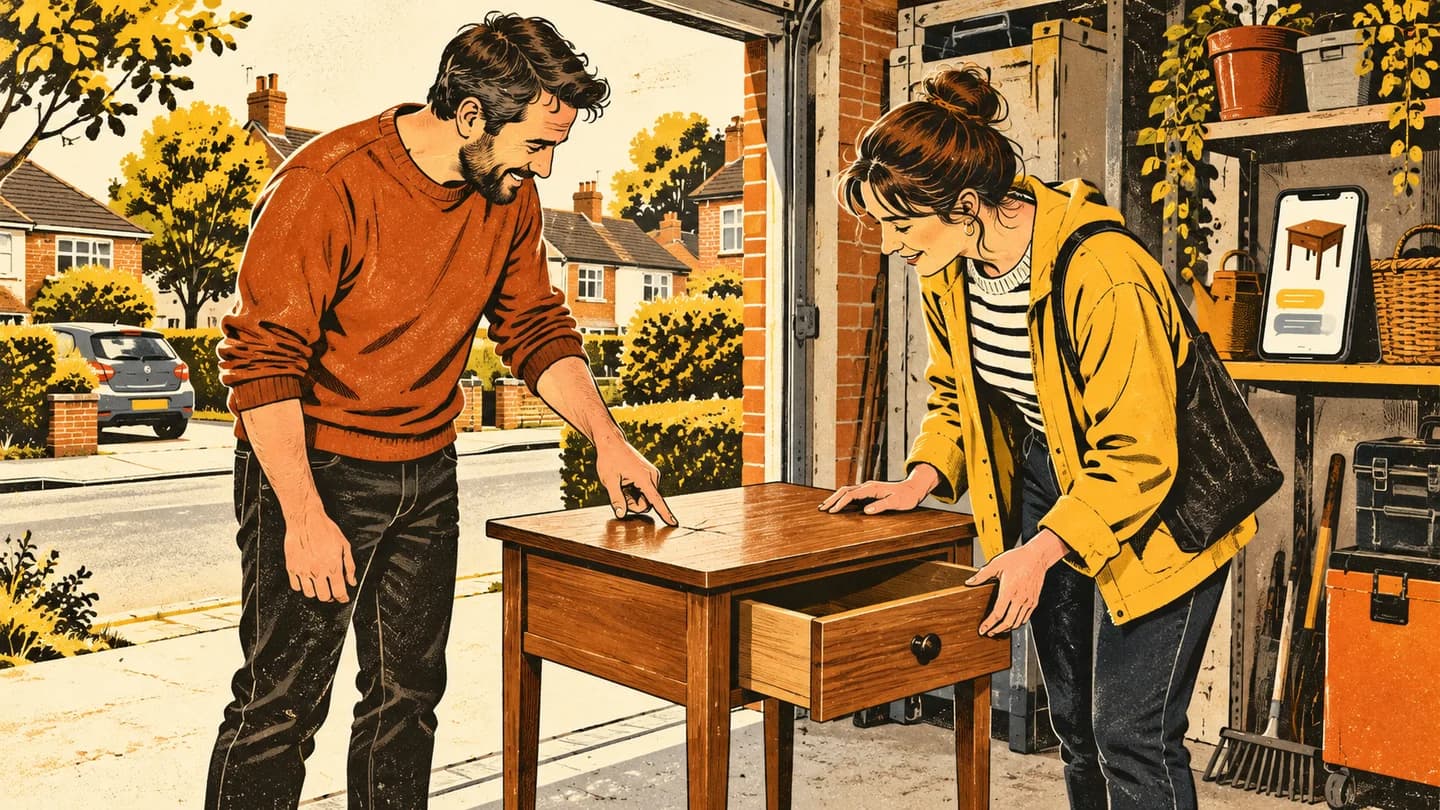
Check joints, drawers, doors, hinges, feet and surfaces. Note missing fixings, loose parts, damage and repairs. For upholstered or powered items, establish the requirements relevant to selling that product rather than assuming every used object is suitable for resale.
Describe the actual material where known. Solid wood, veneer and a wood-effect surface are different descriptions. If you are unsure, say what you can observe without inventing a premium specification. A clear account of a scratch or damaged hinge is more useful than calling everything normal wear and hoping the buyer agrees.
Take photographs that support a collection decision
Keep the item and its condition easy to assess.
- Show the whole object from the front.
- Add sides, back and top where relevant.
- Show storage interiors, drawers or moving parts.
- Photograph damage and repairs with enough context to locate them.
- Show included components and any dismantled parts.
- Add a scale or measurement view where the shape is difficult to judge.
Choose a realistic local price
Compare similar objects within a practical travel area, reading condition and collection details. A refurbished dealer piece with delivery may be a poor comparison for furniture the buyer must move from an upstairs room. Active adverts also show asking prices, not proof of completed sales.
Set an asking price and a minimum acceptable amount that fit your objective. If you need the space by a particular date, decide how you will review the price rather than making repeated vague reductions. If you bought the item for resale, include acquisition, transport, cleaning, repairs and any storage or selling costs.
Check whether a cheap furniture purchase works
These are invented figures for a local resale, not expected Gumtree prices or charges.
| Line | Amount |
|---|---|
| Completed sale | £85 |
| Purchase | −£25 |
| Allocated van or transport cost | −£20 |
| Cleaning and minor materials | −£8 |
| Other assumed selling costs | −£2 |
| Contribution before tax and time | £30 |
Leave room for the work that is easy to miss
The £30 in the example still has to justify viewing, transporting, cleaning, photographing, answering enquiries and managing collection. If the table needs another £25 repair, the result changes sharply. Do not treat a large item as free storage simply because it is sitting in your own home.
Before buying bulky stock, ask where it will go and how quickly you can prepare it. A room filled with unlisted furniture can prevent you taking a better opportunity. Set a practical limit on space as well as money, and keep unsold items visible in your records.
Explain collection requirements in the advert
State the general location, collection-only arrangement where applicable and the help the buyer must bring. Be factual about access: ground-floor garage, first-floor flat with stairs, narrow lane or parking a short distance away. Avoid publishing more precise personal details than the advert needs.
Do not promise to lift something you cannot manage safely. Likewise, do not assume one person with a car can move a heavy cabinet. Ask the buyer to check the measurements against their vehicle and access at home. You can provide information, but you cannot guarantee it will fit a space you have not seen.
Check the payment flow available for the listing
Gumtree offers official online payment and Pay & Collect for eligible listings, so advice saying that every Gumtree payment request is automatically fake is out of date. Check the actual order inside your own Gumtree account and read the terms and steps shown for that transaction.
For an eligible collection order, the buyer inspects the item before providing the six-digit collection code. The seller enters it in the order details to complete the handover and release payment. This completion cannot be reversed through the collection process, so do not request the code as an advance reservation. Your bank may take longer to show the released funds. A separate payment link sent in a message is not a substitute for checking the real order.
Use the real service, not a link in a message
Confirm the appointment in one clear message
A useful confirmation removes ambiguity before anyone hires a van.
- Confirm the item, price and included parts.
- Agree a specific collection window.
- Repeat the dimensions and any dismantling arrangement.
- Confirm access and the buyer’s responsibility for suitable help and transport.
- State the payment or official order process being used.
- Share the exact location when needed for the agreed appointment.
Dismantle only when it is practical and agreed
If dismantling is appropriate, photograph how components fit together, label parts without damaging them and keep fixings in a secure container. Include any instructions you have. Do not take apart a fragile or unfamiliar structure simply because it would be more convenient for the buyer’s car.
Check that dismantling does not conceal a defect you should disclose. If the object must remain assembled for inspection or safe transport, explain that before collection. A last-minute argument about missing screws or an unexpectedly fixed section can undo an otherwise straightforward sale.
Make the handover calm and organised
Have the item accessible without blocking a safe route. Give the buyer a reasonable chance to inspect it and confirm the contents. Point out the disclosed condition issues and keep the agreed payment process clear. For home collection, arrange support from another person where appropriate.
Complete the official collection steps or independently verify the agreed payment at handover. Keep lifting within everyone’s capability and use suitable help or equipment. If the vehicle or access makes the move unsafe, stop and arrange another solution rather than damaging the item or risking injury to finish on time.
Close the advert and learn from the sale
Mark the item sold and remove duplicate adverts once the transaction is complete. Save the relevant sale and payment records. If a buyer did not arrive, review whether the arrangement was specific enough and set a clear next step without reserving the same item for several people.
For resale stock, compare the actual contribution with the space and effort involved. Bulky items can work well when you understand the product and can organise transport, but an apparently large margin is less attractive if it takes weeks of storage and repeated failed collections. Use completed results to choose the next purchase.