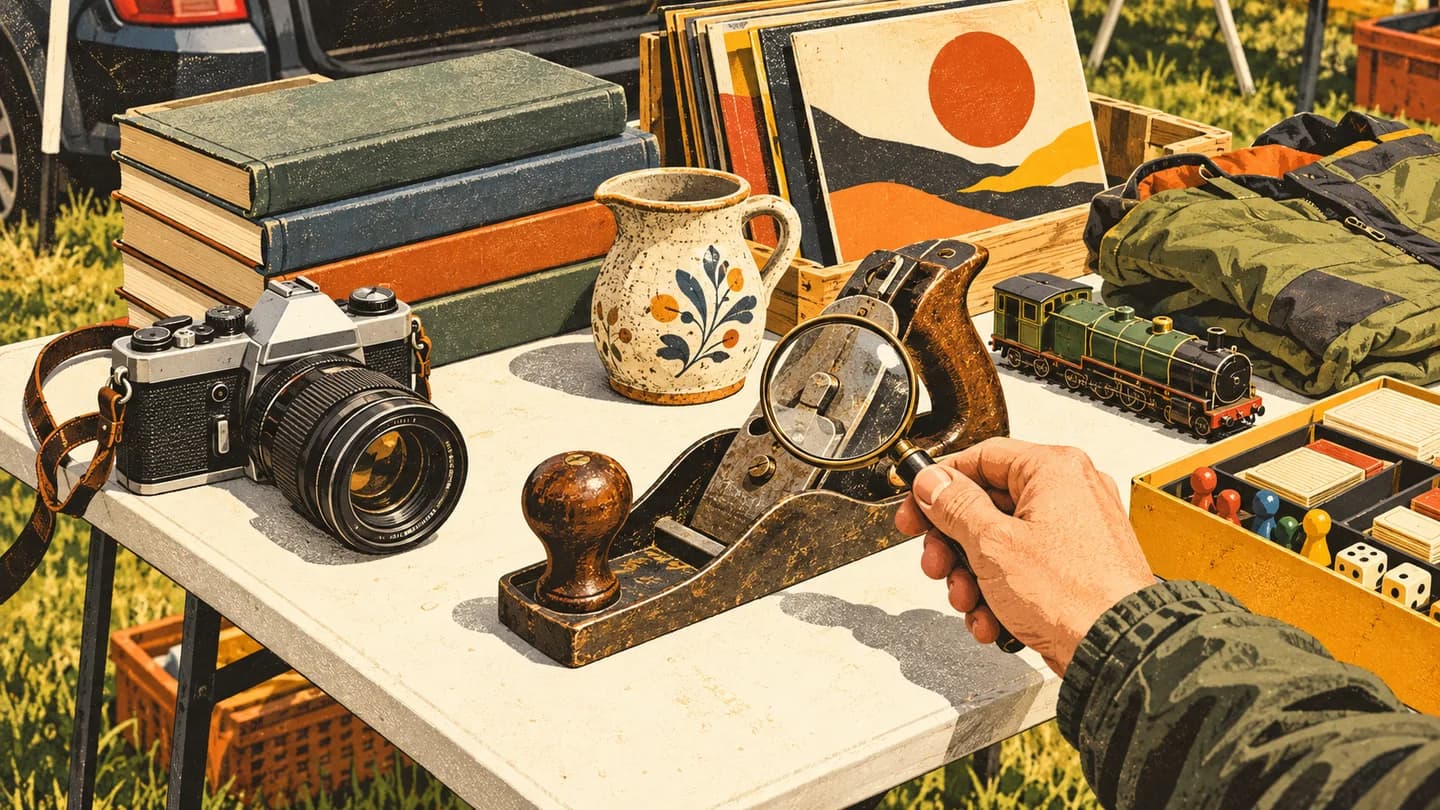
Buy for a realistic resale margin, not because something looks cheap. Start with a small budget and items you can test, store and post.
Learn the whole resale, not just the purchase
A car boot sale puts hundreds of buying decisions in front of you in a short morning. Some objects are underpriced, some are fairly priced and some are cheap because they are damaged, incomplete or unwanted. Your advantage comes from recognising a particular item and understanding its next buyer. It does not come from filling the car before everyone else.
For a first trip, aim to buy a small number of things you can inspect, describe, store and deliver. Then complete the sales and review the results. Two purchases that teach you the full process are a better foundation than twenty uncertain objects waiting for research.
Choose two categories before you leave
Start with something you already understand. A board-game player knows which components make a game usable; someone who repairs bicycles may recognise the correct tool or a worn part. That familiarity helps you identify questions worth asking and faults worth declining. It does not remove the need to check current demand.
Research several ordinary examples in each category before the trip. Note the exact identifiers, common missing pieces, realistic selling range and likely packing method. Write down reasons to reject an item as well as reasons to buy it. “Complete edition with readable title and undamaged contents” is more useful than a vague instruction to look for valuable games.
Keep three budgets separate
These example amounts are a planning exercise, not a recommended investment or a promise of a return. Adapt them to money you can afford to leave tied up.
Getting there
Set aside admission, parking and travel costs. They belong in the trip review even when you buy nothing.
Buying stock
For example, a £40 ceiling for purchases. It is a limit, not a target, and you can bring most of it home.
Finishing the job
Keep money available for suitable packaging, dispatch and any preparation you have already identified. Do not spend it at the final stall.
Confirm the event and prepare to carry things safely
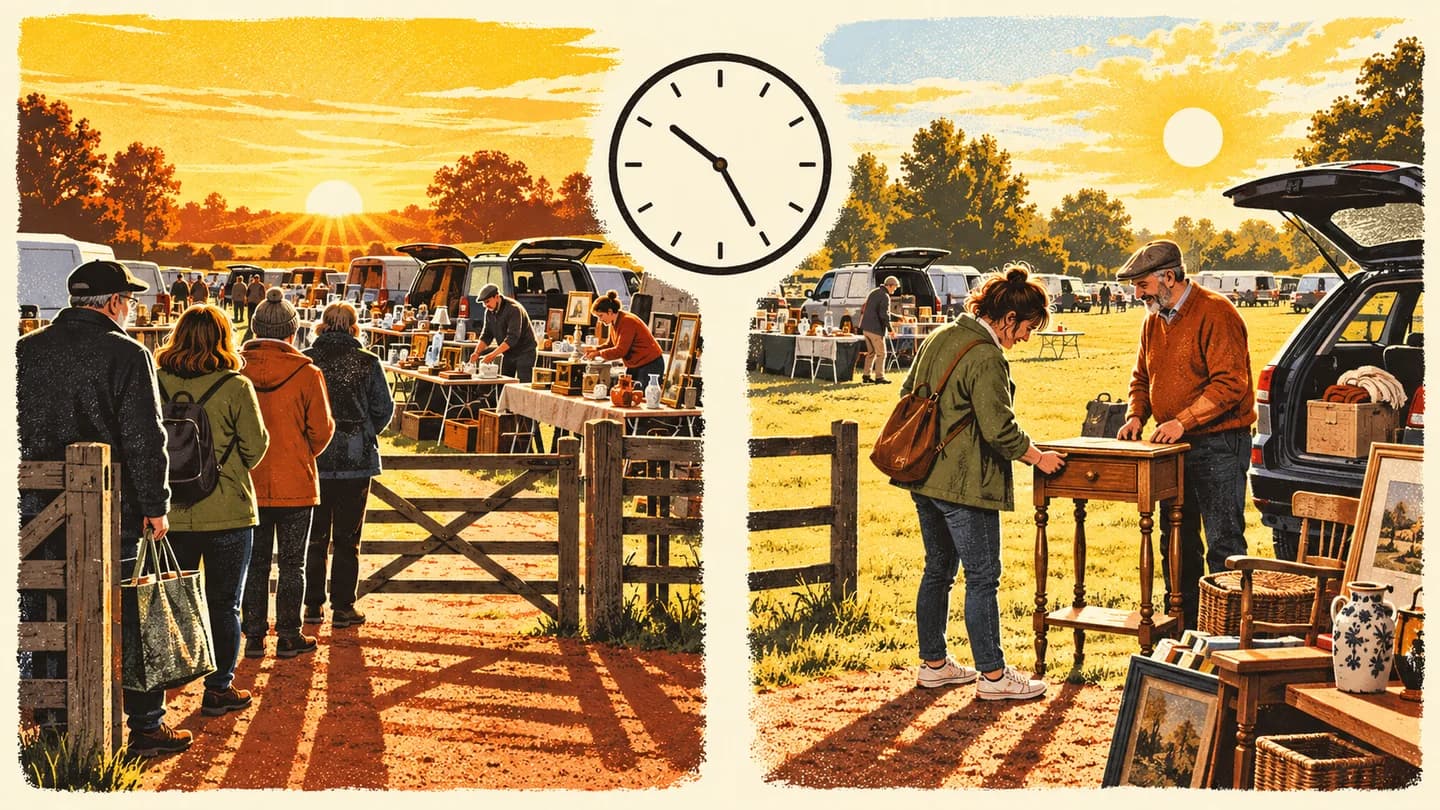
Check the organiser’s current date, buyer opening time, entry charges, weather updates and access information. Seller arrival time is not necessarily public admission time. A listing on a map is a starting point; a cancellation or changed venue can turn a promising outing into a wasted journey.
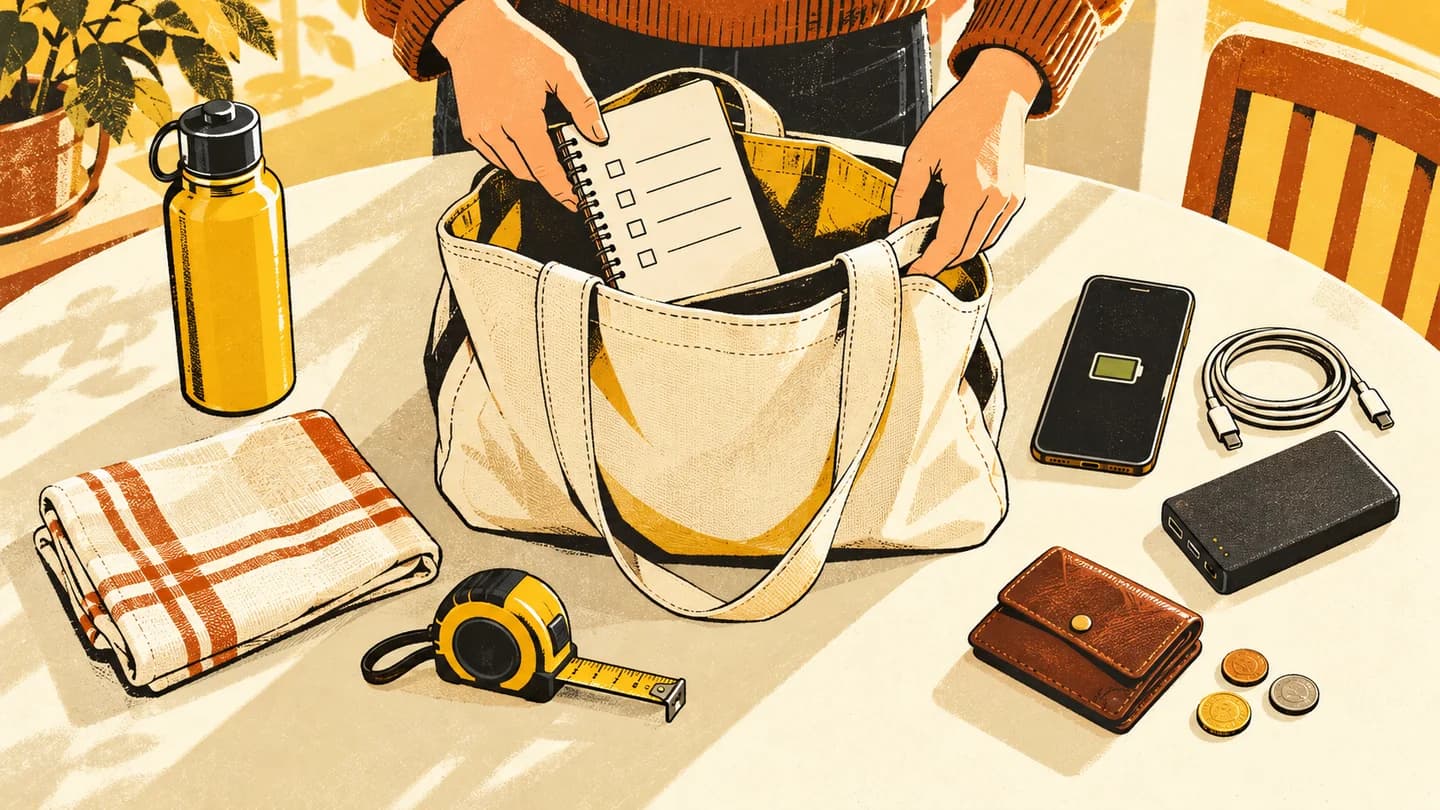
Take a charged phone, suitable bags, wrapping, a tape measure and manageable cash denominations where cash is accepted. Leave room in the vehicle and decide how you will protect fragile goods. Bring only inspection equipment you can use competently and with permission. A powered-on device is not automatically fully tested or safe.
Use one buying sequence at every promising stall
The order matters: identify and inspect before deciding what a sale might produce.
- Ask the price and confirm exactly what is included.
- Find the model, maker, edition, size or other identifying detail.
- Inspect condition, completeness and any evidence of repairs.
- Check comparable completed sales for that version and condition.
- Calculate a maximum purchase price after costs and your required return.
- Make an offer within the limit, or leave the item.
- Record the purchase and protect it before continuing.
Ask questions that reveal something useful
“Does it work?” is easy to answer optimistically. “When was it last used, and which functions did you check?” gives you more to assess. For a game, ask whether the contents were counted against the instructions. For a camera, ask about the battery, charger and the test performed. Keep the seller’s account separate from what you actually verified.
Ask before removing a lid, opening a battery compartment or handling a delicate part. Inspect over a stable surface and return items to their place. If you cannot check an expensive or essential component, price the uncertainty honestly or decline. The seller may not know the answer, and that is different from an answer you can rely on.
Compare like with like
Search the exact model or edition and look for several reasonably recent completed sales. Match the included accessories, working status and visible condition. A boxed complete example, a repaired example and a faulty loose unit can have different buyers. Do not combine their prices into a flattering average for your purchase.
When an accepted offer matters, eBay Product Research can provide actual sold-price information that an ordinary listing view may not make clear. Read the underlying details where available. A sale from a dealer offering additional service is not automatically the price your untested item will achieve. Use evidence to establish a cautious range, then choose a planning figure within it.
Work backwards to your buying ceiling
Suppose comparable evidence supports a possible £35 sale. Use actual charges for your account and route; the following figures are invented to explain the calculation.
| Item | Amount |
|---|---|
| Cautious expected sale proceeds before costs | £35 |
| Selling and delivery costs | −£7 |
| Preparation and other allocated expenses | −£3 |
| Contribution you want for the work and uncertainty | −£15 |
| Maximum stock purchase price | £10 |
A discount does not fix a broken calculation
If the seller asks £18 and accepts £14, you have negotiated a reduction but exceeded the £10 ceiling in the example. You need new evidence supporting a different calculation or a deliberate reason to accept less contribution. The size of the discount is not evidence that the purchase is good.
Include postage properly. If buyers pay a separate delivery amount, account for that income and the actual fulfilment costs consistently. Avoid assuming delivery is free to you because it is charged to the buyer. Heavy packaging, an awkward size or a collection-only market can change the result before you have bought anything.
Use Bargain Bandit as a research starting point
A clear scan can help you begin identifying an unfamiliar find. Check its suggestion against the physical object: labels, dimensions, materials and model details. Correct identification matters more than an attractive estimated value. A photograph cannot confirm concealed damage, internal function or every authenticity detail.
If the signal is poor or the result is uncertain, fall back on the categories and limits you prepared. Do not turn a missing answer into an optimistic one. A seller may sell the object while you research; that is a normal cost of making careful decisions, not a reason to buy first and investigate later.
Leave room for an honest no
Pass when the essential unknowns are larger than the opportunity you can support.
- The price only works if an untested device is fully working.
- A missing part has no confirmed identity, availability or replacement cost.
- Authenticity is essential to value and you cannot establish it.
- You cannot safely assess or supply the type of product.
- The item will not fit your transport, storage or practical selling route.
- The only price evidence is an ambitious active listing.
- You are buying mainly because the journey would feel wasted otherwise.
Treat the handover as part of the purchase
Make a clear offer and allow the seller to refuse. For a bundle, point out every included object and agree one total before paying. Count accessories into your bag, record the agreed amount and ask for a receipt where available. Keep a contemporaneous purchase note if a formal receipt is not provided.
Do not assume you can return a speculative purchase after testing it at home. The seller’s status, description and circumstances affect the position, and a purchase for business use is not automatically a consumer transaction. Resolve the practical terms before paying rather than building your buying plan around a refund you have not established.
Finish the morning before starting another buying trip
At home, separate new stock from items ready to dispatch. Check completeness again, photograph existing damage and choose a suitable cleaning or testing process. Give each item a stock code and a safe storage location. List promptly once the description and condition are established.
After the sales, record proceeds, fees, packing, postage, purchase cost and relevant trip expenses. Include time spent sourcing, preparing, listing and fulfilling. Keep unsold purchases visible in the review. The question is whether the whole batch was worthwhile, not whether its best item produced a good photograph or an impressive selling price.