Create a clear local listing, screen practical questions and verify payment before handing over your item.
Make the collection easy to understand
A useful Facebook Marketplace advert does more than show an appealing item. It gives a local buyer enough information to decide whether the object suits them, whether they can transport it and when they can collect it. That reduces the messages that never develop into a practical arrangement.
Start with the actual object, a realistic local price and a clear handover plan. A successful sale is not the first person saying they are interested. It is an informed buyer collecting the agreed item and completing the agreed payment. Build the listing and messages around that outcome.
Gather the facts before taking photographs
Keep the details together so your replies remain consistent.
- Exact item type, maker and model where identifiable.
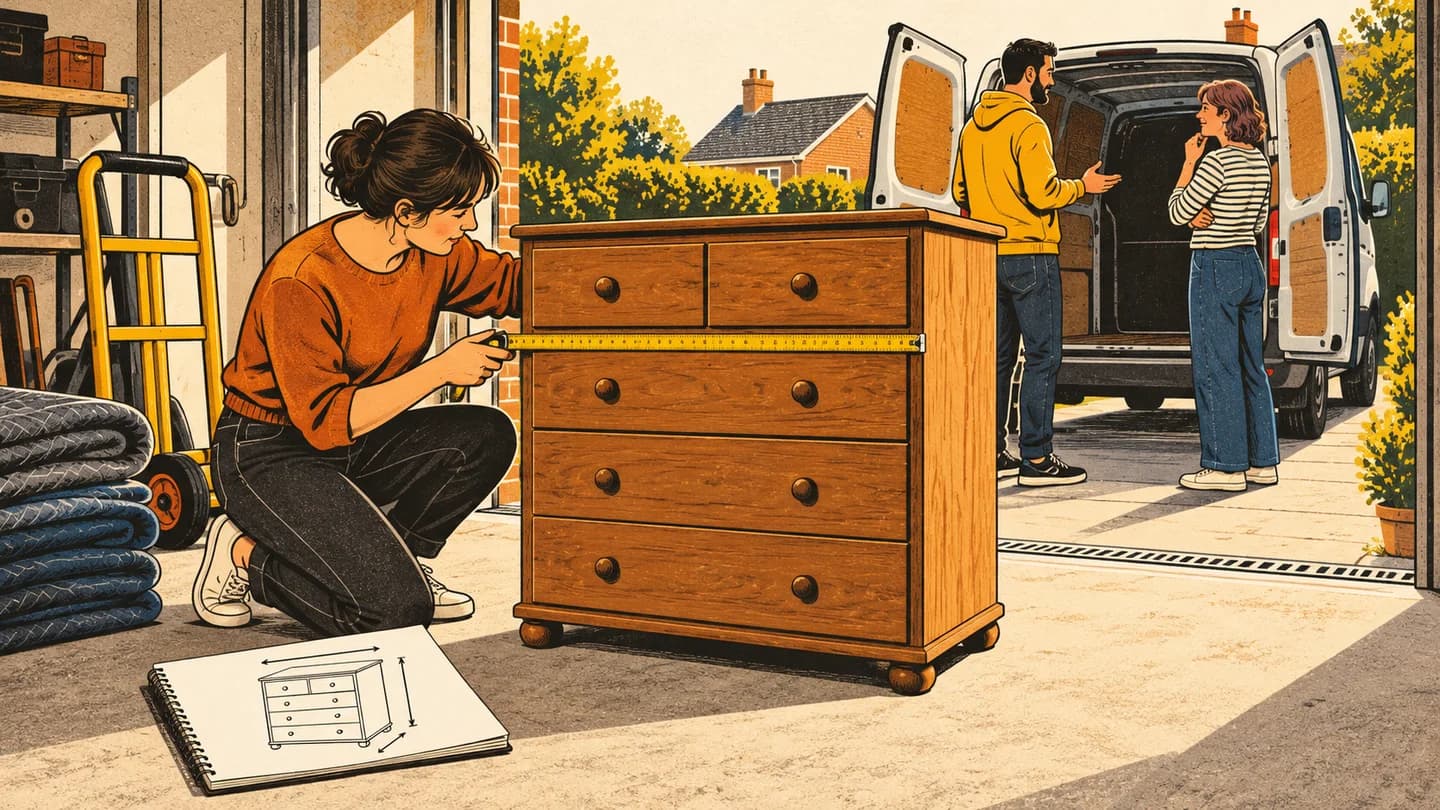
- Dimensions and weight where relevant and known.
- Condition, faults, repairs and missing components.
- Everything included in the price.
- Whether the item dismantles and whether the necessary fixings are present.
- General collection area, access constraints and realistic availability.
- Whether the buyer needs their own lifting help or suitable vehicle.
Show the item in a way that answers questions
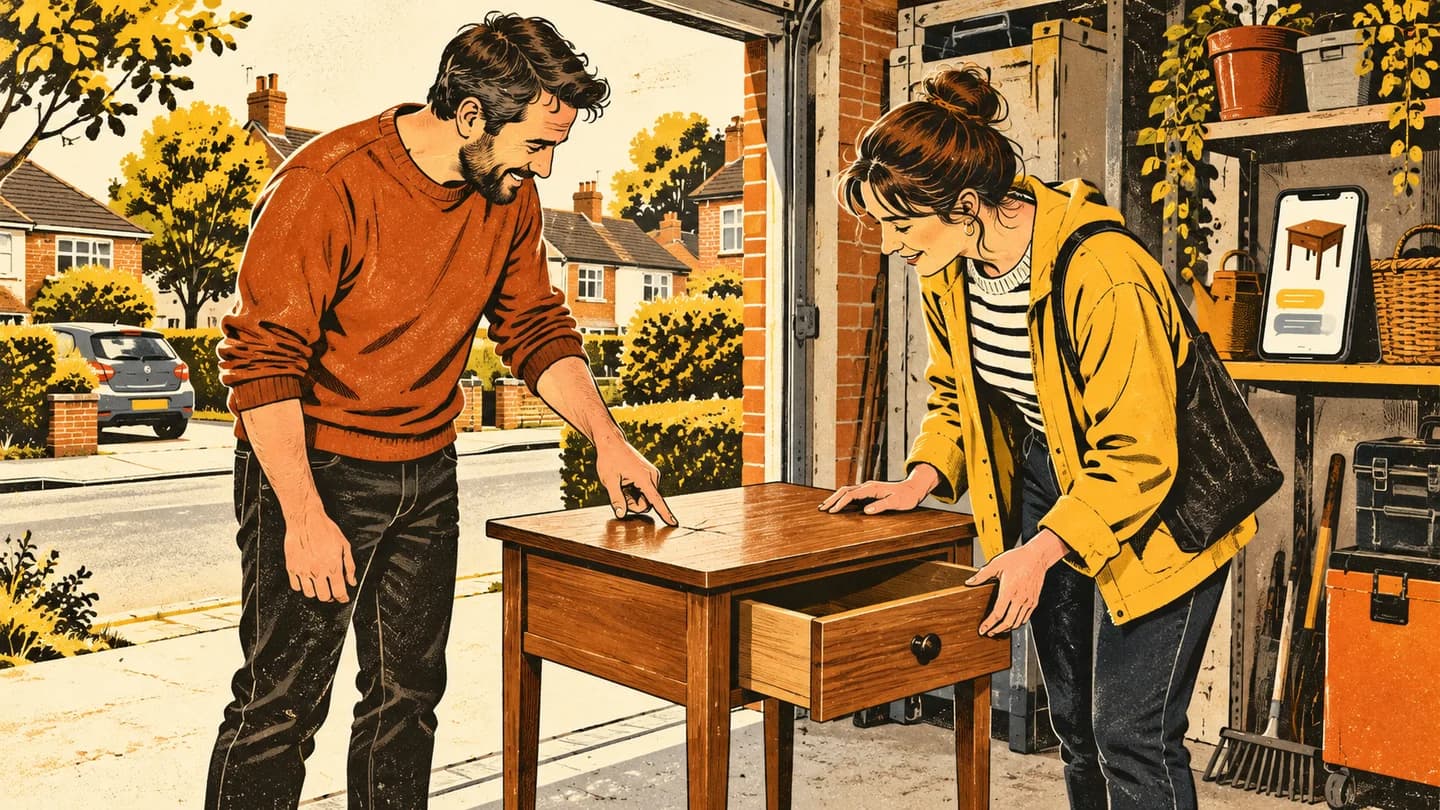
Photograph the whole object in good light, then add useful angles, identification details and flaws. For furniture, show the top, sides and any drawers or mechanisms that affect use. For equipment, show the actual accessories and model label without exposing unrelated personal information.
Keep the surroundings simple and remove private documents, addresses or other information from the frame. Do not rely on a stock photograph to represent a used item’s condition. If a photograph includes decorative props, make the sale contents clear. A buyer should not have to discover at collection that the stool or matching shelf was never included.
Price against local alternatives
Search for comparable items within a realistic collection area. Compare condition, dimensions and completeness, not just the broad name. A nearby ready-to-collect table may be more relevant than a dealer’s refurbished example hundreds of miles away.
Active adverts show competition rather than achieved prices. Use a cautious asking price and decide your minimum acceptable amount before offers arrive. If you are reselling stock, subtract acquisition, preparation, transport and any other costs. If you are clearing space, the speed and convenience of a genuine collection may matter more than holding out indefinitely for a small extra amount.
Compare a local sale with a posted sale
These figures are invented to illustrate the decision. They are not platform charges or expected market values.
| Calculation | Local collection | Posted marketplace sale |
|---|---|---|
| Sale proceeds including any delivery charged | £50 | £65 |
| Purchase | −£20 | −£20 |
| Assumed selling costs | £0 | −£5 |
| Packing and carrier | £0 | −£15 |
| Contribution before other costs and time | £30 | £25 |
Do not promise a reserve without deciding what it means
You can agree to hold an item until a specific collection window, but make that arrangement clear in messages. Avoid telling several people the item is reserved for each of them. If you are still considering enquiries, say so and agree the next step honestly.
A clear message might be: “The table is available at £50. Collection is possible between 6 and 7 this evening. It is 90 cm wide and you will need your own vehicle and lifting help. Let me know if that works.” Replace the details with your actual arrangement. This is more useful than a long exchange about availability with no time or transport plan.
Turn an enquiry into a workable appointment
Keep the conversation focused on the sale.
- Answer material questions about the item accurately.
- Confirm the price and included contents.
- Check that the buyer understands the dimensions and access.
- Agree a specific collection window and payment arrangement.
- Share precise collection details only when needed for the appointment.
- Ask for a message if plans change, and confirm any revised arrangement.
Manage repeated questions without becoming vague
Save a short factual reply for common questions, but check it before sending. A buyer asking about a missing measurement may be revealing a gap in the advert. Add the information so the next person does not need to ask.
Do not invent urgency or other offers to pressure a buyer. Equally, you do not need to negotiate endlessly with someone whose proposed amount is below your limit. A concise decline or a clear counter-offer keeps the exchange practical. The goal is to find a suitable transaction, not win every conversation.
Plan a sensible meeting
For portable goods, consider an appropriate public, well-lit location. For furniture that must be collected from home, arrange a time when you can manage the collection comfortably and have another person present where appropriate. Keep unrelated rooms and valuables out of the handover process.
Allow a reasonable inspection of the item in a suitable place. Demonstrate ordinary functions you can safely show, and point out the disclosed faults. Do not attempt unfamiliar electrical work or unsafe lifting to complete a sale. If the buyer’s vehicle or helpers are unsuitable, pause and agree a workable alternative instead of rushing a risky move.
Check payment in your own account
Pause when a message changes the transaction unexpectedly
These requests deserve independent checking rather than an immediate response.
- A link asking you to enter card details to receive a buyer’s payment.
- A demand for a verification code or account password.
- A request to pay an unfamiliar courier or release charge.
- An overpayment followed by instructions to refund another person or account.
- Pressure to hand over the item before the agreed payment can be verified.
- A claim of platform protection that does not match the actual payment and collection method.
Understand the protection for the sale you are making
Do not assume that Facebook Purchase Protection covers a local person-to-person exchange simply because the conversation began on Marketplace. Read the current terms relevant to the actual arrangement. The listing platform and the payment provider can have different roles.
If a message seems suspicious, stop following its instructions and open the relevant service yourself. Use the platform’s reporting tools for fraudulent enquiries. A genuine buyer can discuss the item and complete a straightforward supported arrangement without needing your passwords or one-time security codes.
Finish and record the sale
Close the loop so the same item does not remain promised elsewhere.
- Confirm that the buyer has inspected the agreed item and contents.
- Complete and independently verify the agreed payment arrangement.
- Allow safe collection using the planned access and help.
- Mark the advert sold and remove other live adverts for the same item.
- Keep the sale record and relevant messages.
- If it was resale stock, record actual proceeds and costs.
Use unsuccessful enquiries as evidence
If many people ask but nobody collects, review the practical obstacles before cutting the price repeatedly. The dimensions may be unclear, the collection windows too narrow or the item may require transport most buyers cannot arrange. Improve what you can and then reassess the price. A clear advert and a manageable collection plan give a reasonable buyer fewer reasons to abandon the sale.