Build accurate clothing listings and check the account rules before moving from personal sales to sourcing stock.
Start with clothes you can describe confidently
Selling clothes on Vinted works best when the buyer can understand the garment without handling it. That means clear photographs, useful fit information, honest condition notes and a price that makes sense beside comparable alternatives. A recognisable label may attract attention, but it cannot compensate for a hidden stain or an unexplained size.
Your own wardrobe is a useful place to learn the process because you may already know how an item fits, how it has been cared for and whether it has been altered. Buying clothing specifically to resell introduces another decision: whether the purchase leaves enough money after preparation and whether your selling activity fits the platform’s account rules.
Separate a clear-out from buying stock
Vinted does not allow professional selling through a standard account. If you intend to buy garments to sell as a business, check the current UK Pro eligibility and permitted-stock rules before sourcing. Successfully selling your own coat does not automatically establish that a personal account is suitable for a commercial inventory.
You can still use a wardrobe clear-out to learn useful skills: measuring, photographing, packing and recording the work involved. Treat that as experience with the process rather than proof of business profit. Clothes you already own and clothes purchased for resale have different acquisition histories, even when the listing work looks similar.
Sort the clothes before creating adverts
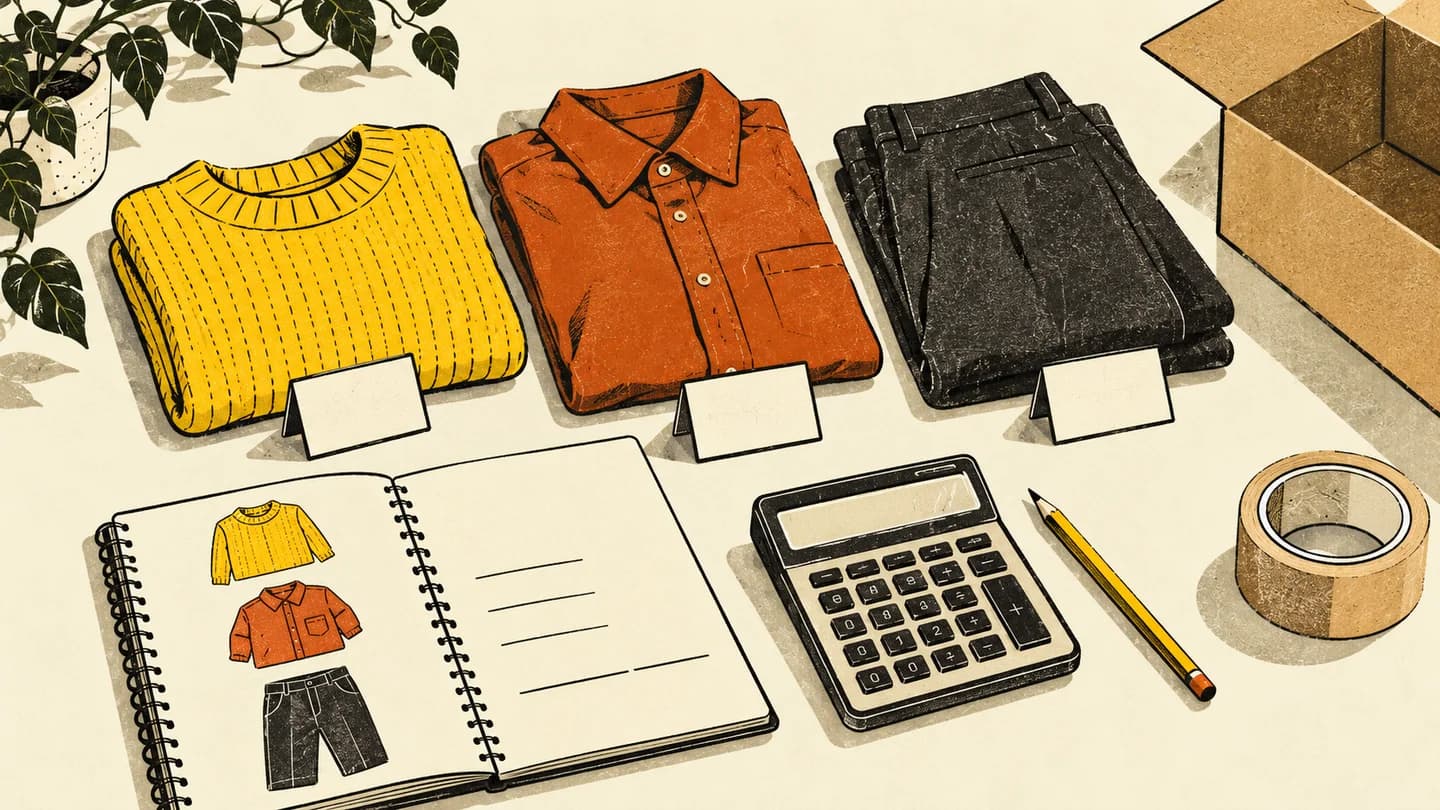
Make a small set of groups so unsuitable items do not keep returning to the photography pile.
- Ready to list: clean, complete garments with condition you can describe.
- Needs preparation: an appropriate wash, simple repair or further inspection.
- Needs research: uncertain identity, material, age or authenticity.
- Better together: compatible lower-value items that may suit a clearly described set.
- Unsuitable for this route: items that fail the platform rules or are not worth the necessary work.
Inspect the places wear likes to hide
Check collars, cuffs, underarms, hems, seams, pockets and fastenings. Turn the garment over and inspect the lining where present. Look for pilling, thinning fabric, pulls, stains, loose stitching, missing buttons and damaged zips. A mark that disappears in a flattering photograph is still part of the item.
Read the care label before cleaning. Do not assume that every garment can be machine washed or that a stain will come out. If specialist cleaning is needed, get the cost before buying stock or committing to a selling price. Let items dry fully before storage or packing, and disclose remaining odour or damage accurately.
Make a complete listing record
Gather these details once, then use them consistently in the advert and your stock notes.
- Record the brand and labelled size without inventing a label that is missing.
- Note material from the care label where available.
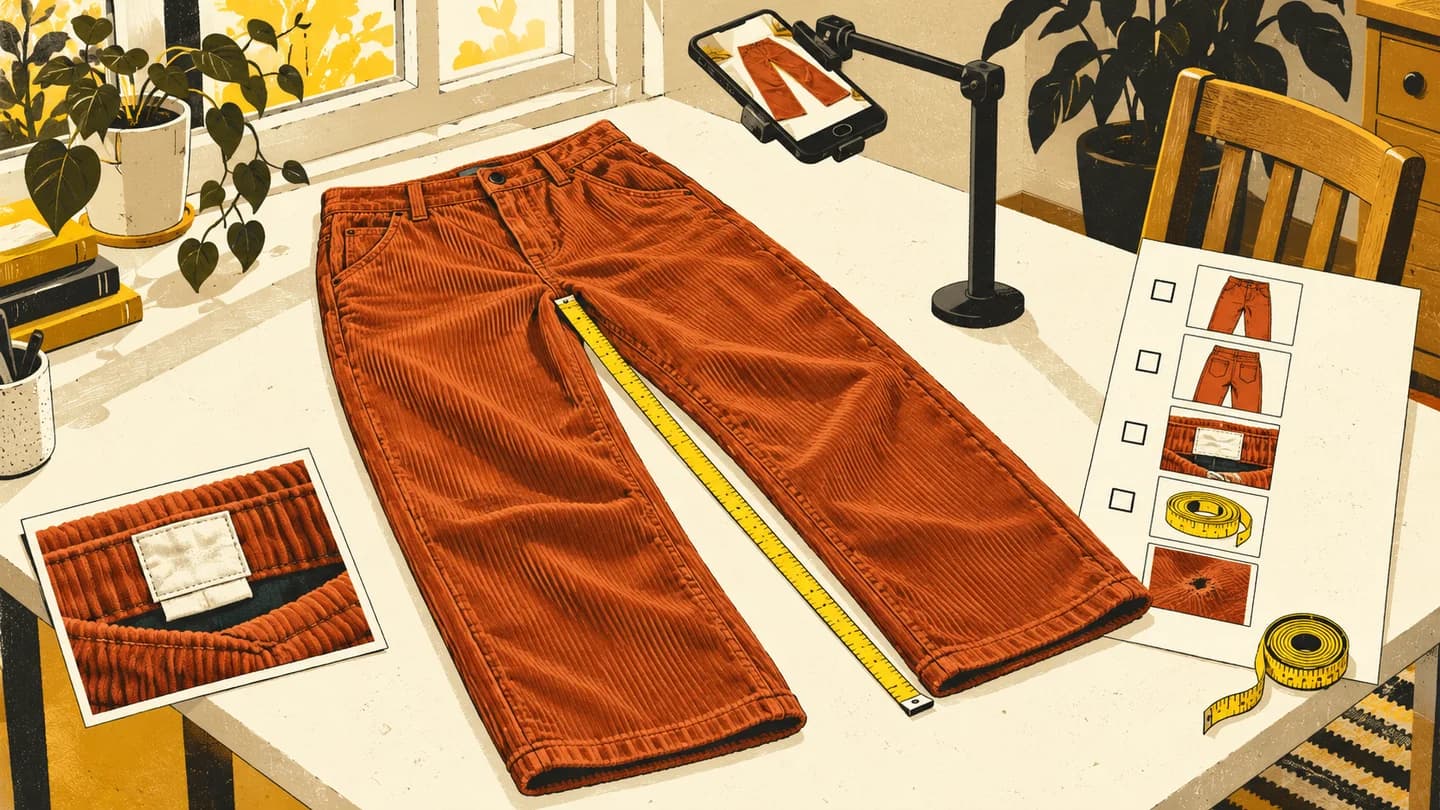
- Measure the relevant parts with the garment laid flat and explain the method.
- Photograph the whole item, back, labels, details and flaws.
- Write the condition in plain language and state known alterations.
- Choose the correct category, condition and other listing fields in Vinted.
Help a buyer assess fit
A size label is useful, but it does not tell the whole story of a used garment. Shape, stretch, alterations and wear can affect fit. For a top or jacket, a flat chest width and length may answer common questions. For trousers, waist width, rise and inside leg can be more informative than a single size number.
Explain what you measured. “Chest 52 cm laid flat, measured underarm to underarm without stretching” is clearer than “chest 52”. Keep the labelled size separate from your measurements. Do not convert a measurement into a guaranteed body size or call something a perfect fit for everyone wearing the same label.
Make the first photograph useful
Show the entire garment against a simple background in even light. Keep the colour close to reality and avoid filters that change the fabric or hide wear. Follow with details a buyer cannot see in the first image. Your own photographs should represent the item you will actually send.
A tidy presentation does not need an elaborate studio. A consistent clear space and a repeatable set of views can make the work quicker. If you include styling accessories in a photograph, make clear what is for sale. Better still, keep the main photograph focused on the garment so a buyer does not have to disentangle the contents.
Price against useful alternatives
Search for similar garments by brand, type, material, style, size and condition. Active prices show what other sellers are asking, not necessarily what buyers have paid. Where achieved-sale evidence is limited, choose a cautious starting point and a date to review it rather than treating the highest listing as a valuation.
Remember the buyer sees a total checkout cost that includes applicable charges and delivery. A low-value garment may be less appealing as a separate purchase than it appears from its item price alone. This is one reason suitable bundles can be useful, provided the contents and shipping arrangement remain clear.
Check the result on purchased stock
These invented figures show the difference between a sale and a worthwhile purchase. They do not represent a promised Vinted return or a current fee schedule.
| Line | Amount |
|---|---|
| Item proceeds | £18 |
| Purchase | −£6 |
| Cleaning allocation | −£2 |
| Packaging | −£1 |
| Optional promotion assumed | −£2 |
| Amount remaining | £7 |
Include the time even if you do not charge yourself
That £7 may be acceptable for a quick, familiar process or disappointing after an hour of cleaning and messages. Record enough to make that judgment. If the garment needs another £5 repair, the economics change again. The absence of a standard selling commission does not remove these other costs.
For a clear-out, you may prioritise reclaiming space and recovering some money. For repeat stock buying, you need a buying limit that supports the work. Use the results from several completed garments, including disappointments, before deciding that a brand or category is reliably worth sourcing.
Complete the sale carefully
Use the order instructions shown in the platform for the actual transaction.
- Check that the order is paid and ready for the next step inside Vinted.
- Confirm the garment and disclosed condition against the listing.
- Pack it clean and dry with suitable protection.
- Check the packed parcel against the selected service limits.
- Use the provided shipping process and keep proof of handover.
- Record the completed payment and any adjustments when the transaction finishes.
An offer is not a completed order
Improve the process before expanding the stock
After your first small batch, look for the real bottleneck. It may be slow photography, poor measurements, unsuitable stock or purchase prices that leave too little room. Fixing that issue can help more than buying another bag of clothes. Build a repeatable routine and a supported account setup before you turn an enjoyable clear-out into a regular reselling operation.