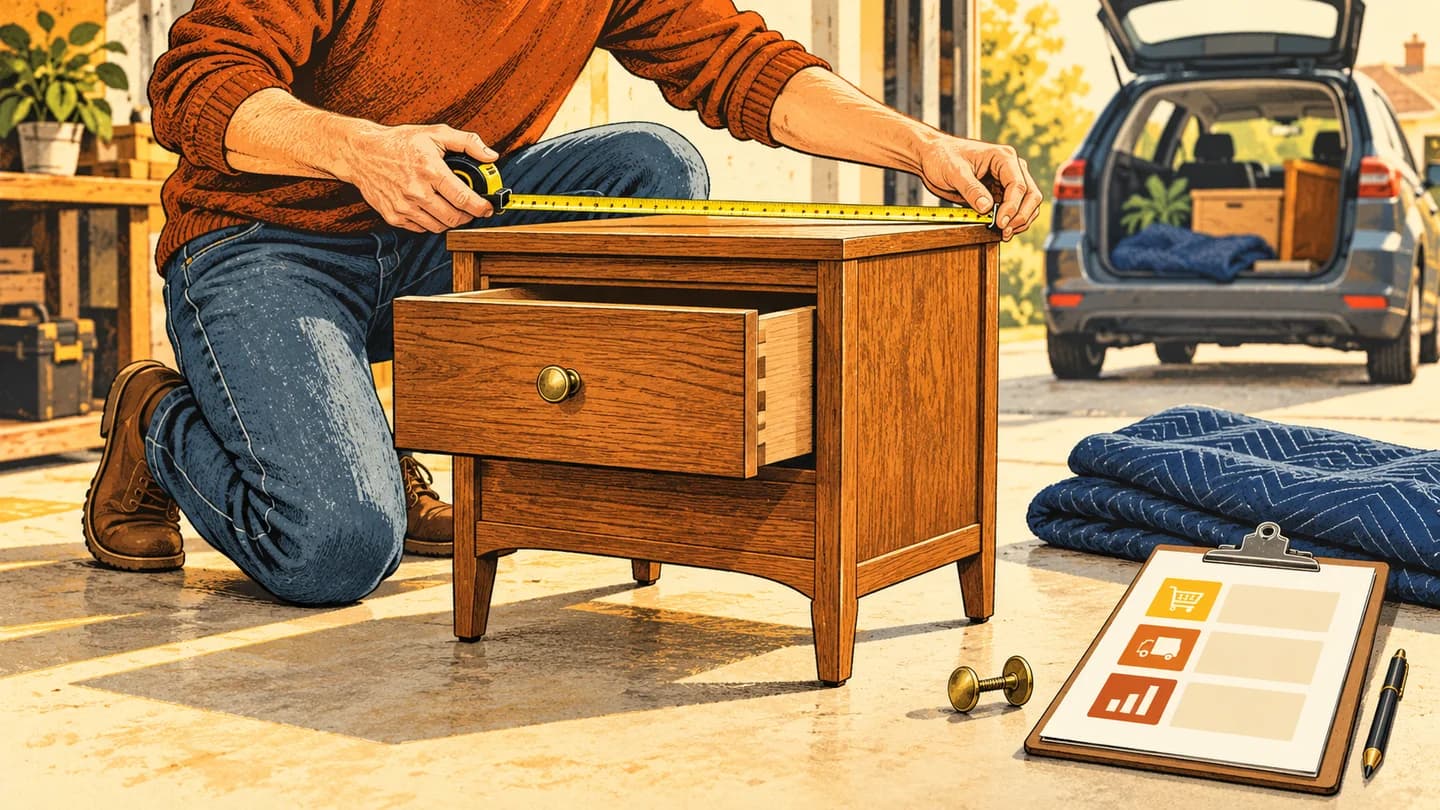
Choose pieces you can inspect, move and sell without transport and restoration absorbing the margin.
Start with furniture you can finish and move
Small furniture flipping works when the item has a clear buyer, manageable preparation and a practical collection or delivery route. A cheap cabinet that needs a van, a specialist repair and a month of storage can be a worse purchase than a more expensive bedside table ready for photographs. The useful number is the return after those costs, not the gap between the purchase price and an optimistic asking price.
Begin with a narrow range of pieces that fit your space and skills. Measure your vehicle opening, storage area and workbench before shopping. Decide what you can lift safely and whether you need help. “Small” describes dimensions; it does not guarantee light weight, sound construction or easy access up a flight of stairs.
Choose a practical first project
Look for items whose main appeal is already present. Buying well often saves more time than an ambitious makeover creates in extra value.
Compact side or bedside table
Check stability, useful dimensions and surface condition. A simple sound piece can be straightforward to photograph and collect.
Small cabinet or chest
Check every drawer, door, hinge and shelf. Missing fittings and swollen panels can make a tidy-looking cabinet costly to restore.
Matching pair
Confirm dimensions, finish and construction agree. A genuine pair may suit a bedroom buyer, while two similar pieces need an accurate description.
Specialist or upholstered piece
Allow for the knowledge, safety checks and treatment it requires. Choose it because you understand the work, not merely because the asking price is low.
Inspect before planning the makeover
Ask before opening drawers or moving furniture. Use good light and a clear area rather than trying to inspect a cabinet balanced on uneven ground.
- Record height, width and depth, plus any projections. Measure drawer interiors or shelf clearances when they affect everyday usefulness.
- Check that the piece stands securely and inspect joints, legs and load-bearing parts for movement, splits or poor repairs.
- Open every drawer and door. Note missing runners, damaged hinges, seized locks and shelves that do not sit correctly.
- Look underneath and behind the item for material clues, maker labels, water damage, loose backing and evidence of insects.
- Check odours and surface damage. Decide what you can address competently and what needs a specialist quote before purchase.
Identify the material before choosing a treatment
Solid wood, veneer and a wood-effect surface can need different preparation. Look at edges, the underside and existing damage for clues, without scraping or removing finish at the stall. Veneer is a thin layer of wood over another material; it is not automatically a sign of poor furniture, but it limits how much material can safely be removed.
A lifted veneer corner, swollen board or damaged decorative inlay is different from a light surface scratch. Price the actual repair. If you cannot identify the finish or construction, avoid a buying plan that depends on aggressive sanding. A well-made piece with an intact original surface may appeal more to its likely buyer than a freshly painted version.
Separate cosmetic work from problems that change the deal
Make two lists: work needed for safe, useful furniture and optional changes intended to improve appearance.
- Loose joints or cracked structural parts need a proper repair, not paint that makes them less visible.
- Missing matching handles may mean sourcing one part or replacing a complete set. Check availability and hole spacing first.
- Water-swollen panels and persistent damp odours can be difficult to resolve economically.
- Old insect holes do not alone establish an active infestation. Fresh-looking debris or uncertain damage warrants knowledgeable assessment before bringing the item into storage.
- Glass, stone tops and mirrors require appropriate handling and secure fittings; their replacement cost can dominate a small project.
- Check current safety recalls for an identifiable product. Include any required safety fittings and instructions in the final sale.
Upholstery needs its own buying check
Plan the work before opening a tin of paint
Write down the smallest sensible scope: for example, clean appropriately, repair a loose drawer runner, replace one confirmed missing fitting and photograph. Estimate active labour separately from drying or curing time. A finish that needs several days before normal use still occupies your work area even when you are not touching it.
Check the product instructions and choose preparation appropriate to the existing surface. Unknown old paint can contain lead; do not start dry sanding or heating it without assessing the hazard and using a suitable safe method. Significant repairs, valuable historic finishes and uncertain materials are reasons to consult a competent specialist. A resale margin should not depend on a rushed treatment you do not understand.
Price the project from the sale backwards
The following example is a planning exercise, not a promise that a particular table will sell for this amount. Replace each allowance with your own evidence and quotations.
| Item | Allowance |
|---|---|
| Expected selling price | £95 |
| Selling costs applicable to the chosen route | −£5 |
| Collection and delivery costs you absorb | −£15 |
| Materials and replacement fitting | −£10 |
| Return for two hours of active work | −£24 |
| Contingency and remaining profit target | −£16 |
| Maximum purchase price | £25 |
Track hours as carefully as paint costs
In the example, buying for £25 leaves a planned £24 allowance for labour and £16 beyond it after the listed costs. If the work takes four hours rather than two, the same labour allowance is only £6 per hour. If you need another £12 fitting, the remaining cushion also shrinks. Keep overheads and any tax obligations in your wider business calculation.
Log time spent collecting, researching, cleaning, repairing, photographing and arranging handover. These jobs are easy to omit because they do not happen at the workbench. After several sales, compare your estimate with the result. That will show whether you are earning from resale or mainly funding a restoration hobby.
Research the buyer who can actually collect it
Search your intended selling area for the same type, dimensions and style of furniture. Distinguish achieved sales from optimistic listings that remain available. If completed local data is limited, use broader evidence cautiously and leave room for a slower sale or a lower accepted offer. A high-end dealer’s photographed and delivered price is not automatically achievable from a collection-only listing.
Think about practical search terms: narrow bedside cabinet, small hallway table, pair of drawers, solid-wood side table where the material is established. Include accurate measurements and useful details. Do not add a designer or period attribution simply because the outline resembles a well-known piece. The buyer for a useful cabinet may care more about whether it fits their alcove.
Transport can make or break a small furniture flip
Check the collection address, access, stairs, parking and whether help is available. Measure both the item and the vehicle opening; a boot’s internal volume does not prove a cabinet will pass through the hatch. Allow for blankets, secure restraint and space that prevents pieces striking each other.
Inspect for loose parts before lifting. Use sound structural areas and appropriate help rather than pulling on a top, handle or decorative detail. Remove or secure movable components in a way suited to the piece, keeping fittings labelled. If delivery needs a professional service, get a quote before promising a selling price that includes it. A second failed collection trip is still a cost.
Make the listing answer the collection questions
Prepare the description while the furniture is accessible for measurements and photographs.
- Photograph the whole piece in clear light, then the top, sides, inside, rear and any relevant marks or labels.
- Give overall dimensions and describe the material to the level supported by inspection. State whether shelves or legs are removable.
- Describe repairs, replacement fittings, refinishing and remaining wear. Show defects clearly rather than hiding them with styling props.
- Explain what is included. A lamp, books or plant used in the photograph should not accidentally become part of the promised sale.
- Set out the collection or agreed delivery arrangements, access information and any help the buyer needs to bring. Keep communication and payment within the rules of your chosen platform.
Limit stock to the space you can use well
Give each piece a purchase record, work estimate and review date. If it has not attracted serious interest, reconsider the photographs, dimensions, price or selling route before buying another similar project. Storage is a constraint even when you are not paying separate rent: an unfinished chest can block the space needed for a faster sale.
Small furniture becomes a repeatable resale category when you know which pieces fit your buyers, vehicle and available hours. Keep the projects whose numbers survive a realistic repair and transport budget. Leave behind the ones that only look profitable before you account for the work.