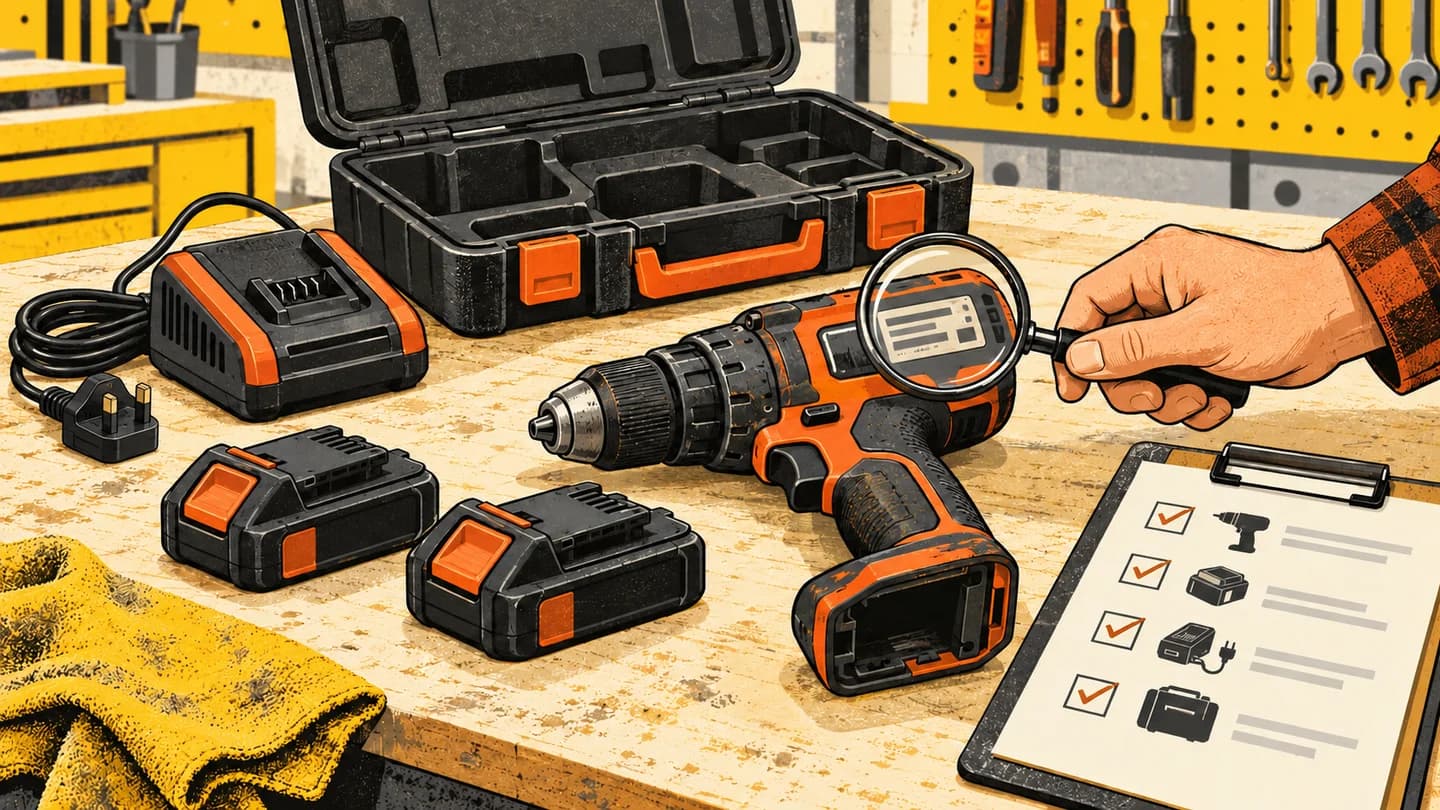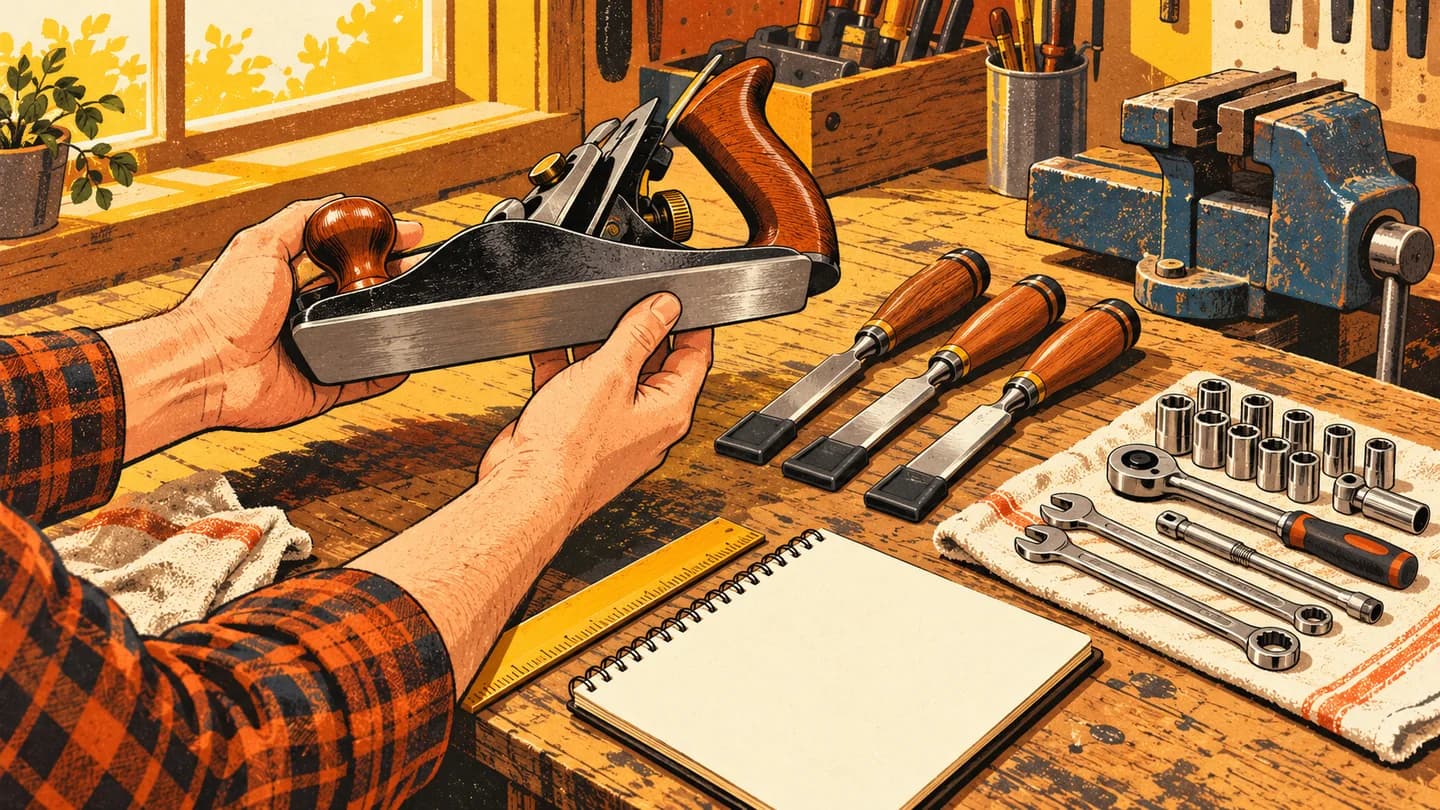
Look for identifiable, usable tools and complete sets rather than paying a premium for rust and age.
Buy a useful tool, not just an old one
A box of second-hand hand tools can contain practical workshop equipment, collectible pieces and scrap that will consume an afternoon. The opportunity comes from identifying the useful items accurately and noticing the faults before paying. Age, weight and a famous name are starting points for research, not a guarantee of resale profit.
Choose a few tool families you understand well enough to inspect. A woodworker may recognise a complete plane quickly; a mechanic may spot missing socket sizes or worn ratchets. If you cannot tell whether a specialist tool is complete, price it as unresolved until you have checked the manufacturer’s information or obtained knowledgeable help.
Tool families worth researching
These are categories to investigate when the individual item is sound and fairly priced. They are not a list of guaranteed valuable brands.
| Tool family | Useful selling detail | Check before buying |
|---|---|---|
| Bench and specialist planes | Exact model, size, blade and complete adjustment parts | Cracked castings, missing parts, damaged mouth and blade condition. |
| Chisels and carving tools | Width, profile, usable blade length and maker | Deep pitting near the edge, cracks and damaged handles. |
| Sockets and spanners | Size, drive, measurement system and matching set | Worn working faces, cracked sockets and missing popular sizes. |
| Vices and clamps | Jaw width, capacity and model | Damaged castings, screw wear, missing pads and transport weight. |
| Handsaws | Type, length, tooth arrangement and condition | Bent or kinked plate, damaged teeth and handle repairs. |
| Measuring and torque tools | Range, units, model and verification records | Damage, missing parts and unsupported accuracy claims. |
Sort a mixed box before making an offer
Ask to lay items out carefully. Treat cutting edges and pointed tools as sharp even when they look rusty.
- Separate identifiable tools from loose parts, accessories and items you cannot assess. Do not give every object the value of the best one.
- Read maker and model marks, sizes and units. Photograph them alongside the complete tool so notes do not become detached from the right item.
- Group sets by maker, drive and measurement system. Count actual sizes rather than assuming every case recess contains the correct part.
- Inspect the features that do the work: jaws, cutting edges, adjustment mechanisms, screw threads and handles.
- Research a few realistic sold comparisons and replacement-part costs. Make an offer from the sound, saleable contents, allowing time for the rest.
Bench planes: completeness matters as much as appearance
For a conventional metal bench plane, identify the model and compare its components with an appropriate parts diagram. Look for the correct blade, its securing parts and the adjustment mechanism expected on that design. Different plane families do not all use the same assembly, so avoid borrowing a checklist from a visually similar but mechanically different tool.
Inspect the sole and casting for visible cracks or repairs, especially around stressed areas and the mouth. Check the wooden handles for splits and loose fittings without forcing anything. A missing adjuster or unsuitable replacement blade can change the purchase economics. Blade width alone does not guarantee compatibility: confirm the model, thickness and other fit requirements with a reliable supplier before budgeting a replacement.
Cutting tools: distinguish preparation from major repair
A chisel that needs ordinary sharpening is a different purchase from one with a short, deeply pitted blade or a damaged handle. Inspect the area that will form the working edge, not only the maker’s stamp near the handle. Record width and profile because a buyer seeking a particular carving gouge needs more than “vintage chisel”.
Handsaws need their own assessment. Look along the plate for obvious distortion and inspect teeth and the handle. Do not assume a bent saw will be a quick restoration or that every tooth pattern can be sharpened in the same way. If you are not equipped for the work, obtain a realistic service estimate and check that the expected resale value supports it.
Socket and spanner sets: count what the buyer will use
A smart case can make an incomplete assortment look more valuable than it is. Write an inventory before calling it a set.
- Record whether the sizes are metric, imperial or another system, and state the socket drive size separately.
- Check for substitutions: mixed brands, different lengths and duplicate sizes can hide missing pieces.
- Inspect socket openings and spanner jaws for rounding, spreading, cracks or heavy corrosion.
- Check that a ratchet’s selector and retaining mechanism behave as intended, while recognising that a light hand check does not prove performance under load.
- Identify special sockets, extensions and adaptors individually. Do not describe an ordinary socket as impact-rated without supporting markings or specifications.
- Check the case hinges and latches. A usable matching set in a secure case is a different proposition from loose tools in a broken box.
Vices and clamps: weight creates both usefulness and cost
A substantial vice may interest a workshop buyer, but its weight can erase a promising postage margin. Record jaw width, opening capacity and the mounting arrangement. Inspect the body for cracks or suspicious repairs, the jaws for damage and the screw mechanism for obvious problems. Do not force a seized mechanism to demonstrate movement at a stall.
For clamps, count complete working units rather than bars alone. Missing pressure pads, broken handles and damaged threads may be repairable, but the correct part and your time still cost money. Compare a set of matching clamps with similar sets; a bundle of mismatched lengths and types may be better described and priced as separate tools.
A torque wrench clicking does not prove its accuracy
Choose the buyer before choosing the restoration
A user wants a sound tool suited to a job. A collector may also care about original parts, finish, labels and a particular production variation. Aggressive polishing, repainting or replacing components can remove details that help identify the tool or reduce its appeal to that buyer. Research first, especially when an unusual feature appears to distinguish the item.
Use a measured preparation plan: preserve identifying marks, clean only by a method appropriate to the material and condition, and document anything replaced. Do not grind, weld or improvise a repair simply to make a damaged safety-critical part look presentable. If a tool needs specialist restoration, sell only through a suitable, accurately described route or have the necessary work completed before offering it for use.
Three decisions for the same £10 price tag
The price alone says little. Consider the work needed to reach an honest saleable condition.
Complete, identifiable tool
A sound model with clear sold comparisons may justify buying after allowing for cleaning, verification and delivery.
Missing a costly component
Look up the exact replacement and confirm availability. A cheap body plus an expensive part may cost more than a complete used example.
Structural fault or unresolved safety
Do not value it as working stock. The remaining route may be specialist parts recovery or recycling, with little or no resale margin.
Calculate the return on the whole box
Suppose three sound tools in a mixed box could realistically sell for £30, £25 and £20. That is £75 gross, not £75 profit. In an illustrative budget, allow £10 for applicable selling costs, £15 for packing and delivery not recovered from buyers, £5 for suitable preparation materials and £25 for your time and margin. Your buying ceiling is then £20.
Do not add £5 for every unidentifiable tool merely to justify the seller’s price. Storage, sorting and disposal can make the remainder a cost. If one of the three useful tools needs a £12 part, the ceiling falls to £8 unless you change the selling plan or find better supported prices. A box becomes a bargain when the conservative calculation works.
Keep safety and description tied together
A tool offered for use needs more than an attractive photograph. When supplying second-hand equipment for use at work, UK duties include taking reasonable steps to ensure safety and providing adequate information for use. Describing it as “sold as seen” does not remove those responsibilities. Check the requirements appropriate to your selling activity and the tool.
In the listing, state the inspection or work actually completed. “Cleaned, adjustment checked and replacement handle fitted” is more informative than “fully restored” when no further assessment took place. Explain faults directly. A buyer should not have to infer a cracked casting from a dark photograph or discover that the photographed blade belongs to another model.
List and pack the exact contents
Clear inventory photographs reduce questions and help a buyer decide whether the tool solves their problem.
- Use the maker, model, size and tool type in a supported title. Photograph marks, working surfaces and any replacement components.
- For a set, list every size and accessory. Say which expected pieces are absent instead of relying on “as pictured”.
- Describe rust, pitting, wear, repairs and functional checks accurately. Keep calibration or service records with the matching tool.
- Protect sharp edges securely and prevent heavy metal parts moving inside the parcel. Do not let a blade or point bear directly on the box.
- Weigh and measure the finished parcel. For a heavy vice or bundle, compare an appropriate delivery service with a practical collection sale.
Develop a repeatable buying advantage
Keep a record of which tools sold, what preparation actually cost and how long they occupied space. That will show which categories suit your knowledge and buyers. A small number of accurately identified, well-presented tools can be a better resale business than a shed full of cheap metal waiting for a repair you have not priced.