Choose whether to sell complete sets or bulk bricks only after checking identity, condition and sorting costs.
Choose the selling route before valuing the box
Used LEGO can be sold as checked sets, clearly described incomplete sets, individual parts or bulk building material. Each route needs a different amount of work and attracts a different buyer. A box that looks profitable as a complete set may be a poor purchase once missing pieces and sorting time are included.
Start with the contents you can verify. A set number, instructions or a recognisable model gives you a research lead; it does not prove that the right bricks, colours and minifigures are all present. Your job is to turn an appealing pile into an accurate inventory and a realistic selling plan.
Four possible exits for the same purchase
Choose the route supported by the actual contents and the time you can give it.
Checked complete set
Requires the correct inventory, colours and included figures, with box and instructions described separately.
Identified incomplete set
Useful when the model is recognisable but omissions or substitutions make completion uneconomic.
Individual parts or figures
Requires accurate identification, condition checks, storage and efficient picking for small orders.
Bulk lot
Often simpler to prepare, but the contents, condition, genuine-piece checks and net weight still need a clear description.
Inspect what the seller is actually including
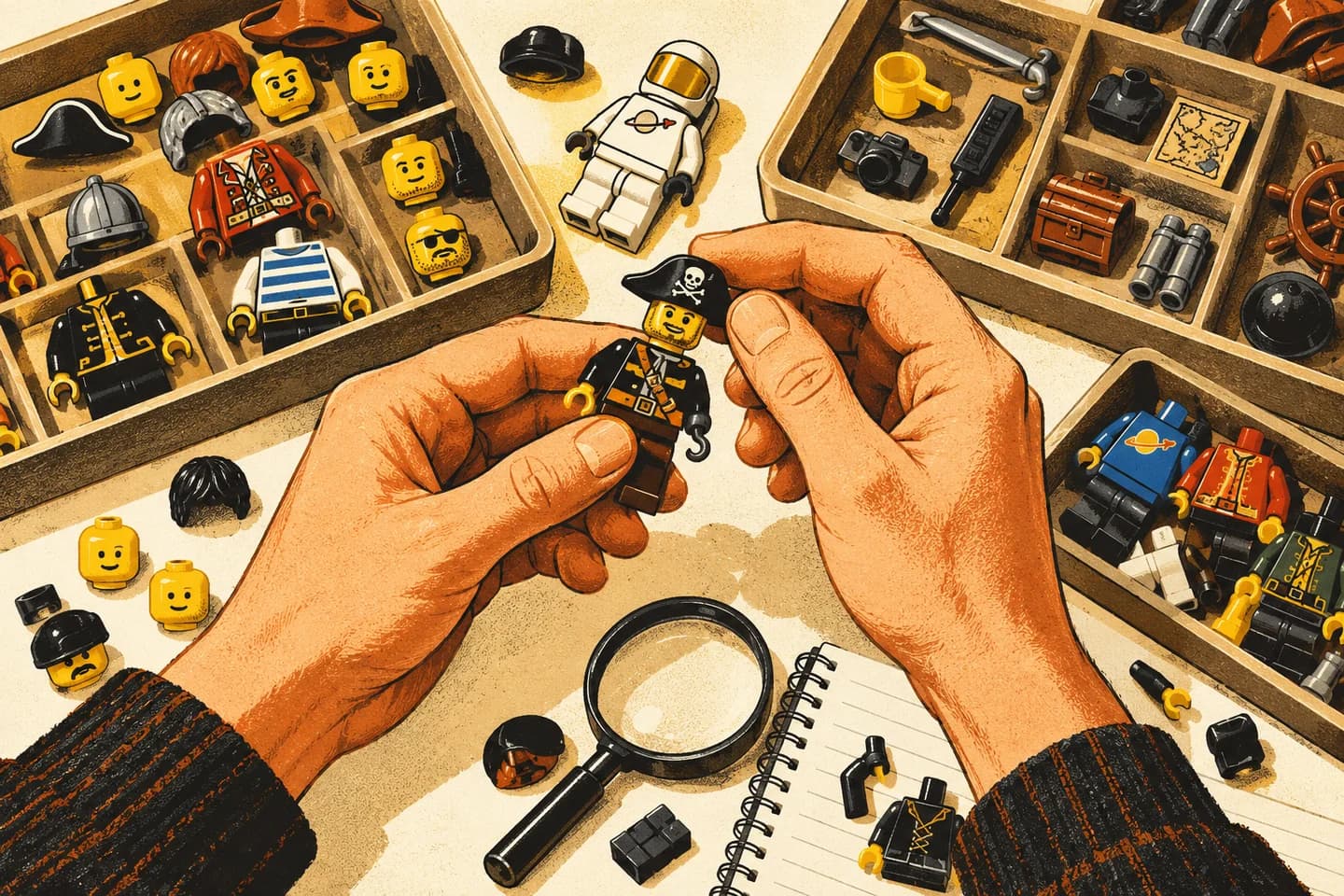
Ask whether the displayed minifigures, instructions and containers are part of the price. Check several areas of a bulk box rather than judging only the attractive layer on top. Look for mixed brands, damaged elements, household objects, dirt and anything that will require extra preparation.
If the purchase depends on one apparently valuable figure or set, inspect that part of the claim first. Do not give an ordinary bulk lot a collector-level valuation because you hope a rare item is hiding underneath. When the promising detail cannot be verified, use a conservative limit for the contents you understand.
Separate the first sorting pass from detailed inventory
The first pass tells you what kind of project you have bought.
- Keep instructions and any credible set information together.
- Set aside figures and delicate accessories for individual inspection.
- Separate obvious non-LEGO material and damaged pieces.
- Keep electronic or sensitive components apart from ordinary washable bricks.
- Group distinctive parts that may help identify sets.
- Leave uncertain items clearly labelled rather than silently counting them as verified.
Identify the set and use the correct references
LEGO’s building-instructions service can help you locate the official instructions for a known set. A reference catalogue such as BrickLink can provide another way to inspect the set and its inventory. Match the set number and version rather than assuming a similar-looking model uses the same contents.
For a mixed box, start with distinctive printed elements, unusual shapes and any surviving assemblies. They can narrow the possibilities. An instruction booklet beside the bricks may belong to a set that is no longer in the box, so treat it as evidence to investigate rather than proof of ownership of the complete model.
Check a candidate set systematically
Keep a written or digital record of what has been verified.
- Match the correct inventory to the identified set.
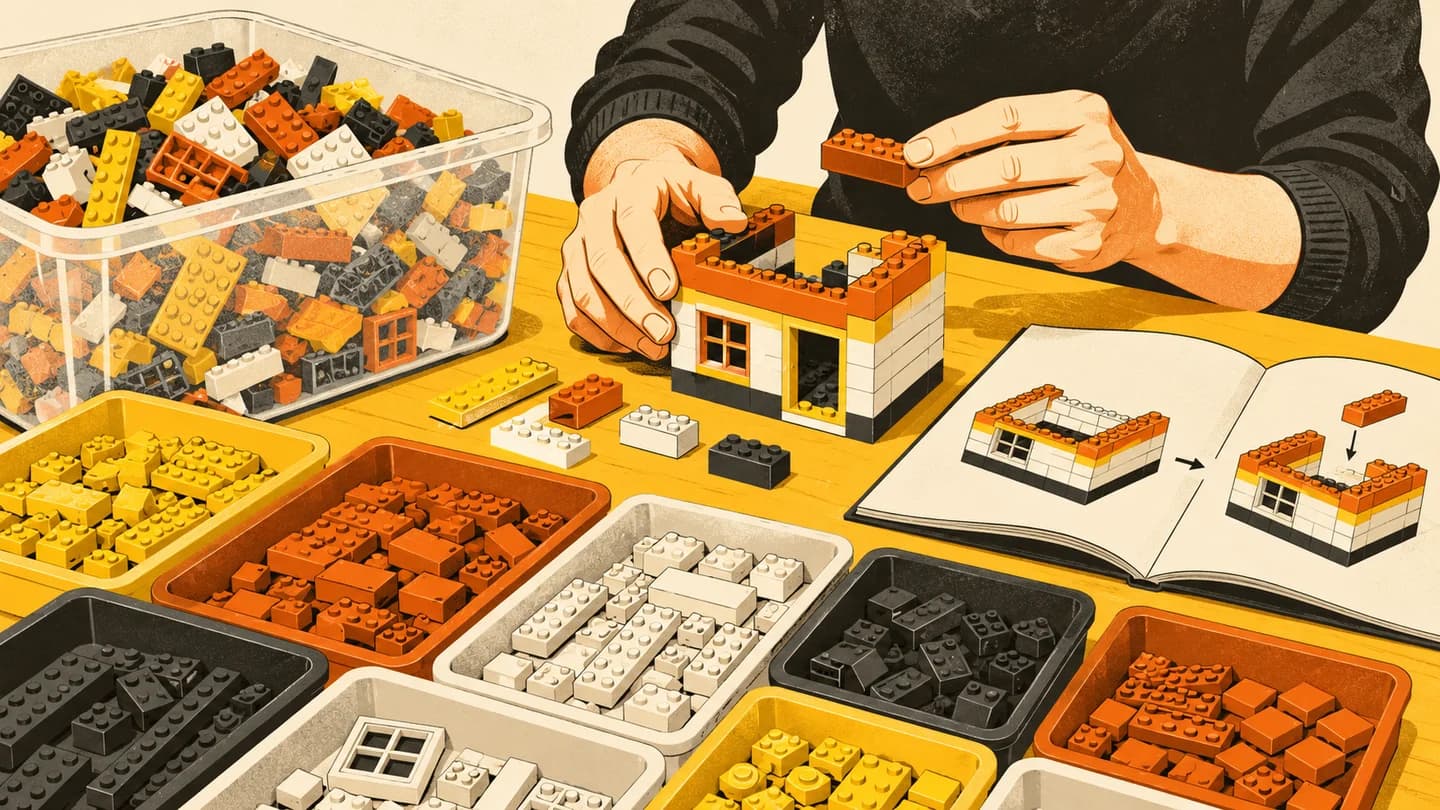
- Sort the required parts by type and colour.
- Count the actual quantities, keeping substitutions separate.
- Check figures and accessories against the set’s expected contents.
- Inspect printed or stickered elements and delicate parts closely.
- Record missing, damaged, substituted and uncertain pieces.
- Only describe the set as complete when the claim is supported.
A built model does not settle every question
A model can stand up and resemble the box picture while containing a wrong colour, a substitute part or a missing accessory. Building can be a useful check, but it does not replace careful identification of the pieces that affect the listing.
Be especially precise about figures, printed parts and decorative elements where they contribute to value. Record whether instructions and the original box are included and their condition. If you mean that the main build is complete but the figures are missing, say that directly instead of using “complete” on its own.
Price missing parts as an order, not a handful of unit prices
Identify the correct part, colour and version before shopping for replacements. Then calculate the total delivered cost, including any seller minimums or charges that apply. Small cheap parts spread across several orders can become an expensive way to complete a modest set.
Compare that total with the likely improvement in sale proceeds. A slightly more expensive part from a seller supplying the rest of the list may produce a cheaper overall order. Keep any acceptable substitutions explicit; a replacement in a different colour is not the exact original inventory simply because the model still works.
Use replacement services honestly
Compare completion with selling as found
These figures are invented to show the decision. They are not current LEGO prices or platform charges. Both options assume the same £25 acquisition cost.
| Line | Complete it | Sell clearly incomplete |
|---|---|---|
| Expected proceeds | £70 | £45 |
| Replacement parts delivered | −£15 | £0 |
| Selling and fulfilment expense | −£12 | −£10 |
| Acquisition cost | −£25 | −£25 |
| Contribution before time, tax and other costs | £18 | £10 |
Ask whether the extra £8 earns the work
In the example, completing the set produces £8 more before your extra time and risk. That may be worthwhile if the inventory is simple and the replacement order is certain. It may not be worthwhile if you need hours of rebuilding and another missing part is likely to emerge.
Repeat the calculation at a lower plausible selling price. Include the possibility of waiting for parts and delaying the listing. The most satisfying restoration project is not necessarily the most efficient resale route, and it is fine to keep those two motivations separate.
Use price-guide information on the right basis
BrickLink distinguishes past sales from items currently offered for sale, and its guide separates relevant conditions and part colours. Use the matching item and condition when researching. Current asking prices do not prove that your stock will sell at those levels.
A set’s part-out value is also different from the price of selling the set whole. Adding individual part values does not account for whether every piece will sell, how long that might take or the work of storing and dispatching many orders. Do not treat that theoretical total as immediate recoverable cash.
Clean only in a way suited to the pieces
For ordinary bricks, LEGO recommends hand cleaning with water no hotter than 40°C and a soft cloth or sponge, with appropriate mild detergent and rinsing. Its guidance treats electronic and other sensitive components separately and warns against machines and heat drying. Read the current care instructions for the parts you have.
Do not assume aggressive treatment will restore damaged printing, discolouration or worn surfaces. Dry suitable washed pieces thoroughly before bagging them. Cleaning is preparation, not a reason to hide the condition that remains or describe used pieces as new.
Make a bulk listing specific enough to assess
Bulk buyers still need to know what is being offered.
- Give the net weight of the included pieces, excluding the container.
- Explain whether figures, instructions, baseplates or unusual components are included.
- State what sorting or checks you performed and any limitations.
- Disclose mixed brands, damage or contamination rather than burying them in photographs.
- Use pictures of the actual lot, including a spread that shows its contents.
- Make clear if any photographed display items are excluded.
Keep the checked stock organised until it sells
Label each set or lot and keep its figures, instructions and inventory record together. Avoid taking a piece for another project without updating the original record. Pack small parts securely so the buyer receives what you counted.
After the sale, record the final proceeds, replacement costs and time spent sorting. That evidence helps you choose future purchases. Used LEGO can reward careful work, but the advantage comes from accurate inventories and sensible buying limits, not simply from owning a large quantity of bricks.