Identify the correct combination of parts and accessories before pricing a minifigure.
A mixed box is a sorting job before it is a bargain
A handful of recognisable characters can make a box of LEGO look more valuable than it is. The useful question is not whether a character is popular. It is whether you have the correct, genuine combination of parts, in a condition someone will buy, at a price that leaves enough for your work.
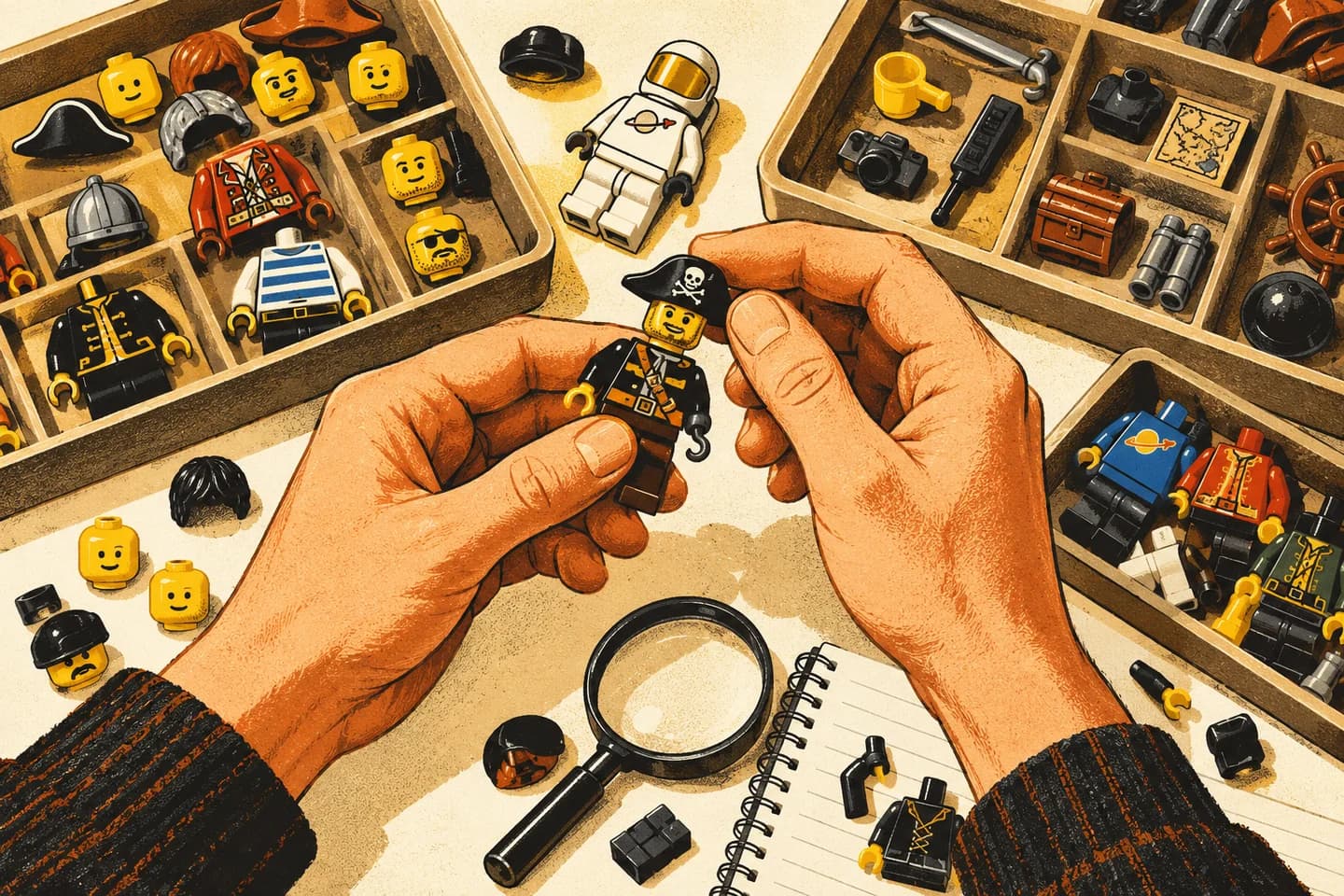
Children swap heads, legs, hair and accessories. A figure that looks convincing at a glance may contain parts from several releases. Some of those pieces might still have value, but you cannot price the assembled result as a complete example of the most expensive version you can find. This guide gives you a practical sequence for inspecting a box, researching promising figures and deciding what to sell individually.
At the stall: inspect before you make an offer
Ask permission to handle the contents and use a shallow tray so small pieces cannot disappear into the grass. Start with the figures that appear to account for most of the asking price.
- Look at both sides of the torsos, not just the printed fronts.
- Check whether heads, legs and headwear appear consistent with the proposed character.
- Notice missing hands, cracked sides, damaged heels and badly rubbed printing.
- Separate loose accessories from complete-looking figures so you know what is actually included.
- Ask whether the box is all included in the quoted price and whether any displayed figures are excluded.
A useful first decision
If you cannot identify the expensive-looking pieces on the spot, set a conservative limit for the ordinary contents you understand. Do not add a large allowance for a hoped-for rare figure. Leaving a promising but unverified box behind is preferable to paying a collector price for an assembled mixture.
Photograph the box with permission if you need to research it, but remember that a crowded photograph can hide cracks and mismatched pieces. An image-identification tool can suggest a starting point; it cannot establish the physical condition or authenticity of every component.
Identify the exact figure, one component at a time
At home, work on a clear, well-lit surface and keep each candidate’s parts together. Avoid forcing aged or stiff joints apart merely to make inspection easier.
- Record the torso’s front and rear printing, arm colours and hand colours.
- Compare the head print, including any second expression, with a dependable catalogue entry.
- Check leg colour, printing and hip combination rather than assuming plain legs are interchangeable.
- Match hair, helmet or other headwear to the identified release.
- Check the catalogue inventory for the figure and distinguish its required components from extra accessories shown in a seller’s photograph.
- Save the catalogue reference and your own photographs with a stock code.
Use a catalogue to resolve differences
BrickLink’s reference catalogue separates minifigures and parts, which makes it useful for investigating a distinctive torso or an incomplete figure. Search with the details you can observe rather than selecting the highest-priced result that resembles the character. Compare the whole entry and its component information.
If two entries look almost identical, slow down. A small printing difference may explain the separate identity, or your assembled figure may combine both versions. Write down the unresolved detail. It is better to describe verified components than to make a confident complete-figure claim that your evidence cannot support.
Condition: the small faults buyers need to see
Inspect in good light, using magnification where helpful. Handle gently; the aim is to observe damage, not create it.
- Torso: check the sides and around the arm sockets for cracks or stress marks.
- Legs and hips: look for cracks, looseness, chewed edges and mismatched replacements.
- Head and hands: inspect wear, damage and excessive looseness without repeatedly forcing parts on and off.
- Printing: check rubbing, scratches and fading on the front, back and exposed edges.
- Accessories: check thin handles, clips and projecting details for breaks.
- Surface condition: note dirt, odour, discolouration and any marker pen or paint.
A tiny crack can change the comparison
Genuine parts, custom parts and uncertainty
Look for expected moulded markings and compare construction and printing with reliable references, but do not treat one logo, a familiar colour or a convincing photograph as conclusive authentication. Genuine components can also be mixed with aftermarket or custom parts.
Keep uncertain pieces separate until you can resolve them. Do not describe an unverified figure as genuine because it came in a box containing genuine bricks. Where a substantial premium depends on authenticity, seek a suitable specialist opinion before buying at that price or advertising the claim. Also keep custom printing and replacement accessories distinct from original release components.
Research prices without chasing the highest number
Once the identity is established, inspect completed sales for the same figure in comparable used condition. BrickLink’s price guide distinguishes past six-month sales from current items for sale, and separates new and used information. Those distinctions matter: an unsold asking price is not a completed transaction, and a used figure is not automatically comparable with new stock.
Use the data as a starting point rather than a guaranteed UK selling price. Consider how many relevant transactions support the figure, the location of competing sellers and the delivery costs a buyer faces. Then compare suitable completed marketplace listings, reading the descriptions for cracks, missing parts or included extras.
Keep a short valuation note with the reference, condition, several relevant comparisons and your cautious expected proceeds. If there is little usable evidence, record the uncertainty. Do not turn one exceptional result into the value of every figure in the box.
A worked mixed-box buying calculation
Imagine a seller wants £25 for a mixed box. After inspection, you estimate that two correctly identified figures could each sell for £18, four ordinary complete figures could sell together for £12, and the remaining loose parts could make a £7 lot. These are invented teaching figures, not current prices for particular characters. Expected gross proceeds total £55.
Now allow £12 for the combined selling and fulfilment costs of those orders and £3 for preparation materials or replacement pieces. That leaves £40 before buying the box, so a £25 purchase would leave £15 before your time and other expenses. If sorting, photographing and fulfilling takes two hours, the opportunity is less impressive than “£55 worth of figures for £25”.
Test a weaker outcome as well. If one promising figure is cracked and brings £8 instead of £18, the contribution falls by £10, before any change in charges. If the loose parts do not sell, another £7 remains tied up. The calculation should survive ordinary disappointments rather than requiring every optimistic estimate to happen.
Complete a figure only when the added value pays
Before ordering a missing head, helmet or accessory, verify the exact compatible part and colour. Include delivery and any minimum-order requirement in the cost. Buying a £2 piece from a seller can cost much more than £2 by the time it arrives.
Compare the expected net proceeds of the incomplete figure with the completed one. If completion adds £6 but the correct part costs £7 delivered, the higher selling price does not improve the cash outcome. Completion might make an item easier to sell, but that should be a conscious decision. Never substitute a cheaper near-match and advertise the result as the original complete figure.
Choose individual listings or useful lots
Individually identified figures with worthwhile margins deserve their own descriptions and condition photographs. Ordinary figures can make sense as a clearly described group; loose parts may suit a parts lot. Group by a useful theme or component type rather than implying a random assortment is a complete collection.
Compare the work as well as gross proceeds. Five small sales create five orders, packages and opportunities for a missing accessory. A slightly lower bundle return can be sensible if it saves substantial handling. Conversely, burying one well-researched, desirable figure in a poorly described bulk lot may lose value you could justify with an individual listing.
Prepare a listing a collector can assess
Use photographs of the actual figure, not this article’s illustrative artwork or a catalogue image.
- Show the front, rear and both sides, with close-ups of defects.
- Name the verified identity or describe the components honestly if identification remains incomplete.
- List accessories included and important missing pieces.
- State cracks, print wear, loose joints and any replacements clearly.
- Explain exactly what a multiple-figure lot contains and avoid assuming every piece has identical condition.
Clean, pack and keep the evidence
Photograph condition before cleaning. LEGO’s general care guidance recommends hand cleaning with water no hotter than 40°C and a soft cloth or sponge. That does not mean every decorated, fabric, electronic or unfamiliar component should be immersed. Check appropriate care information for the actual materials, avoid abrasive treatments and stop if printing or finish changes.
Allow suitable cleaned parts to dry fully, then keep each sale’s components in labelled protective packaging. Small accessories should not travel loose in an outer envelope where they can be lost. Protect the packed figure from crushing and select a suitable postal service based on the finished parcel.
Record the accepted sale, actual costs and time. Over several boxes, those records will show which kinds of figures repay the identification work and which purchases merely create more sorting. That is the knowledge that improves the next buying decision.