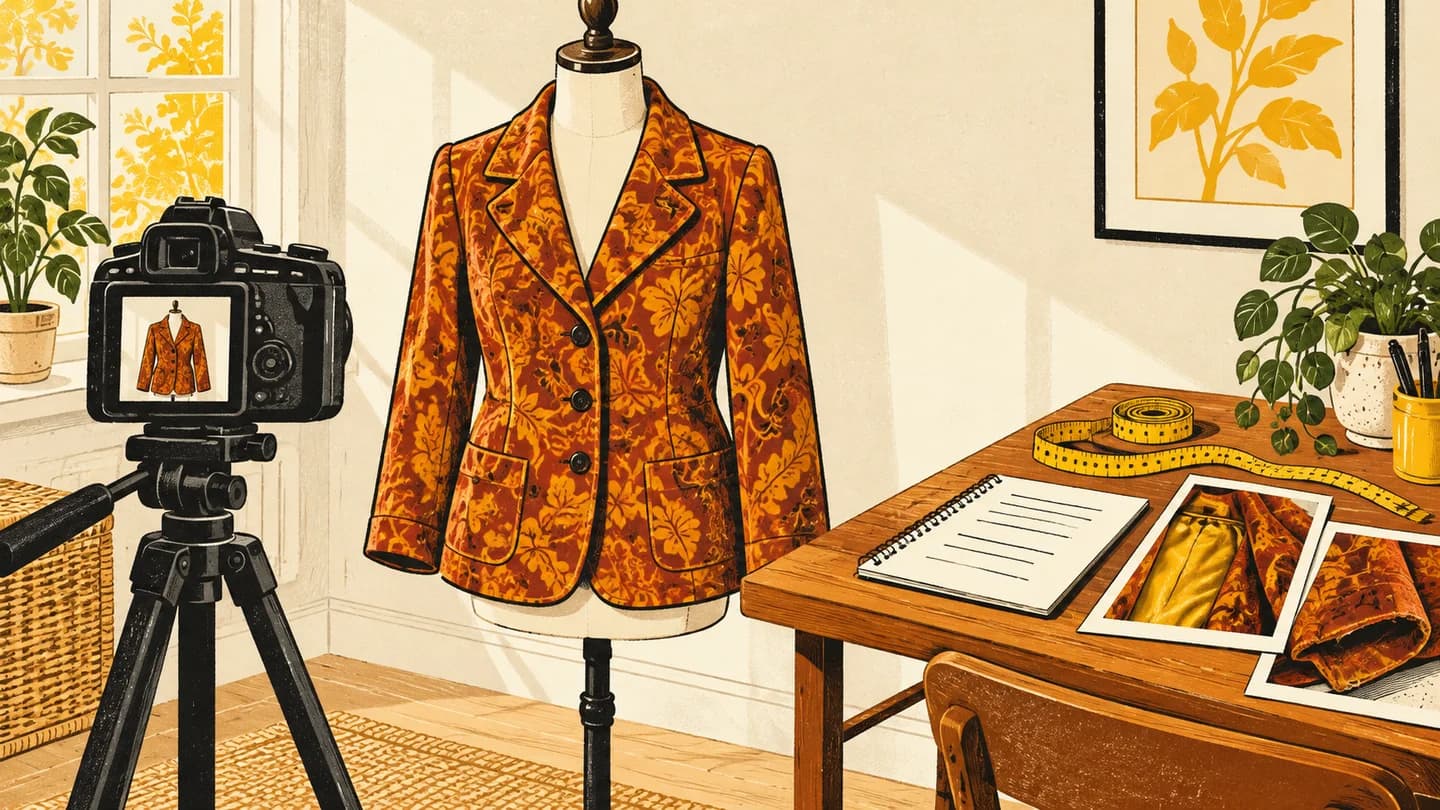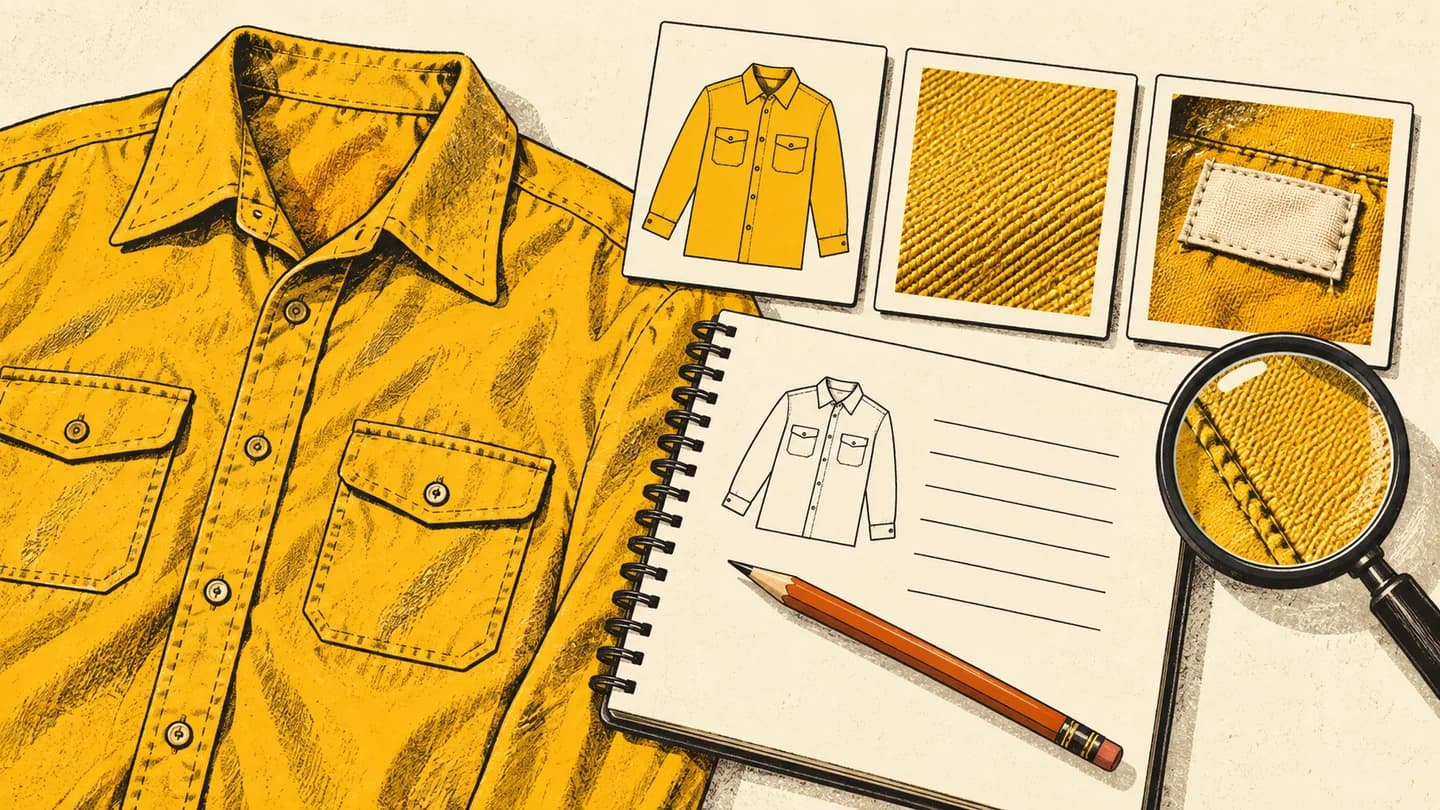
Use specific style vocabulary that matches the garment instead of adding unrelated search terms.
Use the words that explain the garment
Good Depop keywords help the right buyer recognise the item you are selling. They should describe its type, shape, material, colour, brand and relevant style. A list of popular terms attached to the wrong garment may attract attention while making the listing less useful.
Start with facts, then add supported style language. “Brown corduroy flared trousers” gives a buyer several meaningful details immediately. “Rare vintage aesthetic must-have” gives almost none. This guide shows how to build a readable description that serves search and the person deciding whether the garment will suit them.
Separate identity, style and age
Identity is what the item is: a jacket, skirt, pair of trousers or matching set, with a verified maker where known. Style describes its appearance: cropped, flared, oversized in cut, patterned or workwear-inspired. Age concerns when the physical garment was made. Those are related but different claims.
A modern piece can resemble an older fashion. If you know the style but cannot establish the age, use the style description without asserting a decade. Likewise, a garment can resemble a designer’s look without being that designer’s product. Keywords should not blur those distinctions just because a more famous term may attract searches.
Build a factual vocabulary for each item
Write a short note from the garment itself before looking for trend labels.
- Garment type and verified brand.
- Main colour and visible pattern.
- Material supported by the label or reliable evidence.
- Cut, length, rise, neckline, sleeve or leg shape.
- Labelled size and useful measurements.
- Construction details such as pockets, lining or fastenings.
- Condition, alterations and missing components.
Turn vague copy into useful descriptions
These examples show the approach. Use only details that are true for your own garment.
| Vague phrase | Useful replacement |
|---|---|
| Amazing vintage trousers | Brown corduroy flared trousers, high waist |
| Perfect oversized jacket | Boxy denim jacket; chest width 60 cm laid flat |
| Designer-style top | Black sleeveless top with a square neckline |
| Great condition for age | Light cuff wear and a small repaired seam, pictured |
| One size fits most | Labelled one size; measurements provided below |
Make the opening line carry the essentials
Put the item type and strongest distinguishing facts near the start. A reader should not have to open a long description to discover whether the listing is for a coat or a skirt. Include the brand where verified and relevant, but do not repeat it several times just to fill the line.
Then move to fit, material, condition and contents in a sensible order. The opening is not the place to hide a major fault behind enthusiastic adjectives. If the garment is altered or missing an important part, make that easy to find before the buyer reaches any styling suggestions.
Describe fit without making a promise
Terms such as slim, straight, cropped and wide-leg can be useful when they describe the garment’s construction. “Oversized” needs care: a garment that is large on one model may not have an oversized cut for every buyer. Explain the labelled size and give measurements instead of relying on the photograph alone.
For a jacket, you might provide chest width laid flat and length measured from a stated point. For trousers, waist width, rise and inside leg can make the shape clearer. Say how you measured and avoid stretching the fabric to achieve a more appealing number. A buyer can compare those measurements with clothing they already own.
Use era language only when the evidence supports it
A colour palette or silhouette may suggest a period without proving when the garment was made. Labels, documented product history and construction details can contribute to an age assessment. Look for contradictory evidence as well as clues that support your first impression.
If your evidence supports only a broad range, use that range. If it supports only a style influence, describe the influence. Do not make a precise 1990s or 2000s claim because another listing used it for something similar. The more the price depends on age, the more carefully you should be able to explain the attribution.
Generated descriptions still need an inspection
Choose a few relevant hashtags
Use the tag options currently available in the listing form for terms that accurately describe the item. A garment type, supported material or appropriate style can be useful. Do not fill spare space with unrelated celebrities, brands or events merely because they are popular.
Review copied tags when reusing a listing template. A tag that suited the previous garment may be wrong for this one. Consistent formatting can save time; identical keyword blocks across unrelated stock can create misleading descriptions. Read the final listing as a buyer would, including the tags at the end.
Complete the structured fields
Depop uses listing information such as category, brand and colour alongside description text when matching searches. Fill the relevant fields accurately. A careful paragraph cannot fully compensate for a wrong size or category that places the item in unsuitable filtered results.
Check the fields again when you copy an existing listing. Keep the useful layout, but replace the previous item’s facts. This is an easy place for errors to survive because the description may look polished while a hidden selection still refers to the old garment. One deliberate final review can prevent avoidable confusion.
Edit a description in five passes
Each pass has a different purpose so you do not simply add more words.
- Facts: check identity, material, measurements, condition and included contents.
- Relevance: remove terms that do not describe the actual item.
- Readability: put the essentials first and shorten repetition.
- Agreement: confirm that photographs and structured fields support the same description.
- Final check: inspect any generated or copied text for leftover claims.
Understand what keyword improvements can achieve
Clear, relevant descriptions help people and the platform understand the item. They cannot guarantee a ranking or sale. Depop’s search results also reflect factors beyond your wording, including the search context and personalisation. Your own search view is not a definitive measurement of what every buyer sees.
Avoid treating a single search position or a few likes as proof that a particular phrase is a secret formula. If you change a description, record what changed and look at meaningful outcomes such as relevant questions, offers and completed sales. Keep price, condition and photography in the same evaluation.
Use questions as feedback for the next listing
If buyers repeatedly ask whether trousers are low-rise or whether a jacket is lined, that information may deserve a clearer place in the description. Answer from the item rather than guessing, then improve your inspection template so you capture it earlier next time.
The most useful keyword vocabulary grows from knowing the clothes and the questions buyers need answered. Learn garment terms accurately, use them where they fit and keep condition visible. A good listing can be concise while still being specific; its job is to make the purchase understandable, not display the largest collection of fashion words.