The useful bit
Give Art Scan accurate context without turning an unverified story into an established fact.
Separate observation from attribution
“Signed Smith at lower right” describes what you see. “An original by a famous Smith” adds a conclusion. The first is useful input; the second needs evidence.
Prepare your notes
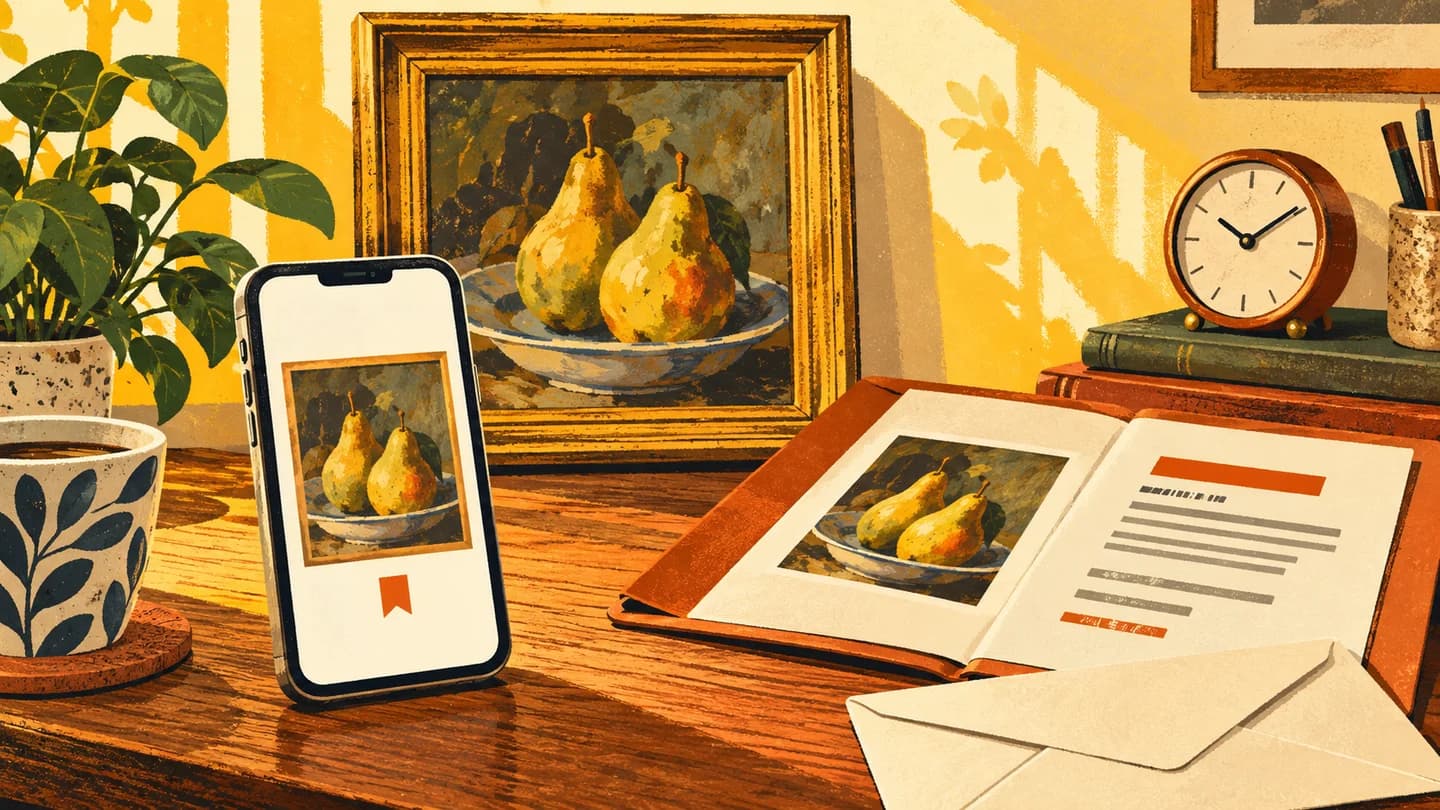
- Open Art Scan, choose the whole-work photo and expand Add details (optional).
- Find What else do you know? You have up to 2,000 characters for evidence that the main image may not show.
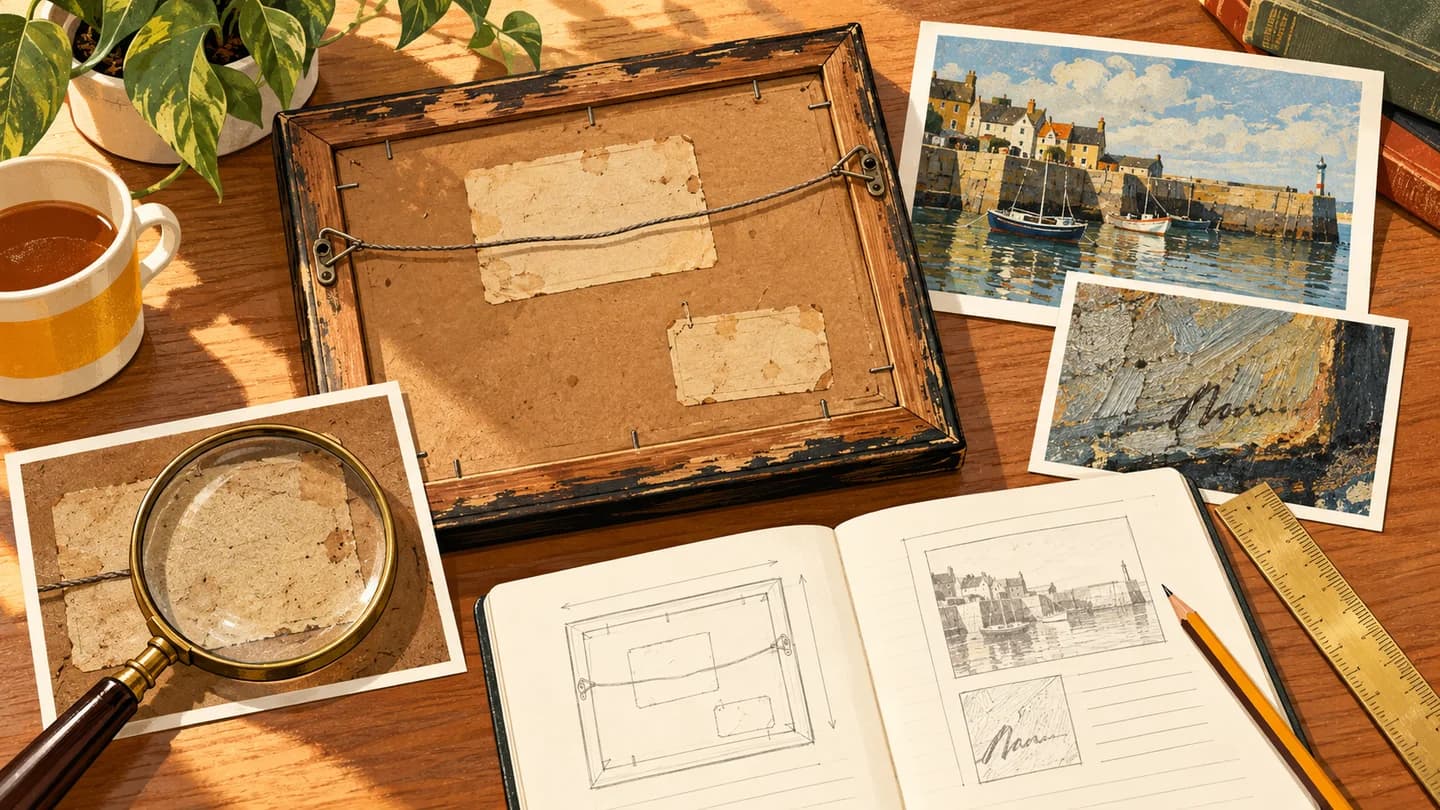
- Copy visible signature letters, using question marks for uncertain characters. Record edition numbers exactly, including letters.
- Describe rear labels, gallery names, dates and dimensions. Say whether dimensions refer to the picture or the frame.
- Explain what provenance documents exist and who supplied them, without treating a seller’s story as proof. Identify what you have not checked, such as whether a signature is printed.
- Review the single photo and notes before pressing Start Art Scan. This flow accepts one photograph, so use the notes to describe relevant reverse-side details.
Details that help
Keep notes concise and relevant to the actual piece.
- Dimensions and whether they include the frame.
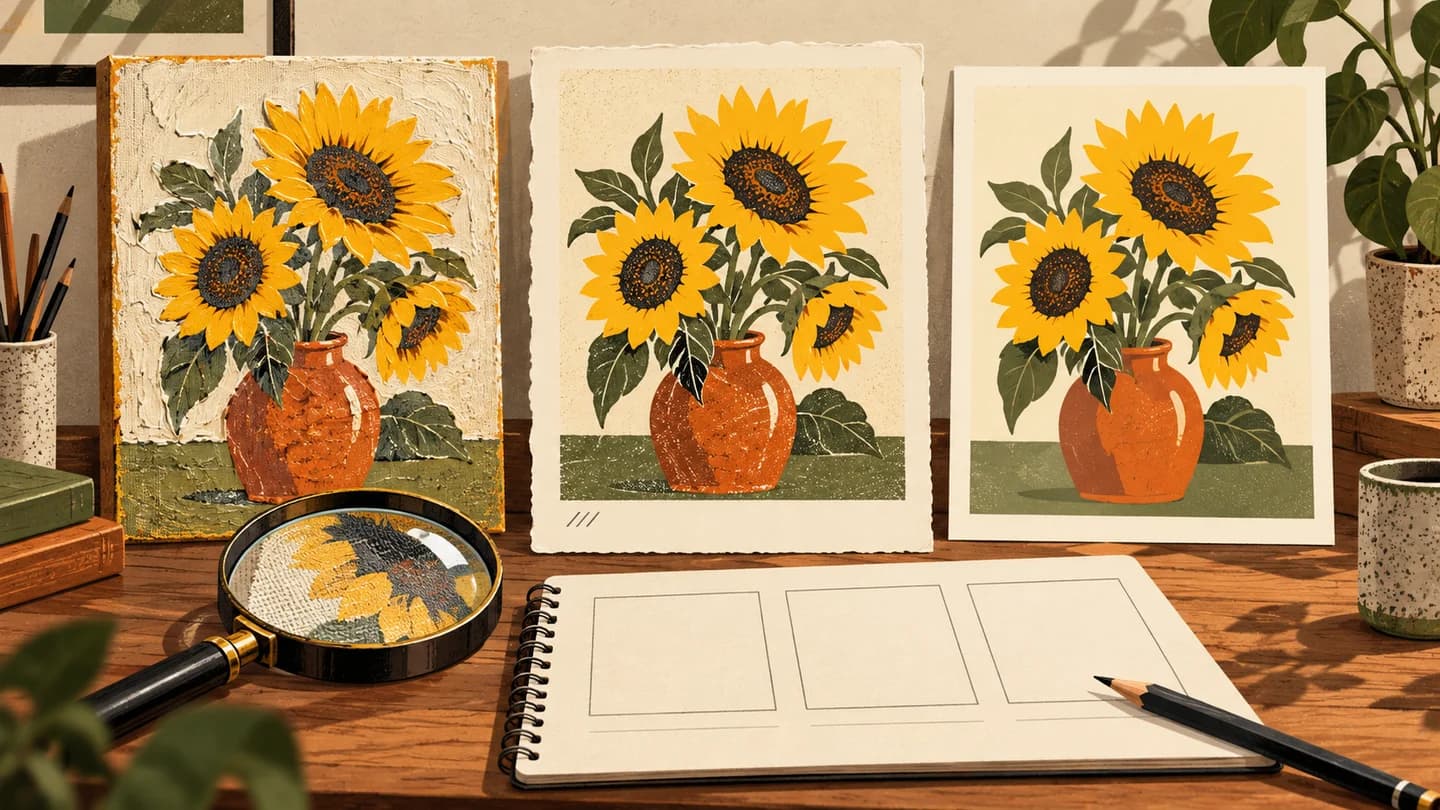
- Paper, canvas or board when you can tell.
- Embossing, numbering and publisher information.
- Damage, fading or areas obscured by glass.