Identify the exact card and condition before using a headline sale as a valuation.
Value the card in front of you
A photograph of an expensive trading-card sale can make a childhood binder look like a windfall. The difficult part is establishing whether your card is the same release, in a comparable condition, with a buyer willing to pay a similar amount. Matching the character or player is only the first step.
A useful valuation answers four questions: exactly which card is this, is its identity credible, what condition is it in, and what have comparable copies actually sold for? Work through those questions before deciding whether to buy a collection, sell a single card or pay for professional grading. A high asking price answers none of them.
Build an exact card description
Take clear photographs of both sides in good light. Keep the card supported on a clean surface and avoid rubbing or bending it to reveal details.
- Record the game or sport, character or player name, manufacturer and year or set information shown on the card.
- Find the collector number and expansion identifier. Depending on the release, the identifier may be a symbol, printed code or named product series.
- Establish the language and specific version: standard, foil, reverse foil, promotional, parallel, numbered or another documented variation.
- Compare with an official card database or manufacturer checklist for that release. Do not assume a detail missing from one era should appear in another.
- For an encapsulated card, also record the grading company, grade, any qualifier and certification number. Keep these separate from your own opinion of condition.
Artwork is a search clue, not a complete identification
Pokémon cards illustrate the problem well: the same character can appear across numerous expansions, and a set can include different foil treatments. Older cards may carry expansion symbols, while the Scarlet & Violet series introduced expansion codes. The exact printed number and finish matter more than a search for the character followed by “rare”.
Sports cards have their own variants. A base card, a colour parallel, an insert, a numbered issue and an autograph version can share a player and broadly similar design. Read the manufacturer’s checklist for the product and verify what the markings actually denote. An apparent autograph needs its own authentication evidence; a printed facsimile is not a hand-signed card.
Inspect four areas before choosing comparable sales
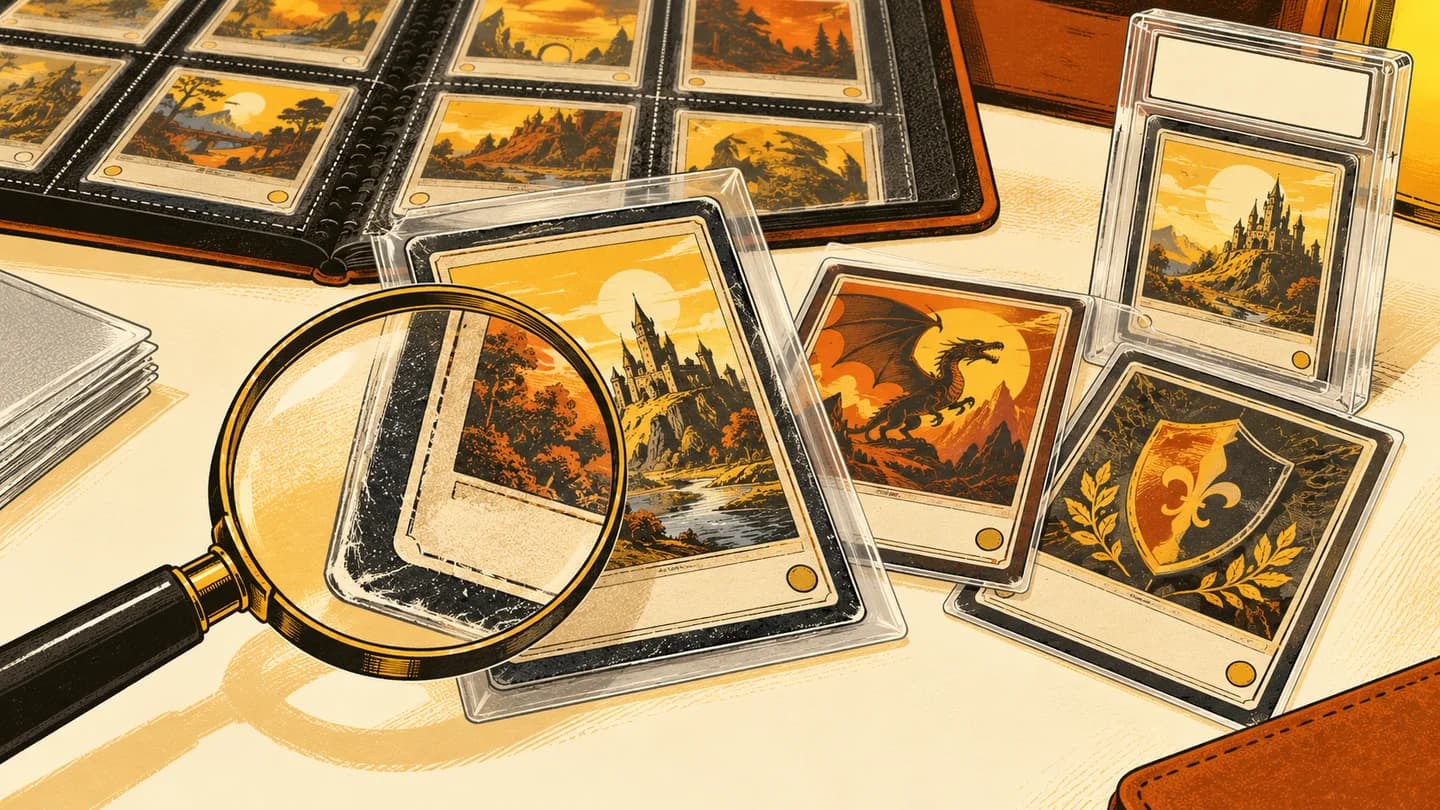
A sleeve can hide a dent or surface scratch. If you own the card, inspect it carefully outside the sleeve only when you can do so without damage; for a prospective purchase, ask for suitable photographs or permission.
| Area | What to inspect | What to record |
|---|---|---|
| Corners | Softness, folds, fraying or missing colour | Which corners are affected, on the front and back. |
| Edges | White spots, chips, dents and uneven wear | The location and extent, rather than a vague “good condition”. |
| Surface | Scratches, creases, impressions, stains and foil wear | Use angled light and photographs that reveal the defect. |
| Centring and print | Border balance, print lines and visible production defects | Describe observations without promising a professional grade. |
Raw condition and a numerical grade are different claims
An ungraded card is often called raw. Sellers may use descriptions such as near mint or lightly played, but meanings can differ between marketplaces and sellers. Read the condition definitions on the place where you intend to sell, then provide photographs and disclose faults even when you select an overall condition category.
Professional grading assesses several features together. A clean front does not compensate automatically for a crease on the back, and a well-centred card can still have surface damage. Avoid listings such as “guaranteed ten” or “would grade mint”. If it has not received that grade from the named company, you cannot price or advertise it as though it has.
Do not improve a card into a different problem
Turn completed sales into a usable range
Search by the precise set and card number as well as the name. Start with several recent matches, then widen the time period if there is too little evidence.
- Remove different languages, finishes, reprints and promotional versions from the comparison. A visually similar card is not automatically a substitute.
- Separate raw copies from graded copies. For graded comparisons, match the grading company, numerical grade and relevant qualifiers.
- Look at the sale photographs and stated defects, not just the title. A damaged copy may be your most useful comparison if yours is also damaged.
- Distinguish a single card from a bundle, sealed product or listing that includes other valuable items. Check whether postage is included in the figure.
- Treat unusual results and undisclosed accepted offers cautiously. Record a realistic range rather than choosing the highest visible number.
A sale result is evidence with limits
Public sales records do not always show whether a transaction was paid, subsequently cancelled or returned. Repeated extraordinary results from a thin market deserve closer attention, especially when they are far above otherwise comparable copies. Cross-check another established marketplace or auction archive when the purchase price is substantial.
Also consider how often the exact card sells. Ten competing listings and one visible sale over several months suggest a different selling experience from frequent sales of similar copies. A scarce variant can be difficult to replace and still take a long time to sell. “Rare” describes supply only imperfectly and says nothing by itself about your likely waiting time.
Check authentication separately from price
Compare the card’s printing, finish and details with reliable references, but do not rely on one home test. Different authentic releases can have different materials and finishes. Avoid destructive bend, tear or scratch tests: they can ruin a genuine card and are a poor basis for a purchase. If authenticity is unresolved and the value depends on it, obtain appropriate specialist assessment before buying or selling it as genuine.
For a graded card, enter the certification number on the grading company’s own website. Match the recorded card, grade and any available images to the item offered. Inspect the holder and label for discrepancies or signs of interference. PSA warns that genuine certification numbers can be copied onto counterfeit inserts, so a successful lookup is a check on the database record, not conclusive authentication of the object in your hand.
Three sensible ways to sell
Choose a route that fits the actual cards and the work involved. Every common card does not need an individual listing.
Sell a raw single
Useful when a card has enough demand and value to justify photographs, a detailed condition description and protective packing.
Group a clearly described lot
Suitable for lower-value cards when the contents, approximate or exact count, duplicates and condition are disclosed. Do not imply an ordinary sorted lot is an untouched mystery collection.
Consider professional grading
Potentially useful for selected valuable cards when likely graded outcomes justify the total cost and delay. It should be a calculation, not a default step for anything shiny.
Compare grading with selling raw today
Check the service’s current eligibility, fees, value limits, submission instructions and turnaround estimates. Include protective supplies, delivery in both directions, insurance where suitable, any intermediary charges and relevant cross-border costs. These vary by route and service level; a headline grading fee is not the whole expense.
Use conservative scenarios. Suppose, purely as an example, the card could sell raw for £80 and the total additional grading-related cost is £35. If it later sells graded for £130, the extra £50 of gross revenue leaves only £15 before any extra selling costs and the value of your time. If the grade supports only a £90 sale, the same route is £25 worse than selling raw before those adjustments. Neither figure is a predicted grade or market price.
Only proceed when the likely outcomes make sense for your particular card and budget. A large premium for the highest grade is not evidence that yours will achieve it. Inspect the defects first and compare lower plausible grades, including the possibility that the card cannot be graded as hoped.
Buy collections without paying for imaginary highlights
Ask to see the cards driving the seller’s price, including their backs. Count duplicates and separate identified valuable singles from bulk. Check that the impressive card in the first photograph is actually included and that the collection has not been priced by applying a premium card’s value to every similar-looking copy.
Build your offer from conservative net proceeds for the identifiable cards, plus a realistic outlet for the remainder. Deduct selling costs, packing, grading only where justified and the time required to sort and list. If most of the supposed value rests on cards you cannot inspect, the collection is not yet researched enough to support that price. Avoid buying more stock simply because social-media attention is rising.
Make the listing and parcel match the card’s value
Good presentation should make inspection easier, not hide flaws behind glare or dramatic lighting.
- Use your own front and back photographs, plus close-ups of defects. Show the exact card rather than a stock image of the artwork.
- Put the identifying set, number, language and verified finish in the title where space allows. Add grading details only when applicable.
- Keep filters and colour adjustments from disguising wear. Describe the grading holder’s condition separately from the card inside it.
- Use a suitable protective sleeve and rigid support, keeping adhesive away from the card and sleeve opening. Do not force a thick card into a holder that is too tight.
- Prevent movement in the parcel and choose a delivery service with suitable tracking and cover for the value. Check packaging and compensation requirements before posting.
Aim for a repeatable decision, not a spectacular screenshot
A useful card valuation is a range with reasons attached: exact release, condition evidence, comparable sales and a realistic selling route. Keep those notes with the photographs so that a later price change can be assessed against the same card, rather than a fresh burst of excitement.
For a beginner, learning one game, era or product line is more manageable than trying to recognise every valuable card. Build knowledge through small, verifiable purchases. Passing on a collection you cannot authenticate or price is part of buying well; you do not need a speculative success to make the process worthwhile.