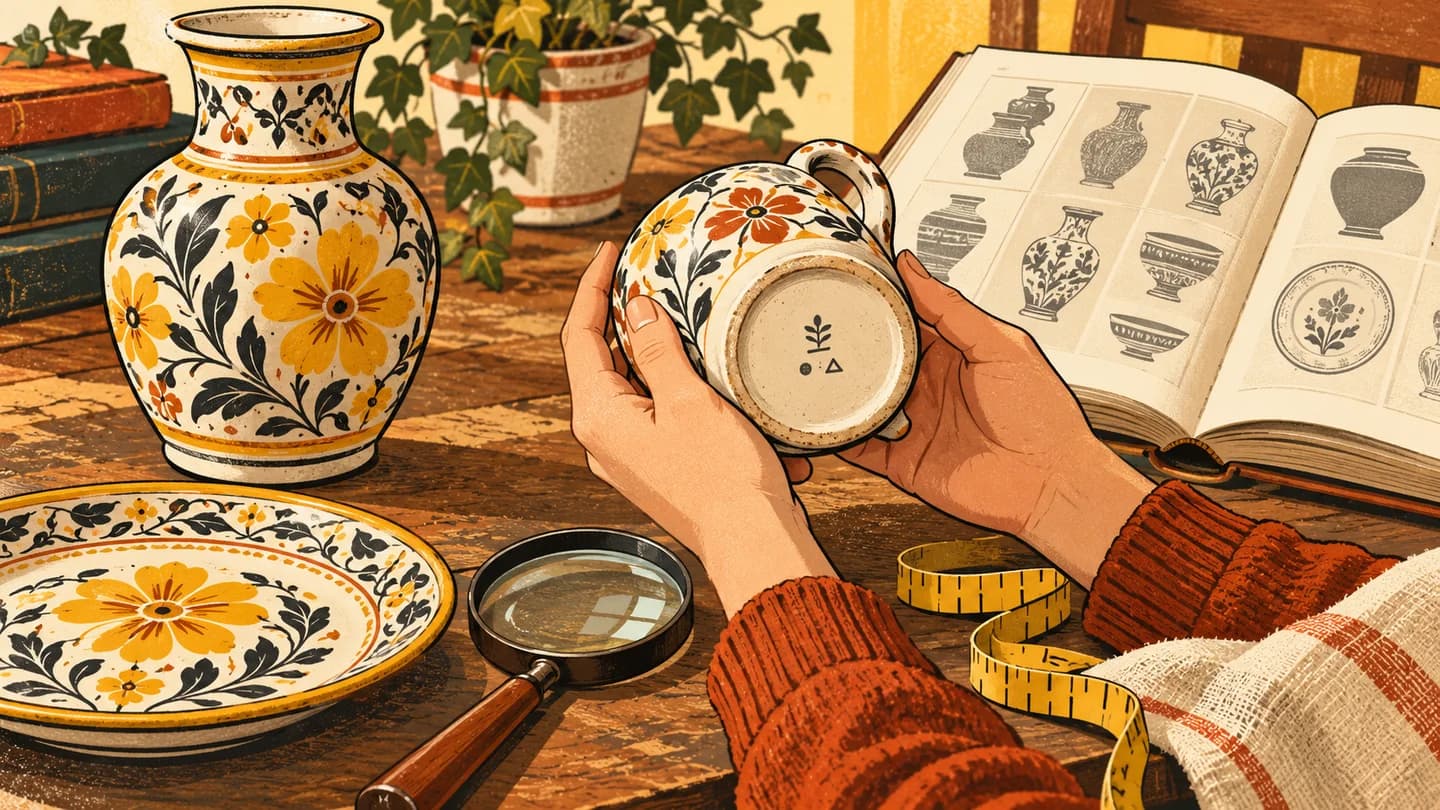
Use the base mark alongside shape, decoration and condition to investigate a ceramic object.
Start with the pot, then turn it over
A promising mark on the base of a vase is a reason to investigate, not a valuation. To identify second-hand pottery or porcelain, connect the mark with the object’s shape, material, decoration and condition. A familiar name on a damaged, common piece can be less useful to a reseller than an unmarked object with a clear decorative market.
At a car boot sale, your first decision is whether the evidence justifies the asking price. You do not have to solve every mystery beside the stall. Photograph enough detail to research properly, establish what you can safely say about the object, and avoid paying for a prestigious attribution that you have not verified.
Make a useful identification record
Ask permission before handling or photographing. Support the body and base rather than lifting an old jug by its handle.
- Photograph the entire object from the front, back and side. Include its lid, stand or matching pieces, if present.
- Record height, maximum width and any relevant opening or plate diameter. Similar designs can exist in several sizes.
- Photograph the underside in even light, then make a close-up of every stamp, painted mark, number, label and inscription.
- Transcribe visible characters exactly. Use a question mark for an uncertain letter rather than silently completing a famous name.
- Record chips, cracks, repairs, worn decoration and differences between components. Identification and condition belong in the same set of notes.
Different marks can answer different questions
A base may contain several marks added for different purposes. Keep them separate until a reliable reference explains how they relate.
| What you can see | What to investigate |
|---|---|
| Factory name or emblem | The business, the particular version of its mark and the period in which that version was used. |
| Painted or impressed initials | Whether they identify a potter, decorator, workshop or something else in this maker’s system. |
| Pattern name or number | The decoration or range; compare the exact arrangement, colour and border. |
| Shape or mould number | The physical form and size, which may have been offered with several decorations. |
| Country wording or retailer name | Production and selling context, without assuming that the retailer made the piece. |
| Paper label or handwritten note | Potential provenance to preserve, but a claim to verify rather than automatic proof. |
Search the exact details, not just “old vase”
Begin with a clearly legible name or distinctive group of characters. Add the object type and any pattern or shape number. If the base is unmarked, search the form and decoration in plain language: for example, “two-handled stoneware vase incised leaf decoration”. Keep a few photographs with a neutral background so an image search concentrates on the ceramic.
Use image matching to find leads, then inspect the evidence behind a result. A marketplace title can repeat an earlier seller’s mistaken attribution. Several listings using the same wording may therefore represent one circulating guess. Look for maker archives, museum collection records, documented catalogues or a specialist reference that shows the relevant mark and comparable objects.
Compare more than the outline of the stamp
Match the lettering, punctuation, border, placement and method of application, as well as the overall symbol. Then return to the object: does its shape, decoration and construction fit the proposed identification? A vaguely similar crown or pair of initials is a weak basis for a strong claim.
Well-known ceramic marks have been copied. The Chelsea anchor and Meissen crossed swords are examples where a recognisable symbol alone cannot settle authenticity. If a proposed identification changes a modest decorative purchase into a costly collectible, arrange an assessment by someone experienced in that factory or type of ware. A photograph of the base may not be enough for them either.
A date in the design need not be a manufacturing date
Pattern, shape and size determine the comparison
Two plates with the same factory mark may have very different demand. Buyers replacing a broken piece often need the exact pattern, diameter and form. A dinner plate, salad plate and shallow bowl are not interchangeable because their decoration looks similar in a thumbnail. Record dimensions before deciding which completed sales are relevant.
For a patterned service, examine border details, central motifs, colour and the placement of decoration. Check whether a saucer was designed for that cup and whether a lid actually matches its pot. A lid that sits on an opening is not necessarily original. Photograph both components separately and describe any mismatch, instead of calling a loosely assembled group a complete matching set.
Choose the most likely buyer
The same research can point towards different selling routes. Decide which one is supported by the object you actually have.
Replacement-piece buyer
Needs an accurate pattern, dimensions and condition description. One sound serving dish may be more useful than a mixed box advertised under a broad factory name.
Collector
May care about a particular maker, period, form or unusual decoration. A premium attribution needs stronger evidence and detailed condition photographs.
Decorative buyer
May choose by shape, colour and scale. An honestly described unmarked vase can have appeal without an invented designer or date.
Inspect condition before borrowing an intact example’s price
Use good light and a stable surface. Do not tap, scratch or apply liquids to test an unfamiliar object.
- Look around the rim, foot and projecting details for chips. Photograph both the visible face and the underside of any damage.
- Look for lines continuing through the ceramic body, especially near handles and spouts. Do not assume every fine line is only surface crazing.
- Check joins for glue, colour changes, uneven surfaces or a suspiciously different sheen that may indicate repair.
- Look for worn gilding, scratched decoration and staining. A bright front photograph can conceal extensive wear elsewhere.
- Check each component of a set. “Six pieces” is not the same as six undamaged pieces, and one good cup does not establish the rest.
- Record faults precisely. If you cannot distinguish a manufacturing feature from later damage, say what is visible and seek help when the distinction matters.
Keep cleaning separate from identification
Preserve labels and inscriptions while you research. Fragile overglaze decoration and gilding can be damaged by handling or cleaning, and an old repair may be less secure than it looks. Do not put an uncertain collectible in a dishwasher or soak it to improve a photograph. Get appropriate conservation advice for flaking surfaces, significant repairs or valuable pieces.
For an ordinary, sound item, follow care guidance appropriate to its material and decoration. Cleaning should not become an attempt to hide condition. A stain that cannot be safely removed remains part of the description, and a polished photograph is not evidence that an old vessel is suitable for food use. Avoid making suitability claims you have not established.
Build a price range from genuinely comparable sales
Search completed sales using the identified maker, pattern, form and size. Compare the number of pieces, condition and completeness. A lot containing twelve plates does not establish the price of one, and an asking price that remains unsold is not an achieved result. Keep notes on several relevant examples rather than choosing the most exciting figure.
Auction results also need interpretation: a reported hammer price may exclude buyer’s premium, while a reseller receives proceeds after their own applicable charges. For your buying decision, estimate what your chosen route could return to you after fees, packing, delivery and any assessment. A museum identification is useful research, but it is not a current market valuation.
An example: the attractive jug with a repaired handle
Imagine a jug offered for £18. Sound examples of the correctly identified pattern have sold around £60, but your jug has an old handle repair and no reliable comparable sale in that condition. The £60 figure cannot be treated as your expected selling price. First find evidence for repaired examples or decide whether the object has a modest decorative market.
Suppose you can support a £35 sale. An illustrative £5 selling-cost allowance, £9 for packing and delivery not recovered from the buyer, and £12 for your time and margin leave a £9 buying ceiling. That makes an £18 purchase unattractive under those assumptions. The important result is the decision, even though the mark turned out to be interesting.
Turn the research into a clear listing
A buyer should be able to see why your description is reasonable without having to guess what is hidden underneath.
- Use supported maker and pattern names, the object type and size in the title. Leave an uncertain maker out rather than presenting a guess as fact.
- Include clear photographs of the whole piece, base, marks, interior, components and every significant fault.
- Explain repairs and missing parts in the main description. Do not rely on a small photograph to carry an important disclosure.
- Retain your research notes so you can answer questions consistently and correct an attribution if better evidence appears.
- Work out protective packing before sale. Keep separate components from knocking together and check the carrier’s fragile-item terms and compensation cover.
Let the evidence decide the purchase
The best pottery research ends with a practical answer: what the object is, what condition it is in, who might buy it and what remains uncertain. Sometimes that uncovers a worthwhile find. Sometimes it shows that a beautiful piece is too damaged, too costly to ship or too difficult to attribute at the seller’s price. Both outcomes are useful to a bargain hunter.