Identify a glass object using several consistent details before assigning a maker or period.
Identify the glass before pricing the name
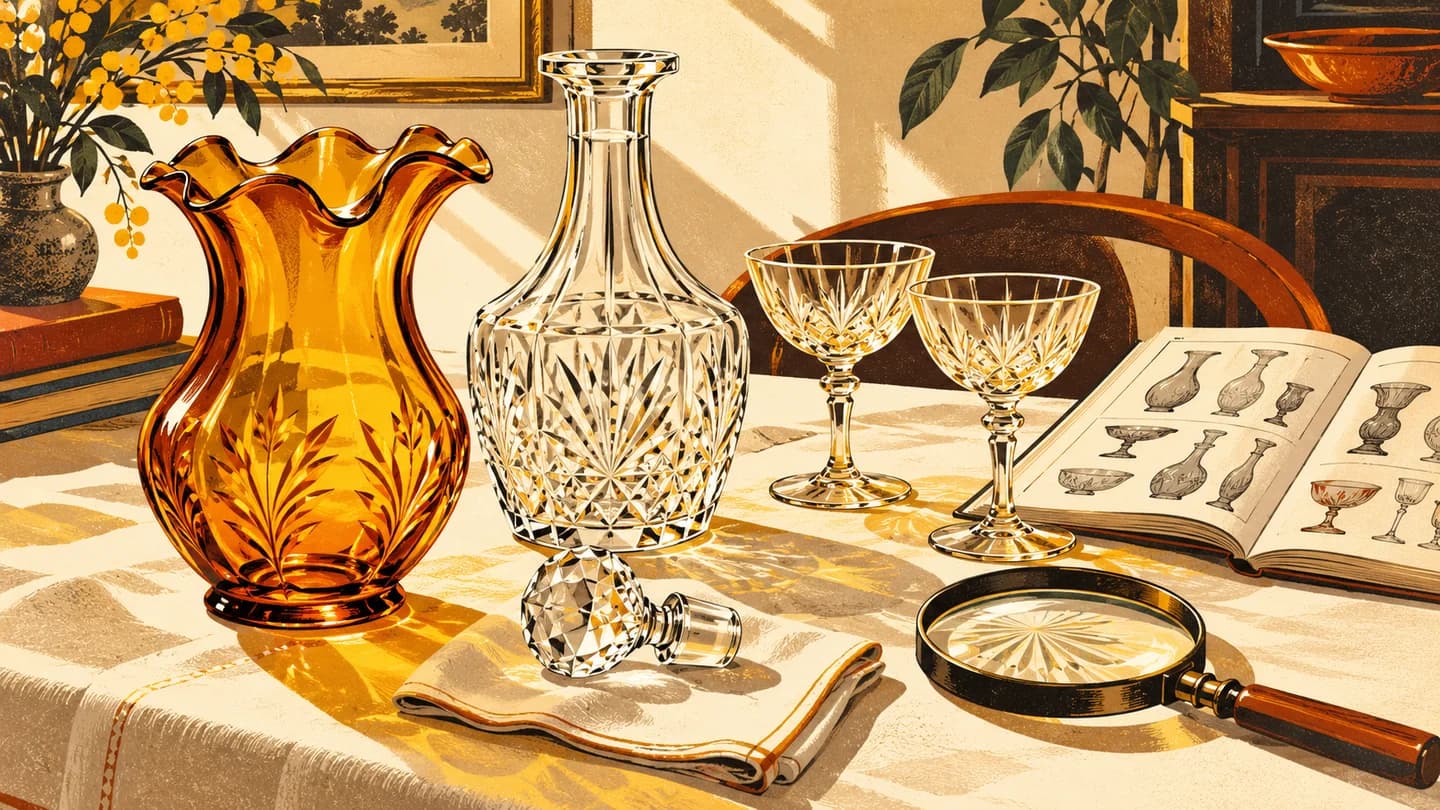
A colourful vase, a cut decanter and a set of drinking glasses can all look like easy car boot sale finds. The difficulty is deciding exactly what you have. Similar shapes were made by different factories, popular designs were reproduced, and a label or signature can require as much checking as the glass itself.
A sensible buying process joins four questions: what is the object, what supports its attribution, what condition is it in, and how will you get it to a buyer? An inexpensive piece can fail the last question if its size, fragility or packing costs leave no margin. A good-looking object with an uncertain maker can still sell, but it needs a description and price that reflect that uncertainty.
Record the features that make a comparison useful
Handle one piece at a time over a clear, stable surface. Ask before lifting anything and support the body rather than relying on a handle or stopper.
- Measure height, widest diameter and the dimensions that distinguish the form, such as the bowl and foot of a drinking glass.
- Photograph the profile, rim, underside and decoration in neutral light. Include a clear view of any label, engraving or acid-etched mark.
- Record the colour without strong filters. Note whether it is in the glass, applied decoration or uncertain from inspection.
- Look at the base finish, seams, cutting pattern and applied details. Record observations before deciding what they mean.
- Photograph flaws separately and count the sound pieces in a group. Do not let a six-piece set photograph hide one chipped rim.
Useful clues and the claims they cannot settle alone
Each feature helps build an identification. None is a substitute for comparing the complete object with a reliable reference.
| Clue | Useful question | Avoid assuming |
|---|---|---|
| Signature or factory mark | Does its form and placement match documented examples? | Every signed object is genuine. |
| Paper label | Does the label belong to this object and fit its history? | A removable label proves manufacture. |
| Base scar or polished area | What does it suggest about how the vessel was worked? | A pontil mark proves age or a particular maker. |
| Mould seams | How was this shape produced and finished? | All mould-made glass is modern or worthless. |
| Pattern and proportions | Do the stem, foot, border and dimensions agree with the reference? | A similar colour establishes the same range. |
| Surface wear | Where is it and is it consistent with the object? | Scratches provide a reliable manufacturing date. |
Understand a pontil without turning it into a shortcut
During some glassmaking processes, a metal rod called a pontil holds the vessel while it is worked. Removing it can leave a scar on the base. A rough or finished base feature may therefore tell you something about manufacture, but it is not a maker’s signature or a date certificate.
Compare it alongside the rest of the object. A modern handmade vase and an older vessel may both show evidence of this technique. Equally, the absence of an obvious scar should not cause you to dismiss a piece without researching its production method. Avoid the tempting rule that one base feature divides all glass into valuable antiques and modern copies.
Use catalogues to check the whole design
A period manufacturer’s catalogue can be particularly useful because it may show a range of sizes, shapes and decorations together. Museum collection records and glass research libraries can help you find documented examples and production context. The Rakow Research Library’s resources include digitised materials and trade catalogues; these are research tools, not a guarantee that staff will authenticate or value your find.
When comparing an illustration, check the details you could easily overlook: the number and position of facets, stem shape, foot outline, rim treatment and proportions. Write down discrepancies instead of explaining every mismatch away. If the reference shows a narrow neck and your object has a broad opening, investigate a different size or form rather than treating the colour match as sufficient.
“Murano-style” and similar wording do not verify origin
Inspect the areas that affect use and value
Light from more than one angle can reveal faults hidden by reflections. Do not run an unprotected finger around a possibly chipped edge.
- Rims and spouts: look closely for missing chips, sharp edges and irregular areas that may have been ground down.
- Feet and bases: inspect chips, cracks, deep scratches and whether the object stands securely on a level surface.
- Handles and applied decoration: look at attachment points for cracks or repairs without flexing them.
- Cut or moulded patterns: distinguish general surface wear from damaged points and edges. Photograph the worst area as well as the overall design.
- Interiors: look for clouding, deposits, staining and inaccessible dirt. Do not promise that every mark will wash out.
- Stoppers and lids: check that they fit without force and compare their design with the body. A replacement may alter both attribution and value.
Cloudiness is a buying decision, not a cleaning promise
Some cloudy glass has removable deposits; other haze reflects damage to the surface. You cannot safely assume which applies from a stall photograph. Repeated dishwasher exposure can etch glass, and deterioration can produce a surface that needs specialist care. If a piece is priced as clear, sound glass but looks persistently hazy, buy only on the condition you can establish.
For ordinary stable glass, choose a gentle cleaning method appropriate to the item. Fragile painted decoration, labels, old repairs and weathered surfaces complicate that choice. Do not use an abrasive, strong chemical or dishwasher as a speculative restoration test. A valuable or unstable object warrants conservation advice before intervention, especially where a mistake could remove evidence or permanently alter the finish.
Three realistic resale approaches
Choose the route from the evidence and condition rather than from the most prestigious name suggested by an image search.
Exact replacement
A buyer needs a particular glass or serving piece to match a set. Precise dimensions, pattern details and an undamaged rim are central to the listing.
Attributed collectible
A documented maker, model or designer may attract collectors. Support the attribution and disclose condition to the standard that price requires.
Decorative object
An unmarked vase can sell for its colour and form. Photograph it well, describe its scale and avoid converting a style resemblance into a named-maker claim.
Research sets and singles separately
A complete group can appeal to someone furnishing a table, while a single replacement may suit a different buyer. Compare like with like: a sale of six glasses does not establish six times the value of one, and one strong single-piece result does not prove every piece in a box will sell quickly. Check whether sold groups contain matching sizes and patterns.
Count condition individually. If two of eight glasses are chipped, do not price the purchase as eight sound examples. Consider whether the remaining six form a useful set, what storage space they need and how many parcels a split sale would require. A lower total return from one carefully described group can be more worthwhile than photographing and shipping several low-value singles.
Let delivery costs influence your maximum offer
Imagine a sound, correctly identified vase with a realistic selling price of £55. For an illustrative budget, allow £7 for applicable selling costs, £12 for suitable packing and delivery not recovered from the buyer, and £18 for your time and margin. That leaves an £18 purchase ceiling before any extra assessment or cleaning expense. These allowances are a planning example, not current carrier or platform prices.
For a larger vase, packing might require a much bigger parcel than its bare dimensions suggest. Check the actual carrier’s size limits and terms, including exclusions or conditions for glass and compensation. Paying for a service does not automatically mean the full value is covered. Local collection can be an alternative, but consider whether the likely buyer is available in your area.
Prepare the listing and parcel together
Decide how you will fulfil the order before publishing a price that assumes simple postage.
- Photograph against a plain background with enough contrast to show the edges. Add close-ups of marks, base details, clouding and damage.
- Write the supported identification, dimensions, piece count and condition. State when a stopper, lid or component is a replacement or uncertain.
- Keep hard glass surfaces from touching each other in packing. Protect projections and separate removable components so they cannot strike the body.
- Use a suitable rigid box with enough cushioning to prevent movement without putting pressure on a fragile handle or stem. Consider separate inner protection for delicate pieces.
- Check the completed parcel’s weight and dimensions, keep packing photographs and retain the transaction and delivery records.
Build knowledge one shape at a time
You will learn more from carefully researching a few pieces than from assigning ambitious names to a whole mixed box. Keep photographs and reference notes from confirmed identifications, including the details that ruled out a tempting alternative. Over time, that makes the first inspection faster. The aim is a defensible description and a worthwhile return, not a famous attribution for every piece of glass.