Separate brand attribution, condition and resale demand before committing money to a handbag.
A bargain needs more than a convincing logo
A second-hand handbag can be attractive resale stock when you understand the model, condition and buyer demand. It can also tie up a surprising amount of money in authentication, repairs and a slow sale. The first job is to establish what the bag is and whether its brand attribution is credible; the second is to decide whether this particular example is worth buying.
A serial-style code, receipt, dust bag or familiar clasp is useful evidence to examine, but none should settle the whole decision. Good checks build a consistent picture of the bag, its history and its condition. For an expensive purchase, that picture may need a specialist assessment before you commit to the deal.
Identify the exact version being offered
Ask for photographs of the actual item, including the interior and wear points. A stock photograph tells you about a design, not the bag that will arrive.
- Record the claimed brand, model, size, material, colour and hardware finish. Measure width, height and depth rather than relying on a nickname such as “small”.
- Compare the shape, compartments, fastening and strap arrangement with reliable records for that version and period. Some models have changed during production.
- Record marks, labels or identifiers where present. Research the system relevant to that brand and era instead of expecting every genuine bag to use the same format.
- List the included pieces: detachable strap, pouch, key, lock, charm, dust bag, box and documentation. Check which belong to this release.
- Ask about repairs, recolouring, replacement hardware and previous assessments. These can affect both identification and the price of comparable examples.
Keep three questions separate
You can receive a reassuring answer to one question while the others remain unresolved. Make a separate note for each before valuing the bag.
Is the attribution credible?
The model and construction need to be consistent with the claimed brand, supported by appropriate evidence and specialist assessment where necessary.
What condition is it actually in?
Authentic bags can still have damaged handles, degraded linings, strong odours or expensive repair needs.
Is there a buyer at the proposed price?
A genuine, usable bag can still be a poor resale purchase if comparable demand is weak or the asking price leaves no margin.
Use details to identify questions, not to invent a pass mark
Look at the stitching, edge finishing, lining, fastening, stamp and hardware as a group. Compare them with the correct model, material and period. A general online rule about a particular stitch count or zip brand may not apply to every version. Similarly, an older bag and a current reissue may differ legitimately.
Photograph inconsistencies and ask a suitably experienced specialist about them. A badly fitted replacement strap is a different issue from a bag that cannot be authenticated, but you need to understand which problem you have. Avoid destructive tests, scraping finishes or dismantling hardware in an attempt to prove a material or construction detail.
The code and the certificate must belong to this bag
Choose an assessment that fits the purchase
Look for a service with relevant expertise in the brand and category, a clear method and written terms. Establish whether it uses photographs, a physical examination or a particular imaging system. Ask what happens when the evidence is insufficient, whether the result identifies the assessed item clearly and who can rely on any guarantee. A marketing claim about accuracy does not explain all of those details.
Check turnaround time before agreeing a purchase that depends on the result. Do not assume a brand boutique will authenticate a second-hand bag for you or provide a written opinion during a casual visit. Contact the appropriate service first. If the purchase cannot be assessed properly within the seller’s terms and your budget, passing on it is a practical buying decision.
Understand what marketplace authentication does
An eligible marketplace transaction can provide a structured inspection route. On eBay, for example, check the Authenticity Guarantee badge and current handbag terms for the specific listing, including category, brand, delivery destination and any optional service charge. Follow the platform’s checkout and shipping process; an off-platform arrangement is a different transaction.
Read what happens if authenticity cannot be confirmed or the condition differs from the listing. Also check the treatment of accessories, alterations and personalised details. Do not assume the presence of a badge means every claim about age, material, ownership history or future resale value has been certified. If you plan to resell later, assess the bag before purchase rather than relying on a future buyer’s transaction to resolve your uncertainty.
Inspect the wear points that photographs often miss
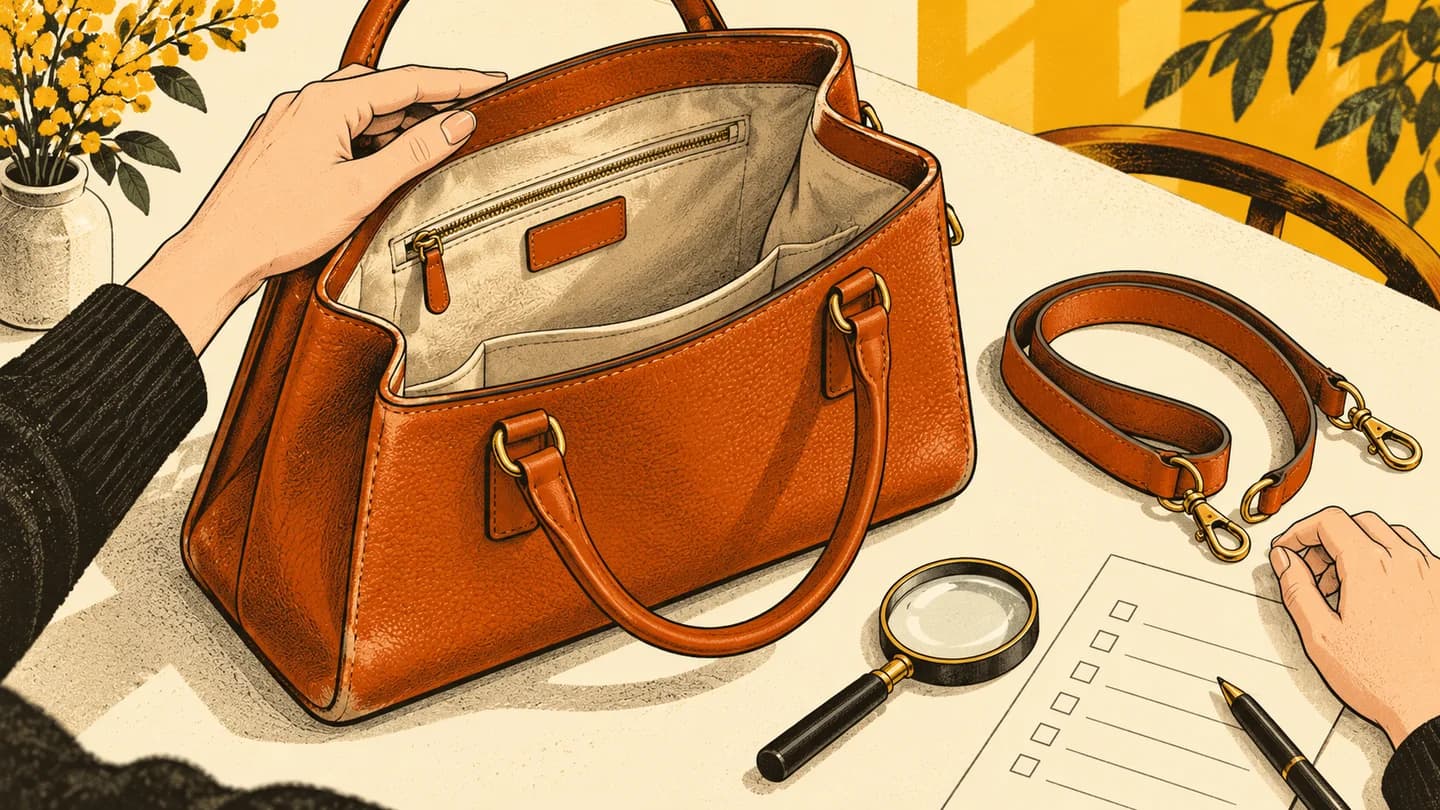
Use clean, dry hands and good light. Support the bag while opening it, and never force a stiff closure or pull a fragile lining inside out.
| Area | Inspect | Ask or record |
|---|---|---|
| Corners and base | Rubbing, exposed material, split seams and distorted shape | Are marks superficial or has the material worn through? |
| Handles and strap anchors | Cracks, stretched holes, loose stitching and darkened areas | Are the handles and detachable strap original or replaced? |
| Edges and hardware | Peeling edge finish, worn plating, corrosion and damaged closures | Has anything been recoloured, polished or replaced? |
| Lining and pockets | Ink, staining, tears, stickiness and flaking surfaces | Can every compartment be inspected without damage? |
| Odour | Smoke, damp, perfume or other persistent smells | Has a treatment been used to mask an underlying problem? |
| Accessories | Missing keys, pouches, straps or locks | Which pieces were included originally, and which are supplied now? |
Price a repair only after someone has assessed it
A missing screw or worn edge can look like a small job while requiring a particular component, material match or specialist technique. Ask the maker’s repair service or a suitably experienced repairer for an assessment, including the likely result, cost and timescale. Mulberry explicitly notes that not every bag can be repaired, so a recognisable brand does not guarantee a convenient restoration route.
Cleaning is also not the same as restoration. Recolouring may improve appearance while changing the original finish; a replacement strap may make a bag usable without restoring its collectible completeness. Keep those distinctions in your buying calculation and eventual listing. If a repairer cannot confirm the work or outcome, do not price the bag as though it has already been restored successfully.
Find comparisons for the same buying proposition
Search completed sales for the verified model and version. Use several examples, with photographs and descriptions you can actually inspect.
- Separate sizes, materials and hardware finishes where they affect buyer demand. A different leather or limited release can make a misleading comparison.
- Compare the level of wear, interior condition and included accessories. A complete bag with a clean lining is not a direct match for one missing its strap.
- Keep restored or recoloured examples separate from bags with an original finish when the distinction affects the market.
- Distinguish a dealer’s advertised retail price from a completed sale and from a cash purchase offer to you.
- Note how often similar bags sell. An uncommon colour may take longer to find a buyer even when an eventual sale looks attractive.
- Include the costs of your chosen selling route and any applicable assessment, handling or delivery charges.
Compare an immediate offer with a self-managed sale
An outright offer from a specialist reseller may be lower than the price at which you could advertise the bag yourself. The difference pays for work, risk and the reseller’s margin. Consignment is different again: you usually need to understand the commission, likely waiting time, markdown permissions and what happens if the bag remains unsold. Compare the actual terms rather than grouping every specialist route together.
For an illustrative self-sale, suppose credible comparisons suggest £240. Allow £25 for assessment, £30 for the selling costs applicable to your route, £12 for packing and delivery not recovered from the buyer, £35 for an assessed repair and £50 towards time, uncertainty and profit. The resulting purchase ceiling is £88. If the repair changes the expected selling price or an assessment is inconclusive, recalculate before buying. These figures demonstrate the method; they are not a valuation or a service price list.
Keep a record that follows the physical item
Save the original listing, messages, purchase evidence, photographs and any assessment or repair report with a stock identifier. Photograph distinctive wear and included accessories so the records refer to this example. Keep private personal information from receipts out of public listing photographs while retaining the relevant purchase record securely.
If a genuine concern emerges after purchase, preserve evidence and use the seller, marketplace or payment provider’s applicable process promptly. Do not pass an unresolved authenticity problem to another buyer with wording such as “bought as genuine”. Resolve the question before offering the item on that basis; a low price does not turn an uncertain attribution into a supported one.
Present the bag accurately and protect its shape
The last stage is to deliver the item in the condition you have described.
- Photograph the front, back, sides, base, interior, identifiers, strap and accessories. Add clear close-ups of wear and repairs.
- State measured dimensions and strap information, along with the verified model and material. Explain any remaining limits to the identification.
- Describe cleaning, recolouring, replaced components and odour honestly. Keep authentication claims within the exact scope of the evidence you hold.
- Support the shape with suitable clean packing material without overstuffing. Protect hardware and loose straps from marking the surface.
- Use a protective outer parcel and a delivery service appropriate to the value, checking its cover and packing requirements before posting.
Buy the example you understand
A good handbag purchase has a coherent identity, a documented condition and a realistic route to a buyer. The most useful skill is recognising which questions you can answer yourself and which require paid expertise. That lets you concentrate on genuine opportunities instead of spending the entire margin trying to rescue an appealing but poorly understood find.