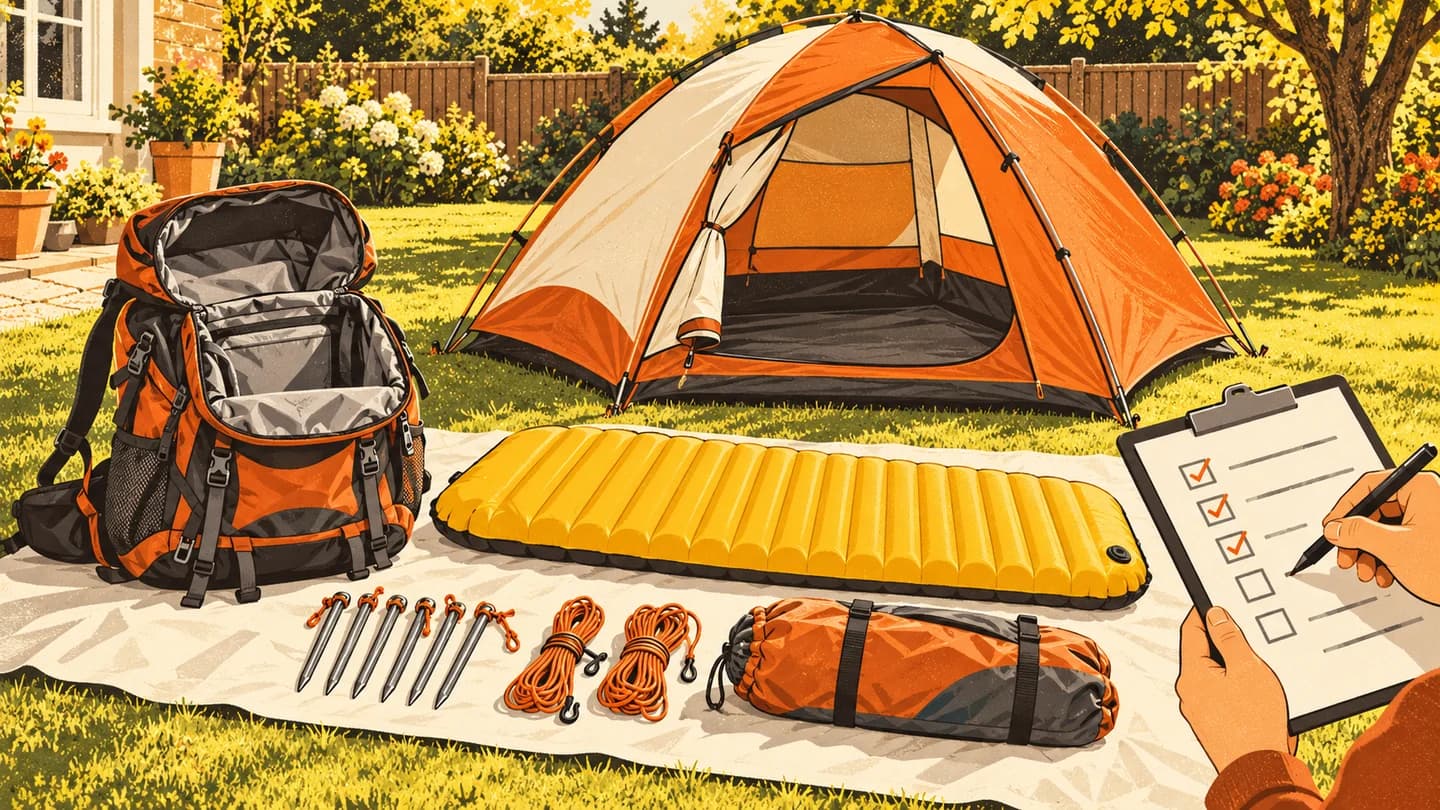
Focus on equipment you can inspect fully and distinguish ordinary wear from safety-critical uncertainty.
Choose equipment you can inspect completely
Used camping and outdoor gear can be worthwhile resale stock when the model is identifiable, the condition is understandable and the item can be tested appropriately. A clean storage bag is not enough. The value sits in the tent, pack or sleeping mat inside it, including all the parts the next owner needs.
Start with categories you can unfold, measure, examine and describe confidently. Straightforward packs, campsite furniture and complete tents may be more manageable than specialist protective equipment or fuel appliances with an unknown history. The right question is not simply whether the brand is expensive. It is whether this particular item has a supported resale value after checking, preparation and delivery.
Sort a mixed camping bundle by the work it needs
A bundle can hide a few useful items among missing parts and unsuitable stock. Do not assign a good-condition price to everything in the bag.
| Category | Useful checks | Common cost to investigate |
|---|---|---|
| Tents and shelters | Pitch fully; check fabric, floor, seams, poles, zips and inventory | Replacement poles, model-specific parts and coating deterioration. |
| Rucksacks | Check seams, straps, buckles, zips, harness and interior coating | Replacement hardware, cleaning and missing fitted components. |
| Sleeping mats | Identify the model; inspect valves and test according to its instructions | Slow leaks, internal damage and repair suitability. |
| Sleeping bags | Check labels, size, fill distribution, fabric, zip and odours | Appropriate cleaning and unresolved condition of insulation. |
| Camp furniture | Assemble and inspect joints, locks, fabric and feet | Broken structural parts and awkward parcel size. |
| Specialist safety or fuel equipment | Establish whether you have the expertise and history needed | Inspection limits may rule out a responsible resale. |
Pitch a tent before calling it complete
Allow enough clean, dry space and follow the instructions for the exact model. Never force an unfamiliar pole arrangement to fit.
- Identify the tent model, size and version from labels and construction. A bag may have been swapped with another tent.
- Lay out the flysheet, inner, poles, pegs, guy lines and any included groundsheet. Compare the contents with the appropriate inventory.
- Assemble it properly and check whether poles, clips, sleeves and attachment points align without improvised substitutes.
- Inspect the floor, seams, mesh, zips, corners and stress points in good light. Look for repairs as well as fresh damage.
- Photograph the pitched tent and its contents. Record missing or replaced parts, then dry everything fully before storage.
Sticky fabric is not ordinary dirt
Some tent coatings deteriorate with moisture and poor storage. A soft, sticky coating, peeling material or persistent musty condition can indicate more than a quick cleaning job. Do not buy on the assumption that a waterproofing spray will restore every failed surface. Identify the fabric and ask the manufacturer or a repair specialist what can realistically be done.
Distinguish removable dirt from coating failure, seam problems and fabric damage. Follow care instructions for that model rather than applying a generic washing method. Cleaning, reproofing and seam repair are different tasks. When a repair is appropriate, include compatible materials, drying time and the work needed to check the result in your purchase calculation.
A garden inspection does not prove expedition performance
Rucksacks: inspect the parts that carry the load
Empty every pocket and open the pack fully. A photograph of the front does not show the condition of the harness or lining.
- Check shoulder straps, hip belt, attachment points and stitching for cuts, fraying, loose seams or previous repairs.
- Operate every zip and buckle without force. Check that both sides of a replaced buckle are compatible and secure.
- Inspect the back panel and any accessible frame or stays according to the design. Note missing or distorted components.
- Look inside for coating deterioration, sticky residue, odours and damage concealed by the outer fabric.
- Confirm size and adjustability, including torso sizing where the model uses it. Capacity alone does not establish fit.
- List accessories actually included: rain cover, removable lid, straps or reservoir. Do not imply hygiene-sensitive accessories are ready for use without appropriate preparation.
Sleeping mats need more than a quick inflation
Identify whether the mat is inflatable, self-inflating or closed-cell foam, and use the manufacturer’s instructions for inspection and care. Check valves, fabric, seams and previous patches. An inflatable mat that looks firm for five minutes can still have a slow leak, while temperature changes can also affect its apparent firmness.
Allow time for a meaningful check under suitable conditions and record the result accurately. Follow the manufacturer’s leak-finding and repair guidance if a fault is suspected; do not improvise high-pressure tests. Internal bulging or separation is a different problem from a simple puncture. Ask whether it is repairable before including it as sound stock in a bundle price.
Sleeping bags: identify the rating, then qualify the condition
Record the exact model, size, insulation type and the information on its labels. Compare ratings only where they belong to that version and the manufacturer’s stated system. Comfort, limit and extreme ratings are not interchangeable: an extreme rating relates to emergency conditions and should not be presented as a comfortable sleeping temperature. Do not take a dramatic low temperature from a different model’s advert and apply it to an unlabelled used bag.
Inspect the outer and lining, zip, hood, seams and distribution of insulation. Odours, clumping, damp storage and repairs can affect the buying decision. Appropriate cleaning may require particular products or a specialist service. A used bag’s label records its original specification; it does not prove that its present condition delivers as-new performance. Describe observations and care history without promising a temperature outcome you cannot establish.
Simple camp furniture still needs a structural check
Open chairs and tables fully and inspect their locking mechanisms, joints, feet and fabric attachment points. Look for bent tubes, cracks, missing fasteners and repairs that alter the original structure. Check manufacturer information for the model rather than inventing a load rating from its apparent sturdiness.
A bulky low-value chair may be better suited to a local bundle than individual postage. Measure the folded item and any carry bag, and check whether sharp or projecting parts need protection. Count complete usable chairs separately from damaged ones. A torn bag may be a minor disclosure; a failing seat or frame changes whether the chair can be offered for use.
Equipment that needs a different buying standard
Some outdoor products protect people from serious harm or introduce additional fire and mechanical risks. Their condition cannot be established by a general car boot inspection.
Climbing and fall-protection equipment
Unknown usage history can itself require retirement under manufacturer guidance. A rope, harness or metal connector looking clean is not evidence that it is safe to resell for protection.
Helmets and protective equipment
Impact history, age, model guidance and condition matter. Do not treat an unknown-history helmet as an ordinary accessory to improve a bundle’s price.
Stoves and fuel equipment
Require the correct knowledge, compatible parts and an appropriate inspection route. Do not improvise a flame test at a stall or inside a tent.
Battery-powered equipment
Identify batteries and chargers, check recalls and condition, and follow the manufacturer’s guidance. Damaged packs are not routine resale stock.
Make missing parts a priced problem
A tent missing common pegs may be straightforward to complete; a missing proprietary pole hub or inner tent can be a different matter. Find the exact replacement, confirm availability and include postage. Similar-looking components can differ in length, curvature, diameter or attachment method.
Do the same for pack buckles, mat valves and furniture fittings. A repair kit being available does not mean every fault is repairable or that the result will meet the intended use. If your plan depends on warranty support, check eligibility and terms before buying. Do not assume an unknown-history second-hand purchase comes with a transferable repair promise.
An example: the complete tent versus the cheap bundle
Suppose a correctly identified tent in the assessed condition could sell for £130. For an illustrative budget, allow £16 for selling costs, £16 for packing and delivery not recovered from the buyer, £13 for confirmed replacement parts and preparation, and £35 for your time, contingency and profit. That leaves £50 as the maximum purchase price.
If a £45 bundle contains that tent plus two untested mats, do not automatically add the mats’ good-condition selling prices to your expected return. First establish whether the tent really meets the assumptions, then value the mats separately after appropriate checks. A failed coating or unavailable pole can undo the entire deal even though the bundle looks generous.
Write a listing that helps the next owner prepare
Outdoor buyers need to know exactly what they are receiving before a trip. Clear inventory and condition details are more useful than “great camping bundle”.
- Name the model and version where established, with dimensions, size and packed measurements where useful.
- Photograph equipment assembled or opened out, plus labels, accessories, repairs and significant wear.
- List missing and replacement parts explicitly. Distinguish an optional accessory from an essential component.
- Describe the inspection, functional checks and preparation actually completed. Keep original specifications separate from your observations of used condition.
- Pack clean, fully dry equipment appropriately, protecting poles and other hard parts. Check carrier restrictions for any batteries or fuel-related items before offering delivery.
Build a category you can assess reliably
Keep notes on preparation time, missing-part costs and actual selling results. Seasonal interest can help a listing, but it should not replace evidence that the item is complete and useful. Buy equipment whose condition you can understand, whose limits you can explain and whose resale price still leaves a margin after the work.